
Metatrichia
Metatrichia
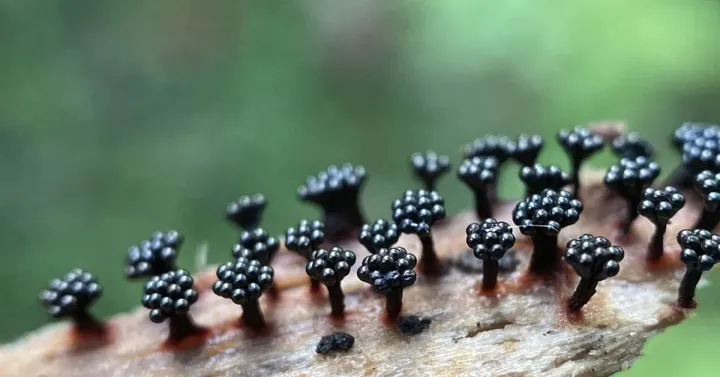
Description
Symptoms
The primary symptom is the emergence of small, often spherical or club-shaped sporangia, typically clustered together on the stems or at the base of the plant.
These fruiting bodies exhibit a range of colors, commonly featuring shades of yellow, brown, or reddish-orange, depending on the stage of maturity of the slime mold.
Upon physical contact, these structures release clouds of fine spores, which can settle on nearby healthy tissues and further spread the presence of the organism.
Plants affected by a significant colony of Metatrichia may show signs of stress, particularly if the sporulation layer covers a large portion of the stem, obstructing normal respiration.
Unlike common fungal infections, these growths appear as discrete units that can be rubbed off, leaving the underlying tissue relatively intact, although potentially damp.
Pathogen
Metatrichia is a genus of myxomycetes, commonly known as slime molds. These organisms are often mistaken for pathogenic fungi due to their appearance on vegetation.
Biologically, they are saprotrophs, not true parasites. They thrive on decaying organic matter, such as fallen leaves, wood debris, and stems of plants that are already starting to decompose.
The life cycle involves a plasmodium stage, a mobile mass that feeds on bacteria, yeast, and fungal spores. They migrate across moist surfaces, which is why they appear on the lower parts of plants.
They do not actively invade living plant tissue. However, their presence indicates high humidity levels and poor sanitation in the immediate environment of the crops.
The transition from a mobile state to a stationary one results in the formation of sporophores, which are the visible structures that farmers identify during crop inspections.
Conditions for development
Metatrichia thrives in environments characterized by persistent high humidity. Rainfall, heavy dew, or overhead irrigation are essential for their proliferation.
The ideal temperature range for their development is between 18 and 25 degrees Celsius, allowing the plasmodium to grow rapidly on damp organic surfaces.
Poor ventilation within dense plant canopy or greenhouse structures prevents the drying of the plant surface, providing a perfect habitat for the slime mold.
Decomposing organic matter, such as improperly composted mulch or dead plant debris left at the base of stems, provides the essential nutrition and moisture for these organisms.
Prolonged cloudy weather with low sunlight exacerbates the issue by keeping surfaces wet for extended periods, encouraging the lifecycle of Metatrichia.
Why it matters
While Metatrichia is not a direct pathogen, it poses a physical threat by covering plant parts, which can hinder the plant's ability to undergo photosynthesis effectively.
The moist environment required for its growth often becomes a breeding ground for true bacterial and fungal pathogens that cause severe rot and tissue necrosis.
For commercial crops, the visual presence of slime mold spoils the aesthetic value, rendering the produce unacceptable for sale or distribution to markets.
Indirect harm includes the potential for localized tissue suffocation and the increased risk of secondary infections brought on by the damp, shaded microclimate.
It acts as a warning sign of poor cultural practices, necessitating immediate intervention to prevent long-term damage to the plant's health and vigor.
Protection
The most effective strategy is the maintenance of proper cultural conditions, starting with optimized irrigation techniques that avoid wetting the foliage and stems.
Rigorous sanitation, including the removal of dead leaves, debris, and rotting wood from the garden or greenhouse, is essential to deprive the mold of its food source.
Improving air circulation through pruning, spacing of plants, and consistent ventilation in protected growing structures will help keep surfaces dry.
In cases of heavy infestation, copper-based fungicides can be used as a contact treatment to disrupt the development of sporangia and mitigate their spread.
Proper soil drainage and the use of clean, well-draining mulch are critical long-term practices to prevent the accumulation of moisture at the base of plants.
Discussion
No discussions yet — be the first.