
Meria larch needle cast
Meria
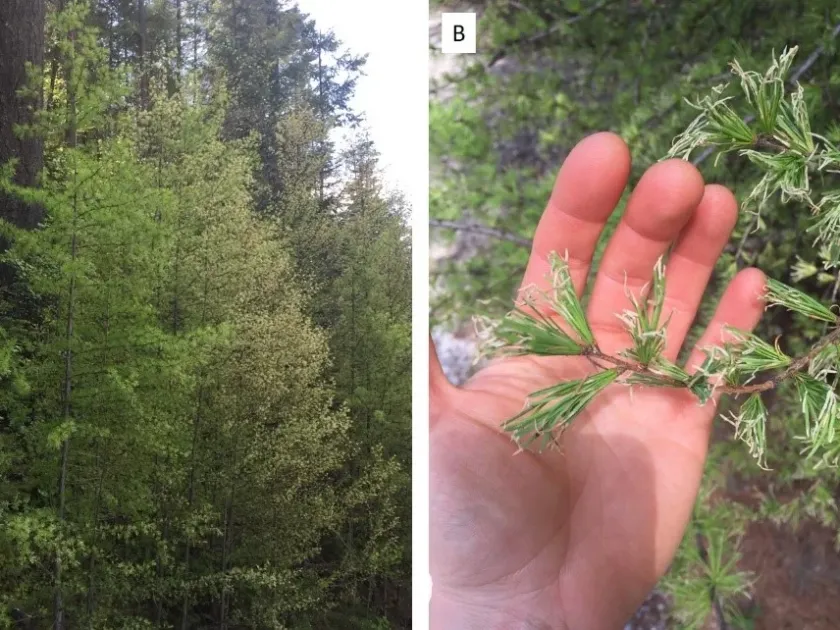
Description
Symptoms
Symptoms typically begin with the appearance of small, irregular yellow-brown spots that gradually spread across the entire needle surface.
As the infection progresses, the needles turn reddish-brown and eventually drop prematurely, resulting in visible thinning of the tree's canopy.
Under a microscope or with a magnifying glass, the white sporulating structures of the fungus can be observed on the undersides of the needles during humid conditions.
The damage is most severe on the lower branches, which are closest to the ground where the overwintering spores are most concentrated.
In severe cases, entire branches may become defoliated, giving the tree a sparse and sickly appearance during the growing season.
Pathogen
The disease is caused by the fungus Meria laricis, which is a specialized pathogen that primarily targets larch species during their vegetative growth stages.
The life cycle involves the production of conidia, which are asexual spores that spread the infection throughout the spring and early summer months.
The fungus survives the winter primarily on fallen larch needles, making debris management a crucial part of the disease cycle disruption.
Once the conidia land on young needles, they germinate and penetrate the epidermal tissues, eventually forming a mycelial network inside the leaf structure.
It is known that the pathogen is highly sensitive to desiccation, requiring specific moisture levels to successfully infect the host tissue.
Conditions for development
High relative humidity and frequent rainfall are the primary environmental drivers for the development and spread of Meria laricis.
Cool, wet spring weather provides the optimal conditions for conidia germination and subsequent rapid colonization of fresh, tender needle growth.
Poor site drainage and excessive density in nurseries create stagnant air pockets, which significantly favor the rapid transmission of spores between trees.
Foggy or misty mornings allow moisture to persist on the needles, creating the necessary conditions for the fungal spores to successfully invade host tissue.
Insufficient solar exposure in shaded areas further exacerbates the problem by slowing down the drying of the foliage after rain events.
Why it matters
The primary impact of needle cast is the significant reduction in photosynthetic capacity, which directly leads to stunted growth and reduced vigor in young larch trees.
Repeated annual defoliation can weaken trees to the point where they become susceptible to secondary opportunistic pests and other environmental stressors.
For forestry nurseries, this disease can lead to substantial economic losses due to the mortality of seedlings and the high costs associated with chemical control.
In landscape and ornamental settings, the premature shedding of foliage greatly diminishes the aesthetic value of the larch trees.
If left unmanaged, the infection can become endemic within a plantation, leading to long-term decline and reduced yield for timber production.
Protection
Sanitation remains the most effective long-term control measure; all fallen needles should be removed and destroyed to reduce the primary inoculum source.
Fungicide applications, particularly those containing copper or triazole compounds, can effectively suppress the spread when applied at the first sign of symptoms.
Improving air circulation through proper spacing and pruning techniques helps to reduce the duration of needle wetness, making the environment less favorable for the fungus.
Selecting disease-resistant larch provenances and maintaining optimal site drainage are essential strategies for integrated pest management.
- Regular monitoring during the vulnerable early spring period;
- Use of certified, disease-free nursery stock;
- Application of balanced fertilizers to promote rapid recovery from defoliation.
Discussion
No discussions yet — be the first.