
Mendosicutes
Mendosicutes
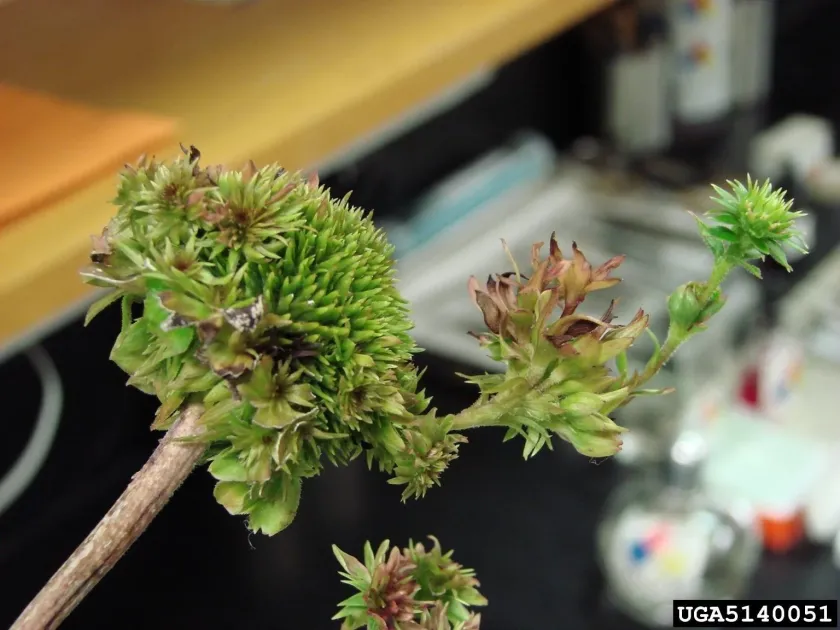
Description
Symptoms
The primary clinical signs of infection include leaf yellowing and chlorosis, which typically begin at the upper canopy levels. These symptoms result from the systemic disruption of the plant's transport mechanisms.
Affected plants often display severe morphological changes, such as stunted growth, internode shortening, and leaf deformation. In many cases, the plant develops a bushy appearance, commonly referred to as "witches' broom."
Reproductive development is also impacted, leading to floral sterility, blossom drop, or the development of malformed fruits. These effects result in significant yield losses for the producer.
Root systems may also exhibit signs of decline, showing reduced vigor and impaired water uptake. This makes the plants more prone to wilting and drought stress, even under sufficient irrigation.
Because these signs often mirror symptoms of viral or phytoplasma diseases, accurate diagnosis usually requires modern molecular tools like PCR to distinguish the specific pathogen responsible for the infection.
Pathogen
Mendosicutes are a taxonomic group of prokaryotes characterized by a unique cell wall structure lacking peptidoglycan. In phytopathology, they are recognized as systemic pathogens that colonize the phloem of host plants, leading to severe physiological disturbances.
The biology of these pathogens relies on the exploitation of the plant's vascular system to facilitate reproduction and spread. By obstructing the phloem, they prevent the transport of photosynthates, causing nutritional deficits in developing plant tissues.
Transmission occurs primarily through insect vectors, such as leafhoppers or aphids, which ingest the pathogen while feeding. Once acquired, the vector often remains infectious for its entire life cycle, facilitating rapid spread within the field.
Due to their unique cell wall composition, Mendosicutes are inherently resistant to many conventional antibiotics, making them particularly difficult to manage in both laboratory and field environments.
The study of these pathogens requires specialized molecular techniques, as they are often difficult to culture in vitro, complicating the timely identification of outbreaks in agricultural settings.
Conditions for development
The development and spread of the disease are heavily dependent on the activity of insect vectors. Warm, dry weather conditions tend to accelerate the life cycles of these insects, increasing their migratory activity and potential for disease transmission.
Weed populations in fields and surrounding areas serve as critical reservoirs for the pathogen. During the off-season, these weeds allow the pathogen to persist, providing a source of primary infection for the next crop cycle.
High planting densities can create favorable microclimates for vector populations, facilitating the rapid movement of pathogens between adjacent plants. This is especially true in regions with poorly managed weed control.
Environmental stress, such as prolonged drought or extreme temperatures, exacerbates the severity of symptoms in host plants. A weakened plant is more susceptible to rapid colonization by the pathogen.
Monitoring the seasonal migration patterns of vectors is essential for predicting disease outbreaks. Agronomists often use environmental modeling to estimate the risk period and determine the timing of necessary control measures.
Why it matters
Mendosicutes are highly detrimental because they cause systemic illness, leading to a permanent reduction in plant health and productivity. The obstruction of nutrient flow ensures that the plant can never reach its full yield potential.
Direct economic losses are often catastrophic, as heavily infected plants become unfit for harvest. Beyond quantitative loss, the quality of the harvested product—such as sugar content, texture, and storage life—is severely degraded.
The physiological stress caused by the infection makes plants more susceptible to secondary infections by fungi and bacteria. This increases the complexity and cost of the overall plant protection program.
Management costs represent a significant economic burden. Repeated insecticide applications, weed control measures, and diagnostic testing contribute to higher operational costs for the agricultural producer.
In severe cases, entire fields may need to be rogued or destroyed to prevent the pathogen from spreading to neighboring areas, highlighting the importance of early detection and proactive management.
Protection
Effective control is centered on integrated pest management (IPM) strategies, with a primary focus on managing the insect vector population. Systemic insecticides applied during critical migration windows are vital.
Cultural control practices, such as the strict removal of weeds that act as pathogen reservoirs, are essential. Keeping field margins clean significantly reduces the risk of initial infection.
The use of resistant or tolerant crop varieties remains the most sustainable and efficient strategy for long-term disease management. Continuous breeding efforts are crucial to combatting these persistent pathogens.
Spatial isolation and appropriate crop rotation can interrupt the life cycles of the vectors and lower the pathogen pressure within the farm environment. Using certified virus-free seeds and seedlings is also a mandatory precaution.
- Implement regular scouting to detect initial signs of disease.
- Utilize yellow sticky traps to monitor vector flight activity.
- Ensure a balanced fertilization program to improve plant resistance.
- Remove and safely dispose of all symptomatic plants.
- Coordinate with neighboring farmers for a landscape-level control strategy.
Discussion
No discussions yet — be the first.