
Meliolaceous fungi
Meliolomycetidae
Description
Symptoms
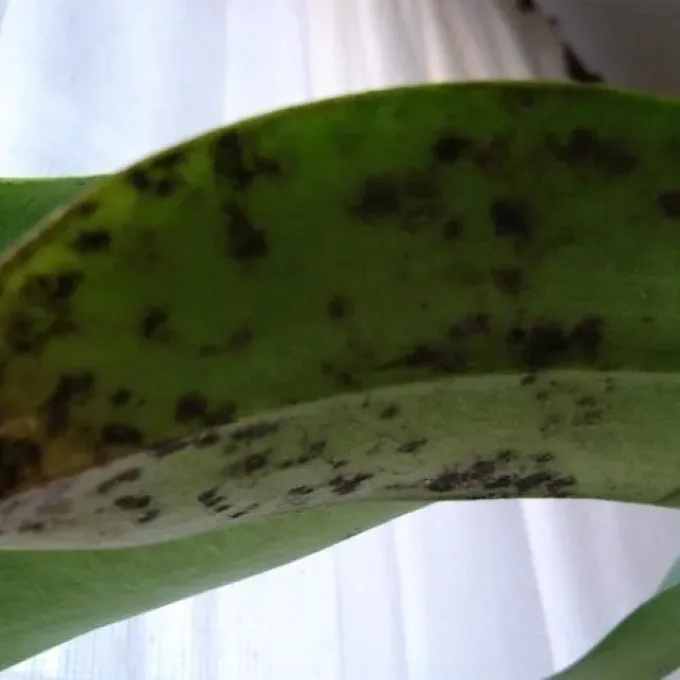
The primary symptom of infection by Meliolaceous fungi is the appearance of dark, soot-like mycelial colonies on the surface of leaves and stems.
The fungus forms an extensive network of dark-colored hyphae that cover the leaf surface, creating a distinctive black layer that can be easily identified by visual inspection.
Small, black, spherical structures called perithecia often develop within the mycelial mats, giving the colony a dotted or granular appearance.
In severe cases, these colonies can coalesce, covering entire leaves and hindering the plant's ability to undergo normal physiological processes.
Unlike internal plant pathogens, these fungi remain strictly epiphytic, meaning they thrive on the surface of the plant without penetrating deep into the internal tissues.
Pathogen
Meliolaceous fungi belong to the subclass Meliolomycetidae, a group of specialized epiphytic parasites within the class Sordariomycetes.
These fungi are characterized by their dark, melanized mycelium, which is highly resistant to environmental stressors such as UV light.
They establish a parasitic relationship with their hosts by using specialized structures called hyphopodia to anchor to the leaf surface and haustoria to extract nutrients.
These pathogens are highly host-specific, often infecting only particular genera or families of plants, particularly in tropical ecosystems.
Their biological survival is dependent on the availability of organic compounds on the leaf surface, which they utilize for their growth and reproduction.
Conditions for development
High humidity and warm temperatures are the most critical environmental factors that promote the growth and spread of Meliolaceous fungi.
These fungi are most prevalent in tropical and subtropical regions where the climate remains consistently humid throughout the year.
The presence of honeydew secreted by sap-sucking insects, such as aphids and scale insects, is a major contributor to the proliferation of the fungus.
Poor ventilation within dense canopy structures or greenhouse environments creates a stagnant microclimate that traps moisture and favors fungal development.
Minimal direct sunlight can also exacerbate the infection, as the shaded conditions provide a stable environment for the fungus to expand its mycelial network.
Why it matters
The main damage caused by these fungi is the reduction of photosynthetic activity because the black fungal layer acts as a physical barrier to sunlight.
Affected plants often show stunted growth, reduced vigor, and poor development of reproductive structures due to the lack of adequate energy production.
Prolonged blockage of stomata can interfere with gas exchange, leading to leaf senescence and premature defoliation of the host plant.
For ornamental plants, the presence of black mildew significantly detracts from their aesthetic quality, rendering them unsellable in commercial markets.
While the fungi themselves do not cause deep tissue necrosis, the weakened state of the plant makes it more susceptible to secondary pathogenic invasions.
Protection
Effective management begins with controlling sap-sucking insects, which removes the primary food source required for fungal colonization.
Pruning infected branches and maintaining optimal plant spacing are essential practices to improve air circulation and reduce surface humidity.
In commercial operations, the application of appropriate fungicides can effectively inhibit the development of mycelial mats on the plant surface.
Preventative measures, including routine monitoring and maintenance of environmental conditions, are key to preventing large-scale outbreaks.
- Integrated pest management for sap-sucking insects.
- Sanitary pruning of highly affected foliage.
- Ensuring adequate spacing between plants.
- Application of preventative contact fungicides.
Discussion
No discussions yet — be the first.