

Description
Symptoms
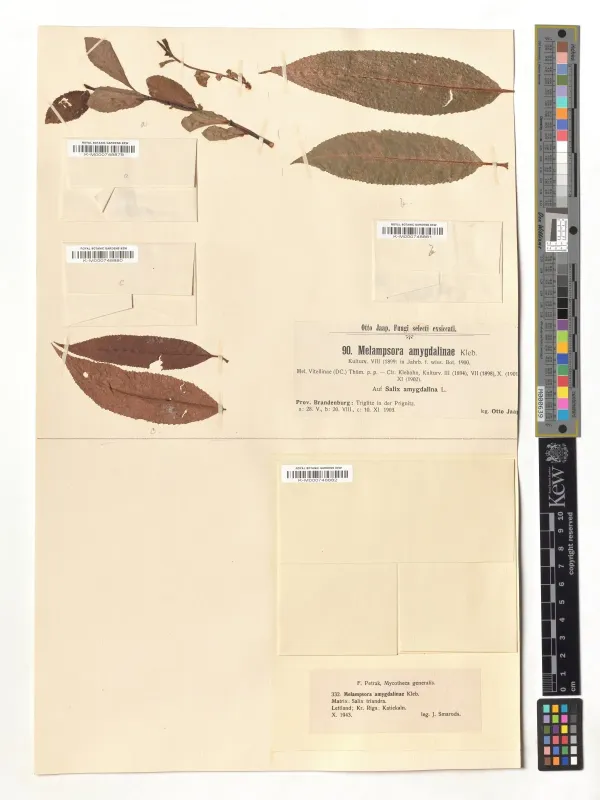
The primary symptom of willow rust is the appearance of small, dusty, orange-to-brown pustules on the underside of the leaves, which contain fungal spores.
As the infection progresses, yellow or chlorotic spots develop on the upper surface of the foliage, directly corresponding to the pustule clusters underneath.
Heavy infestation leads to premature leaf drop, which often begins in mid-summer, causing the tree or shrub to appear sparse and unhealthy.
In some cases, the fungus may manifest as elongated orange lesions on the stems of young willow shoots, causing slight twisting or deformation.
During the late season, these pustules can turn darker, almost black, as the fungus shifts to its overwintering stage on fallen leaves.
Pathogen
The causative agent of this disease is Melampsora amygdalinae, a basidiomycete fungus that acts as an obligate parasite of Salix species.
The pathogen completes its life cycle by utilizing different spore stages, allowing it to rapidly colonize host plants during favorable conditions.
Infection typically occurs when wind-blown spores land on wet leaf surfaces, germinating and entering the plant tissue through stomata.
Once inside, the mycelium spreads throughout the intercellular spaces, drawing nutrients away from the host plant's photosynthetic cells.
The ability of the fungus to survive in plant debris as dormant spores ensures that the cycle repeats each spring when conditions improve.
Conditions for development
Willow rust thrives in cool to moderate temperatures ranging from 15°C to 22°C combined with high relative humidity or frequent rainfall.
Dense willow plantings with poor air circulation create microclimates that retain moisture, making it significantly easier for spores to germinate and infect leaves.
Prolonged wet periods, especially during late spring and early summer, are critical for the initial development and widespread dispersal of the fungus.
Plants under stress, whether from drought, nutrient deficiency, or poor site conditions, show a higher susceptibility to rapid colonization by the fungus.
Early-season weather patterns that facilitate rapid spore production often lead to severe late-summer outbreaks across nurseries and landscapes.
Why it matters
By damaging the leaves, the disease severely impairs the tree's ability to photosynthesize, which directly stunts overall shoot growth and biomass production.
Premature leaf loss depletes the tree's energy reserves, reducing its vigor and increasing its vulnerability to frost damage during the subsequent winter.
In ornamental settings, willow rust ruins the visual appeal of the trees, making them unsuitable for landscaping or garden use.
For commercial growers focused on basketry or biomass willow, the fungus degrades the quality of the wood and hinders the development of long, healthy rods.
Repeated yearly infections can lead to a general decline in tree health, manifesting as branch dieback and, in severe cases, the eventual death of the plant.
Protection
The most crucial cultural control measure is the thorough removal and disposal of all fallen leaves during autumn to eliminate the primary source of the fungus.
Improving air circulation by thinning out dense branches or increasing plant spacing helps reduce the humidity levels that favor rust development.
Chemical intervention involving fungicides, particularly those containing copper or systemic triazole compounds, is highly effective if applied early.
- Select rust-resistant willow cultivars for new plantings
- Apply protective fungicides at the first sign of spring growth
- Prune and destroy infected branches immediately
- Maintain tree health with balanced fertilization
Integrated pest management, including the use of biological control agents and careful monitoring, is recommended for sustainable willow management.
Reference
Connections · Willow rust
Most often together:
Marketplace
Products · 1
Community
Discussion
No discussions yet — be the first.