
Sporobolus streak virus
Mastrevirus sporobosecundi
Description
Symptoms
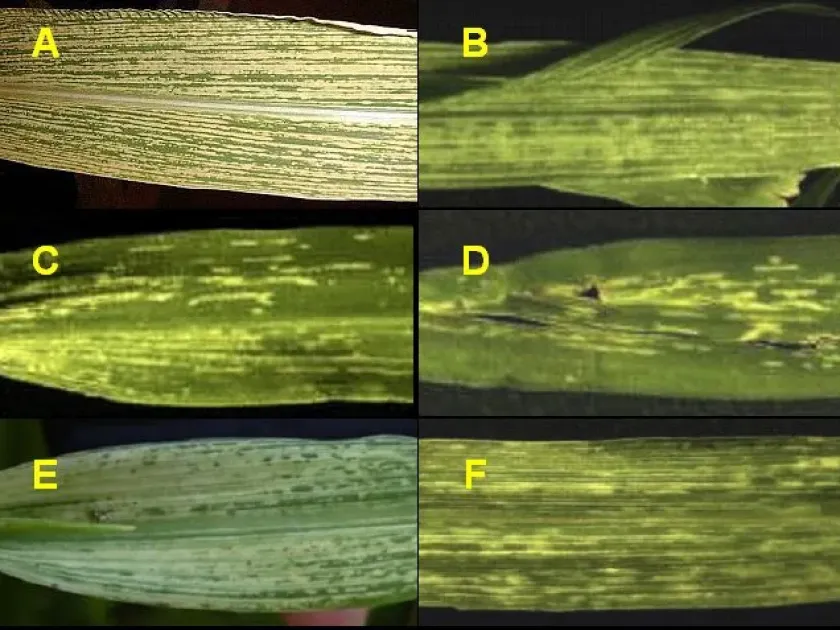
The primary symptom of the infection is the development of chlorotic streaks running parallel to the leaf veins. These streaks can coalesce over time, resulting in yellowing and necrosis of the leaf tissue.
Infected plants typically show stunted growth and a general decline in vigor. This stunting is a hallmark of the viral systemic infection, preventing the plant from reaching its full potential.
Distortion of reproductive organs, including ears or panicles, is frequently observed. This leads to poor grain filling and often results in sterile or poorly developed heads.
The overall photosynthetic efficiency of the plant is reduced, as the chlorotic areas lack the functional chlorophyll necessary to maintain metabolic activity.
Visual identification is most effective when holding the leaf against a light source, which accentuates the mosaic pattern caused by the viral disruption of chloroplasts.
Pathogen
Sporobolus streak virus (Mastrevirus sporobosecundi) belongs to the Mastrevirus genus within the Geminiviridae family. This pathogen is a single-stranded circular DNA virus known to infect various grass species.
The virus acts as an obligate parasite, relying entirely on the host plant for replication and on specific insect vectors for transmission between individual plants in the field.
Natural reservoirs for the virus include wild grasses, particularly species of Sporobolus. These wild plants serve as primary hosts that maintain the virus in the environment throughout the year.
The viral particles exhibit the characteristic geminate (twinned) morphology common to all members of this viral family, which protects the viral genome from environmental degradation.
Replication occurs within the plant cell nuclei, where the virus hijacks the host's cellular machinery to synthesize its proteins and replicate its DNA, leading to severe physiological disruptions.
Conditions for development
The transmission of the virus is strictly dependent on the presence and activity of its insect vectors, typically leafhoppers, which acquire the virus while feeding.
Warm and dry weather conditions favor the population growth and migration of these vectors, significantly increasing the rate of secondary spread throughout the field.
Weedy areas surrounding agricultural fields serve as "green bridges," harboring both the virus and the insect vectors, facilitating early season infection of crops.
Agricultural practices that promote high plant density or leave field margins unmanaged contribute to higher disease incidence by providing more hosts and shelter for vectors.
The infection rate is strongly correlated with the proximity of crop fields to wild grass communities, which act as the primary source of initial viral inoculum.
Why it matters
Sporobolus streak virus poses a significant threat to cereal production, capable of causing substantial yield losses if not managed effectively during the early stages of growth.
Affected plants suffer from severe nutrient depletion and impaired development, leading to a reduction in both the number and the quality of the grains produced.
The grain quality is negatively impacted, often becoming shriveled and having a lower test weight, which reduces its commercial value and suitability for processing or seeding.
The cumulative effect of reduced photosynthesis and disrupted development makes infected crops highly susceptible to secondary pathogens and abiotic stresses.
Economic losses arise not only from lower yield but also from the increased cost of implementing vector control measures to prevent a full-scale outbreak.
Protection
Effective control relies primarily on managing the insect vector populations through the strategic application of insecticides during peak periods of vector activity.
Sanitation is a critical preventive measure, involving the systematic removal of wild grasses and weed hosts from field edges to eliminate the primary viral reservoir.
The deployment of resistant cultivars is the most sustainable strategy, as it eliminates the reliance on chemical inputs and provides long-term protection.
Adjusting planting dates to ensure that young, susceptible seedlings do not coincide with the migratory peaks of the insect vectors can significantly reduce infection rates.
- Maintaining field hygiene by controlling weed reservoirs.
- Using integrated pest management (IPM) to monitor vector populations.
- Implementing buffer zones between susceptible crops and wild grass areas.
Discussion
No discussions yet — be the first.