
Malvastrum leaf curl
Malvastrum leaf curl Guangdong virus
Description
Symptoms
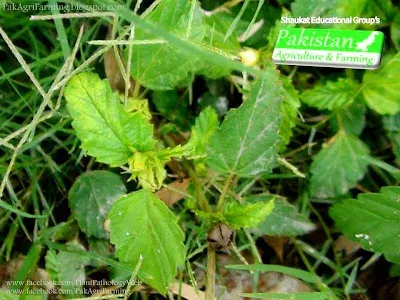
The most prominent symptom is the curling and distortion of leaves, often accompanied by the thickening of veins and inward or outward leaf rolling.
Chlorosis, or yellowing, frequently appears along the leaf veins, eventually leading to a mosaic-like pattern across the entire leaf surface. This reduces the photosynthetic capacity of the plant.
Affected plants exhibit stunted growth and significantly shortened internodes. This gives the plant a bushy or shrub-like appearance, which is a classic indicator of severe viral infection.
Floral development is typically disrupted, leading to flower deformation or abortion. This directly reduces the fruit or fiber set, causing significant losses in harvest yield.
Severe infestations result in a general reduction of plant vigor, making the infected individuals stand out clearly against the green canopy of healthy plants.
Pathogen
The causative agent of this disease is the Malvastrum leaf curl virus (MaLCuV), which belongs to the family Geminiviridae and the genus Begomovirus. These viruses contain a single-stranded circular DNA genome.
The virus is exclusively transmitted by the whitefly Bemisia tabaci. This insect vector acquires the virus by feeding on infected phloem tissues and remains a carrier for the duration of its life, transmitting it to healthy host plants.
Transmission does not occur through mechanical means, seed, or contact. The spread is entirely dependent on the movement and colonization behavior of the whitefly population within the field.
The primary hosts of the virus are members of the Malvaceae family, including cotton, hibiscus, and various weed species that act as natural reservoirs for the pathogen.
The persistent nature of the virus in the whitefly vector ensures that even a small population of insects can effectively spread the disease throughout a field under favorable environmental conditions.
Conditions for development
The disease spread is heavily influenced by the population dynamics of the Bemisia tabaci whitefly. High ambient temperatures and dry conditions favor the rapid proliferation and migration of these vectors.
Poor crop rotation practices and the presence of wild Malvaceae weeds facilitate the persistence of the virus. These weeds serve as an inoculum source during periods when the main crop is not present.
Agricultural practices such as over-fertilization with nitrogen can create lush, succulent vegetative growth, which is highly attractive to whiteflies, thereby increasing the risk of virus transmission.
Migration from harvested fields to young, newly emerged crops often triggers outbreaks. The vector moves to the fresh tissue, carrying the virus from the older, senescing plants.
Environmental management, including irrigation and avoiding excessive pest habitats, can help mitigate the pressure of the vector population in sensitive agricultural areas.
Why it matters
The economic impact is primarily caused by yield loss. In fiber crops like cotton, the virus causes not only a reduction in the number of bolls but also a decrease in the quality of the lint produced.
Since there is no cure for plants once they are infected, the virus causes permanent physiological damage. Management is limited to prevention and the containment of the spread.
High infection rates force growers to implement costly pest management programs. The reliance on frequent insecticide applications increases production costs and poses risks of developing pesticide resistance in vectors.
Viral diseases can lead to total crop failure if the infection occurs early in the growing season, preventing the plants from reaching maturity or achieving their full growth potential.
The presence of the virus in a region can restrict the choice of crops, as growers may avoid planting highly susceptible varieties, leading to reduced agricultural diversity.
Protection
The management of Malvastrum leaf curl relies heavily on integrated pest management (IPM) strategies, with the primary goal of controlling the whitefly vector population.
Applying systemic insecticides during the early growth stages is critical to prevent initial colonization. Rotating different chemical classes is essential to manage potential insecticide resistance.
Cultural control methods, such as removing weed reservoirs and maintaining field hygiene, are effective in reducing the inoculum pressure that whiteflies can pick up.
Using resistant or tolerant varieties, where available, provides the most sustainable protection against the virus and its devastating impacts on plant development.
- Monitor fields for whitefly presence using yellow sticky traps.
- Rouge out and destroy infected plants immediately upon detection.
- Implement strict weed control measures around field borders.
- Utilize biological control agents like parasitic wasps or entomopathogenic fungi.
Discussion
No discussions yet — be the first.