
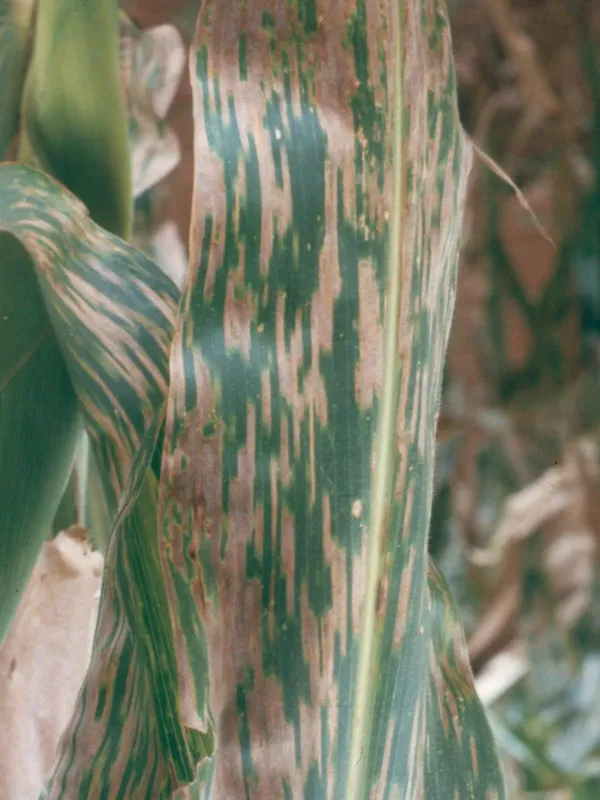
Description
Symptoms
Initial symptoms are characterized by light-green or yellow chlorotic spots and short streaks running parallel to the leaf veins, which may later coalesce.
Infected plants exhibit significant stunting and shortened internodes, leading to a compact, bushy appearance that distinguishes them from healthy, vigorous corn plants.
As the infection progresses, necrotic lesions may develop, eventually causing leaf tissue death, premature wilting, and reduced overall plant photosynthetic capacity.
Reproductive development is severely hampered, resulting in malformed ears with poor kernel set, significantly reducing both grain quality and total yield volume.
- Chlorotic yellow striping along leaf veins.
- Severe plant stunting and shortening.
- Necrotic patches on older foliage.
- Deformed, poorly filled or barren ears.
Pathogen
Maize chlorotic mottle is caused by the Maize chlorotic mottle virus (MCMV), a member of the Tombusviridae family. This virus is a significant phytopathological threat known for its aggressive systemic impact on corn plants.
The virus often acts as a key component in synergistic infections, particularly when co-infecting with Sugarcane mosaic virus (SCMV), resulting in severe corn lethal necrosis.
It can persist in the environment within infected plant debris, soil, and various grass species that act as reservoirs during the winter or off-season periods.
Transmission occurs primarily through insect vectors, such as thrips, corn rootworms, and beetles, which acquire the virus while feeding on infected tissues and spread it to healthy plants.
The virus is highly contagious and can also be spread mechanically through contact between plant leaves or contaminated farm machinery during routine field operations.
Conditions for development
The spread of the virus is closely linked to the population dynamics of its insect vectors, which thrive in warm, humid weather conditions during the growing season.
Monoculture cultivation of maize provides a continuous host supply, leading to a buildup of both the virus and its vector populations, increasing disease pressure annually.
Field conditions with poor airflow and high density facilitate the rapid movement of vectors between plants, accelerating the spread of the virus throughout the field.
Tillage practices that fail to fully incorporate crop residues can leave infected stalks exposed, allowing the virus to survive and reinfect the next season's crop.
Proximity to wild grass reservoirs allows the virus to move from adjacent weed populations into the commercial corn field during the early stages of crop development.
Why it matters
The primary economic impact of Maize chlorotic mottle is substantial yield reduction, which can reach 100% loss in severe cases of corn lethal necrosis.
Infected plants show poor nutrient uptake and hampered grain filling, leading to shriveled kernels and lower grain weight, which affects market value and nutritional content.
The weakened physiological state of the plants makes them more susceptible to opportunistic secondary infections, including stalk and ear rots, which further degrade harvest quality.
Early-season infection is particularly devastating, often resulting in total crop failure for entire sections of the field and necessitating costly replanting efforts.
The overall management costs increase significantly due to the necessity for intensive vector control and the potential loss of premium-grade harvestable grain.
Protection
The most effective strategy for managing the disease is the use of resistant maize hybrids that have been specifically bred for tolerance to the virus and its associated necrotic syndromes.
Implementing a strict crop rotation program, where corn is rotated with non-host crops for at least two years, effectively breaks the infection cycle and reduces virus reservoir pressure.
Integrated Pest Management (IPM) is crucial to control insect vectors, requiring timely monitoring and the application of appropriate insecticides during peak vector activity periods.
Sanitation practices, such as removing weed hosts and thoroughly incorporating crop residues post-harvest, are essential to eliminate environmental sources of the virus.
Farmers should also maintain field hygiene by cleaning machinery after working in potentially infected areas to prevent the mechanical transmission of the virus between fields.
Pathogens and affected parts
Affects crops · 1
Discussion
No discussions yet — be the first.