
Description
Symptoms
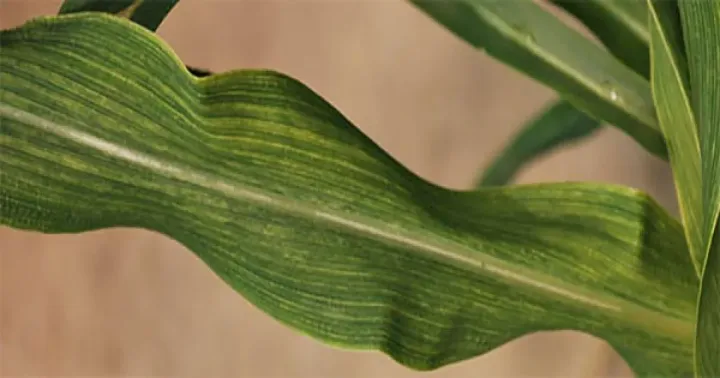
Initial symptoms include small chlorotic spots at the base of the youngest leaves. As the infection progresses, these spots merge into distinct bands along the leaf veins.
A primary diagnostic feature is stunted growth. The plant exhibits shortened internodes, giving it a compact, flattened appearance compared to healthy plants.
Leaves of infected plants often appear discolored, turning pale yellow or green. They can also become rigid and twisted, which limits the leaf's ability to maximize sunlight exposure.
The formation of ears is severely impacted. Infected plants often produce small, deformed ears with poorly developed, shriveled kernels, or they may fail to produce ears at all.
Root systems are typically underdeveloped in infected plants, making them more susceptible to drought and other secondary soil-borne stresses.
Pathogen
Maize chlorotic dwarf is caused by the Maize chlorotic dwarf virus (MCDV), a member of the genus Waikavirus. This virus is an obligate parasite that relies on host plants for its replication and survival.
The virus is transmitted by the leafhopper Graminella nigrifrons. The insect acquires the virus by feeding on infected plants and can transmit it for the duration of its lifespan.
The host range includes maize and sorghum. Additionally, many wild grass species act as reservoirs, maintaining the virus throughout the year in non-cultivated environments.
The virus travels through the phloem, causing systemic infection. It disrupts vital physiological processes, leading to significant changes in plant hormone levels and reduced nutrient uptake.
The spread of the virus within agricultural landscapes is heavily influenced by the seasonal migration patterns and population density of the vector leafhopper.
Conditions for development
The development of the disease is favored by weather patterns that support the rapid breeding of leafhoppers. Warm, moist springs are particularly conducive to early infection.
The presence of perennial grasses acting as primary inoculum sources is a critical factor for the disease cycle in most agricultural regions.
Early-season infection is the most damaging. Plants infected at the seedling stage show the most severe stunting and yield loss compared to those infected later in development.
Close proximity between maize and sorghum fields often leads to a higher incidence of the disease, as leafhoppers migrate easily between these host crops.
Poor weed management in and around fields maintains high populations of the virus vector, ensuring a consistent risk for subsequent plantings.
Why it matters
The economic impact of maize chlorotic dwarf is significant, with yield reductions ranging from moderate to severe. In some cases, farmers may lose the majority of their grain harvest.
In addition to grain yield, the quality of the harvest is degraded. The shriveled kernels have a lower test weight and are not suitable for seed production or premium markets.
Infected crops show increased vulnerability to secondary infections, such as root rots and stalk rots, which further compromise the structural integrity of the plants.
The need for intensive management strategies, including insecticide applications, adds to the total cost of production, reducing overall farm profitability.
For silage producers, the reduced biomass and poor nutritional quality of infected corn plants decrease the value of the feed harvested for livestock.
Protection
Effective weed control is the cornerstone of prevention. Removing grass weeds from the edges of fields eliminates the reservoirs that harbor the virus during the off-season.
Using insecticidal seed treatments can help protect young seedlings from early colonization by leafhoppers, reducing the risk of the most severe infections.
The selection of resistant or tolerant corn hybrids is the most sustainable way to manage the disease, especially in areas with a history of recurrent infections.
Scouting for leafhopper populations using yellow sticky traps can provide critical information for timing insecticide applications to achieve maximum efficacy.
Adjusting planting dates to avoid the peak periods of leafhopper migration can significantly decrease the percentage of infected plants in a field.
Pathogens and affected parts
Affects crops · 2
Discussion
No discussions yet — be the first.