
Magnaporthe leaf spot
Magnaporthaceae
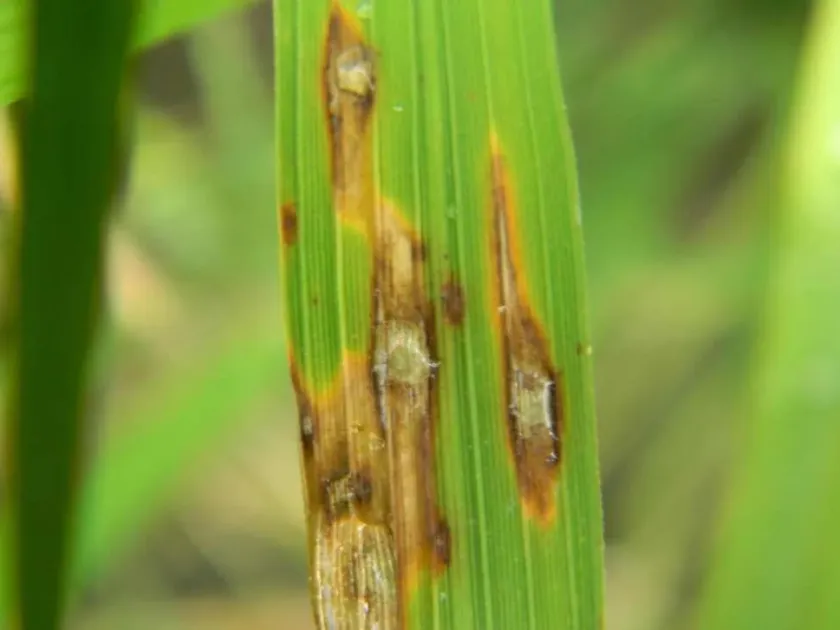
Description
Symptoms
Initial symptoms are characterized by the development of small, diamond-shaped or circular lesions on leaves, which often display a distinct necrotic center.
As the infection progresses, these lesions enlarge and merge, eventually causing leaf blight and premature senescence of the entire plant canopy.
Infections affecting the stem often result in node discoloration and localized tissue death, leading to a condition commonly referred to as neck blast or stem collapse.
Under humid conditions, a characteristic grey to olive-colored velvety mycelial growth may appear on the lesions, representing active sporulation of the fungus.
In severe cases, the panicle or seed head fails to develop properly, leading to empty or shriveled grains that significantly compromise the overall harvest yield.
Pathogen
The disease is caused by fungi belonging to the Magnaporthaceae family, with Magnaporthe oryzae being the most recognized and devastating pathogen within this group.
These ascomycete fungi utilize both sexual and asexual reproduction cycles, which facilitates their survival in soil and crop debris through specialized structures like chlamydospores.
Transmission of the fungus primarily occurs via wind-blown conidia or water splashes during rain, allowing the pathogen to spread rapidly across large agricultural fields.
The pathogen employs a specialized structure known as an appressorium to exert physical pressure and enzymatic degradation to penetrate the plant epidermis efficiently.
Genetic diversity within the Magnaporthaceae family contributes to the emergence of new, more virulent strains capable of bypassing host immunity in different cereal varieties.
Conditions for development
The disease thrives under warm temperature conditions, typically ranging between 25°C and 28°C, which are optimal for fungal metabolism and spore germination.
High relative humidity, ideally above 90%, is an essential requirement for the fungus to successfully colonize plant tissues and initiate new infection cycles.
Periods of prolonged leaf wetness, such as morning dews or frequent evening fogs, are highly conducive to the rapid spread of the pathogen within the crop canopy.
Excessive nitrogen fertilization often leads to lush, succulent growth that is more susceptible to fungal entry and rapid colonization by the pathogen.
Poor field management, including high planting density, limits airflow and maintains a stagnant, humid microclimate that favors aggressive disease development.
Why it matters
Magnaporthe-related diseases are capable of causing devastating yield losses, sometimes reaching up to 90% in susceptible rice varieties under severe epidemic conditions.
The disease negatively impacts the grain filling process, resulting in poor quality, low seed weight, and significant reductions in nutritional and commercial value.
By causing stem and root lesions, the fungus impairs nutrient and water uptake, making the plants highly vulnerable to lodging and other abiotic stressors.
Farmers face substantial financial losses not only due to reduced yields but also from the recurring costs of necessary fungicide applications throughout the growing season.
Long-term soil contamination with fungal spores necessitates strict management practices and potential restrictions on crop rotation to mitigate future risks.
Protection
The most sustainable strategy for management is the deployment of resistant cultivars bred specifically to withstand local races of the pathogen.
Integrated pest management includes the timely application of systemic fungicides, often timed with critical plant development stages to minimize infection risk.
Implementing a diverse crop rotation strategy helps to reduce the primary inoculum load in the soil, effectively breaking the disease cycle over time.
Optimizing planting density and nutritional management promotes robust plant development and improves canopy aeration, naturally suppressing fungal proliferation.
Seed treatments using broad-spectrum fungicides offer crucial protection during the germination stage, ensuring healthier plant establishment and stronger early growth.
Discussion
No discussions yet — be the first.