
Macrosporia
Macrospora
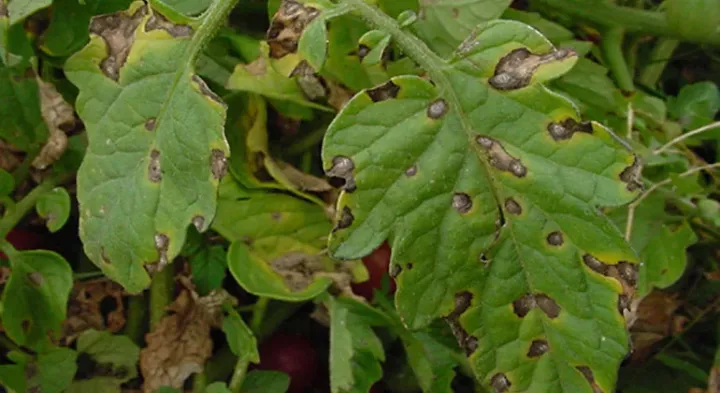
Description
Symptoms
The most characteristic symptom of macrosporia is the formation of circular or oval spots with distinct concentric rings, often described as a "target-spot" pattern.
These spots initially appear on the lower, older leaves and are typically dark brown or black. As the disease progresses, the spots expand and may merge, covering large areas of the foliage.
In humid conditions, a velvety, olive-to-black fungal growth becomes visible on the surface of the lesions, indicating active spore production by the pathogen.
Stem lesions can also develop, often taking the form of elongated, sunken spots that may weaken the stem structure, causing lodging or partial tissue death.
In severe cases, infected leaves wither, turn yellow, and drop prematurely, while fruits exhibit dark, sunken spots that lead to internal rot and poor quality, rendering the yield unmarketable.
Pathogen
Macrosporia, often caused by fungi of the genus Macrosporium (closely linked to Alternaria species), is a widespread plant disease that targets various agricultural and horticultural crops, especially solanaceous plants.
The pathogen exists as spores (conidia) in soil, crop debris, and contaminated seeds. It is a highly resilient fungus capable of surviving harsh winter conditions, making it a persistent threat to seasonal agriculture.
The fungal mycelium penetrates the plant tissues through stomata or mechanical injuries, eventually colonizing the leaf, stem, or fruit tissues. It produces enzymes that break down plant cells to extract nutrients.
Dissemination occurs primarily through wind, water splashes during rain, and mechanical contact. Once established, the fungus can produce multiple generations of spores within a single growing season.
Understanding the biology of Macrosporium is essential for creating effective management plans, as the fungus exhibits high phenotypic plasticity and can evolve resistance to certain control agents.
Conditions for development
Macrosporia thrives in warm, humid environments. Temperatures between 20°C and 30°C, combined with high relative humidity or leaf wetness, provide optimal conditions for infection.
Frequent rainfall or overhead irrigation cycles that leave the foliage wet for extended periods act as a catalyst for the germination and spread of fungal spores across the field.
Poor agricultural practices, such as high plant density or lack of canopy aeration in greenhouses, create a microclimate that accelerates the development of the disease cycle.
Plants suffering from nutrient deficiencies, especially low levels of nitrogen or potassium, or those weakened by insect attacks, are significantly more susceptible to successful fungal colonization.
The presence of overwintered plant debris serves as the primary reservoir for the inoculum, ensuring that the pathogen is present at the start of every new growing season.
Why it matters
The primary economic impact of macrosporia is the significant reduction in photosynthetic capacity due to the loss of leaf surface area, which directly translates into lower biomass production.
Severe infestations lead to premature senescence of the foliage, preventing proper fruit development and negatively affecting the sugar-to-acid ratio in harvested produce.
The infection causes direct losses through fruit rot and reduced marketability, as the appearance and storage potential of the produce are severely compromised by lesions.
In addition to yield loss, the cost of fungicides and the labor required for repeated applications significantly increase the overhead costs of crop production.
The persistence of the pathogen in the soil means that long-term management is required, often forcing growers to adopt expensive rotations or soil sterilization techniques to mitigate future risks.
Protection
Management of macrosporia relies on an integrated approach, starting with the use of disease-free, certified seeds and resistant crop varieties that are adapted to local climatic conditions.
Crop rotation is a critical preventive measure; moving sensitive crops away from infected fields for several years helps exhaust the soil-borne inoculum of the fungus.
- Removal and destruction of all infected crop residues post-harvest to reduce the primary inoculum.
- Drip irrigation to minimize leaf wetness, thereby discouraging spore germination.
- Application of protectant and systemic fungicides at the first sign of symptoms.
- Proper pruning and staking to improve airflow through the plant canopy.
Regular monitoring of fields allows for the detection of early infections, enabling precise, localized applications of control agents rather than broad-spectrum treatments, which is more sustainable.
Discussion
No discussions yet — be the first.