
Lycogala flavofuscum
Lycogala flavofuscum
Description
Symptoms
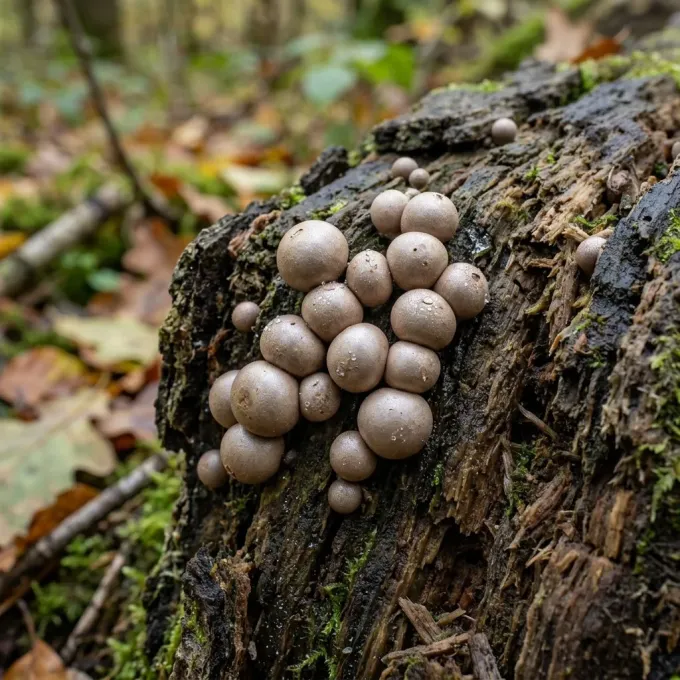
Lycogala flavofuscum appears as rounded or cushion-shaped structures known as aethalia, commonly found on decaying wood, logs, and stumps.
During the early developmental stages, these structures are creamy, pinkish, or pale yellow, making them easily distinguishable against dark wood.
As they mature, the outer membrane darkens to a brownish or ochre color, and the surface texture may become slightly warty or granular.
Upon physical rupture, the mature aethalia release a dense, powdery mass of spores, typically gray-olive to dark brown in appearance.
These slime molds often aggregate in groups, creating a distinct aesthetic presence on the surface of rotting vegetation.
Pathogen
The causative agent, Lycogala flavofuscum, is a species of myxomycete (slime mold), an organism that transitions between vegetative and reproductive phases.
The vegetative phase, known as a plasmodium, is a mobile, multinucleate mass of protoplasm that consumes organic debris and microorganisms.
This species acts as a saprotroph, meaning it does not attack living tissues but thrives on dead organic matter to fuel its growth cycle.
When environmental triggers occur, the plasmodium concentrates into distinct aethalia to undergo sporulation for reproduction.
The biology of this organism relies heavily on the decomposition process, where it plays a role in the natural recycling of woody materials.
Conditions for development
High moisture levels are critical for the survival and development of this slime mold, making it common in humid, shaded forest or garden environments.
Temperatures ranging from 15°C to 22°C support the active movement and feeding of the plasmodial stage within the substrate.
The presence of decaying deciduous wood provides the necessary nutrients for the life cycle of the organism to be completed successfully.
Limited air circulation in areas with heavy debris or stagnant water promotes the colonization of these slime molds on damp surfaces.
Poor garden maintenance, specifically the accumulation of rotting logs and mulch, creates an ideal reservoir for spore germination.
Why it matters
Lycogala flavofuscum is not a primary plant pathogen and poses no direct threat to the physiological health of living, vigorous trees.
The harm it causes is primarily associated with the accelerated decomposition of structural wood, which can indirectly compromise the integrity of trees already suffering from decay.
Its presence is often a diagnostic indicator of underlying wood rot or significant damage in the woody tissue where it is growing.
Beyond wood degradation, it is considered an aesthetic nuisance in ornamental gardens, covering garden features with its spore-bearing structures.
While not lethal, its presence indicates an environment that is overly damp and poorly managed, which may eventually encourage other fungal pathogens.
Protection
The primary control strategy involves good sanitation practices, such as removing decaying logs, stumps, and excessive wood debris from the property.
Improving drainage in the landscape reduces the humidity levels that favor slime mold growth and prevents waterlogging of the soil.
Ensuring proper spacing and pruning of trees can improve airflow and reduce moisture accumulation on branches and trunks.
Treating exposed cuts on trees with fungicides or professional wood sealants can prevent the colonization of decaying surfaces.
- Remove decaying wood and stumps.
- Improve soil drainage and airflow.
- Keep garden areas free of debris.
- Use protective sealants on wood cuts.
Discussion
No discussions yet — be the first.