
Barley yellow dwarf
Luteovirus kerbihordei
Description
Symptoms
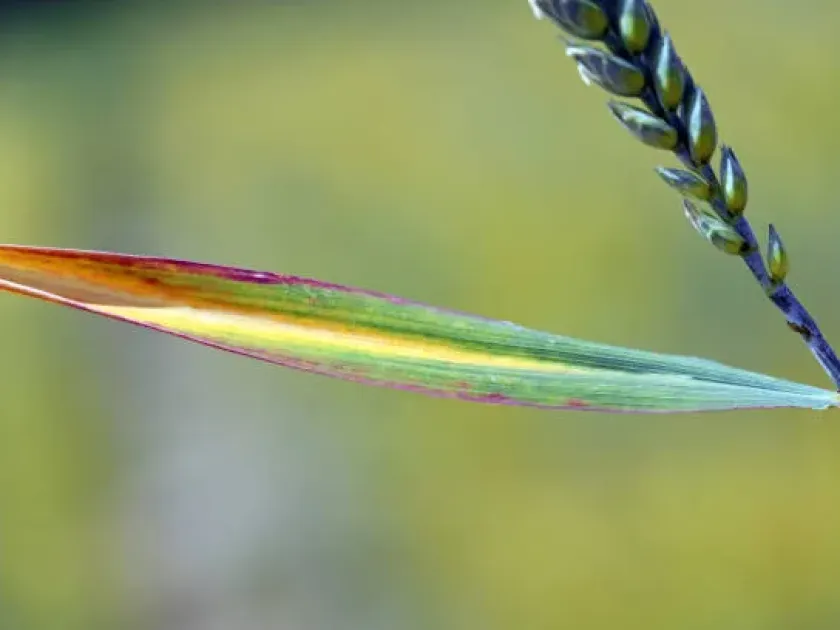
The most diagnostic symptoms include distinct leaf discoloration, where colors vary depending on the host species and viral strain.
Stunting of the plants is almost always present, with internodes becoming shortened, resulting in a low-profile, "dwarf" appearance of the crop.
Leaves often show yellowing in barley, whereas wheat or oat cultivars frequently exhibit reddish or purple discoloration at the leaf tips.
Affected plants often display reduced tillering, and heads may be poorly developed, filled with shriveled or sterile grains.
- Stunted plant height.
- Yellowing or reddening of leaves.
- Upright leaf growth.
- Delayed crop maturity.
- Reduced yield and grain quality.
Pathogen
Barley yellow dwarf (BYD) is caused by a group of viruses belonging to the Luteoviridae family, being one of the most widespread viral diseases in cereals worldwide.
The virus is strictly phloem-limited, meaning it restricts the transport of sugars and nutrients within the plant, which leads to metabolic stress.
Transmission occurs exclusively through aphid vectors, including species like Rhopalosiphum padi and Sitobion avenae, which acquire the virus during feeding.
It is a non-mechanical virus, meaning it does not spread through contact or seed, making the management of insect populations the central control strategy.
Genetic diversity among BYDV isolates impacts the range of host plants and the efficiency of vector transmission, complicating global disease management.
Conditions for development
Environmental conditions that favor the buildup and migration of aphid populations are critical for the onset of an epidemic.
Mild autumn temperatures allow aphids to remain active longer, increasing the probability of early-season infection in winter cereal crops.
Volunteer cereals and grassy weeds act as primary reservoirs for both the virus and the vector insects during the summer months.
Dense crop stands can provide a conducive microclimate for aphids to thrive, facilitating rapid spread within a field from initial infection foci.
Periods of drought followed by favorable growing conditions can stress plants, making them potentially more susceptible to damage once infected.
Why it matters
The economic impact of BYD is substantial, as infected crops show significant reductions in biomass and grain yield potential.
Quality parameters, such as thousand-kernel weight and grain uniformity, are negatively affected, reducing the market value of the harvest.
Infection in the early seedling stage causes the most severe damage, potentially resulting in near-total loss of the crop in susceptible varieties.
Plants weakened by the virus are more prone to overwintering failure and increased sensitivity to abiotic stressors like heat or frost.
Indirect losses include the cost of insecticide applications and the necessity for intensive field monitoring throughout the growing season.
Protection
Cultivating resistant or tolerant crop varieties is the most effective and sustainable long-term solution for managing Barley yellow dwarf.
Adjusting planting dates to avoid the peak periods of aphid flight significantly reduces the risk of early-season virus inoculation.
Effective weed management and the destruction of volunteer cereals help eliminate the "green bridge" that supports virus persistence.
Seed treatment with systemic insecticides provides robust protection for seedlings against aphid feeding during the vulnerable early stages of growth.
Field scouting using yellow sticky traps helps agronomists monitor aphid migration and decide on the timing of supplemental insecticide sprays.
Discussion
No discussions yet — be the first.