
Lirula needle cast
Lirula nervisequia
Description
Symptoms
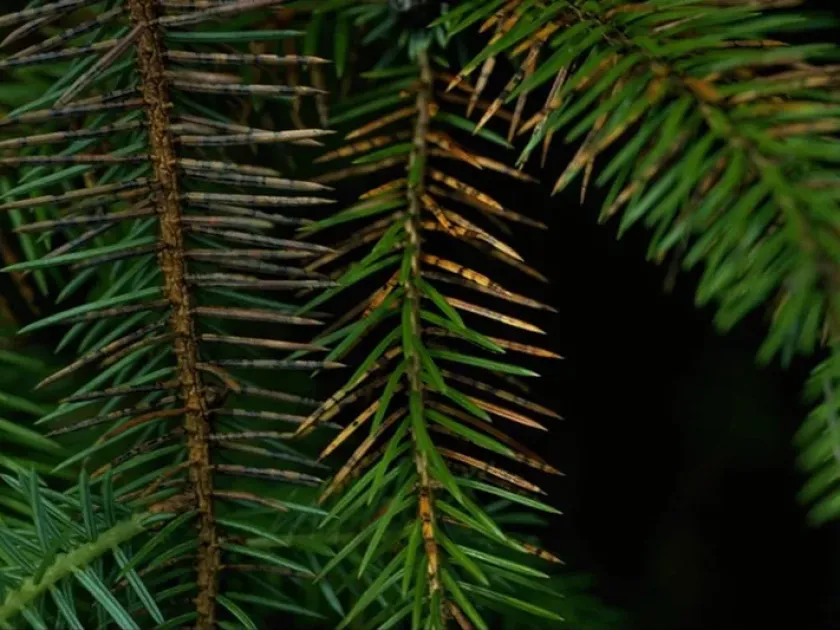
Initial symptoms include the yellowing of individual needles, typically becoming visible in late spring on previous year's growth.
As the infection progresses, the needles turn reddish-brown and eventually drop, causing the foliage to become thin and sparse.
The most reliable diagnostic sign is the presence of thin, black, elongated lines running along the needle's midvein on the underside.
The needles may appear slightly deformed or shriveled in areas where the fruiting bodies have developed and broken through the epidermis.
Heavy infections lead to significant crown thinning, leaving the tree with an unsightly, unhealthy appearance.
Pathogen
The disease is caused by the ascomycete fungus Lirula nervisequia, which specifically targets the needles of fir trees.
The fungus follows a two-year infection cycle, developing its mycelium within the needle tissues before producing reproductive structures.
During the second year, the fungus forms dark, shiny, linear fruiting bodies (apothecia) along the midrib on the underside of the needles.
The pathogen spreads through the release of ascospores, which are dispersed by rain splash and wind during the summer months.
This fungus is highly host-specific, primarily affecting various species within the Abies (fir) genus.
Conditions for development
Cool, wet weather conditions with frequent rainfall are the primary drivers for the germination and spread of Lirula nervisequia spores.
Dense, overcrowded plantations promote the disease by limiting airflow and keeping humidity levels high within the tree canopy.
Sites with poor drainage or stagnant air are more prone to infection, as these environments favor fungal development.
Increased humidity around the canopy, often caused by heavy foliage or low-lying landscape positions, supports long-term infection cycles.
The disease is most prevalent during summers that follow damp springs, which provide the necessary conditions for massive spore dispersal.
Why it matters
Premature needle loss severely reduces the tree's photosynthetic capacity, leading to a decline in vigor and overall health.
Chronically infected trees exhibit reduced annual shoot growth and may eventually become stunted or weakened.
Trees weakened by Lirula needle cast are more susceptible to secondary infestations by bark beetles and other opportunistic pests.
In ornamental settings, the loss of needles ruins the tree's aesthetic appeal, making it unsuitable for landscape use.
In forest nurseries, high infection rates can result in the loss of entire batches of seedlings, representing a significant economic impact.
Protection
Sanitation is critical; all fallen needles and debris should be collected and destroyed to reduce the local spore load.
Proper spacing during planting is essential to ensure adequate airflow and sunlight penetration, which helps keep foliage dry.
Fungicide applications, particularly those containing copper or sulfur, can be used preventatively during the spore-release window.
Maintaining tree vigor through appropriate fertilization and soil management helps the host resist further colonization.
- Prune away and burn heavily infected branches if the infestation is localized.
- Improve soil drainage to reduce humidity levels in the root zone.
- Monitor young plantations closely during damp weather to catch early outbreaks.
Discussion
No discussions yet — be the first.