
Description
Symptoms
Symptoms initially appear as small, water-soaked spots on leaves and petioles, which eventually enlarge and turn dark brown or black.
In advanced stages, these spots often merge, leading to the collapse of the petiole and premature death of the foliage.
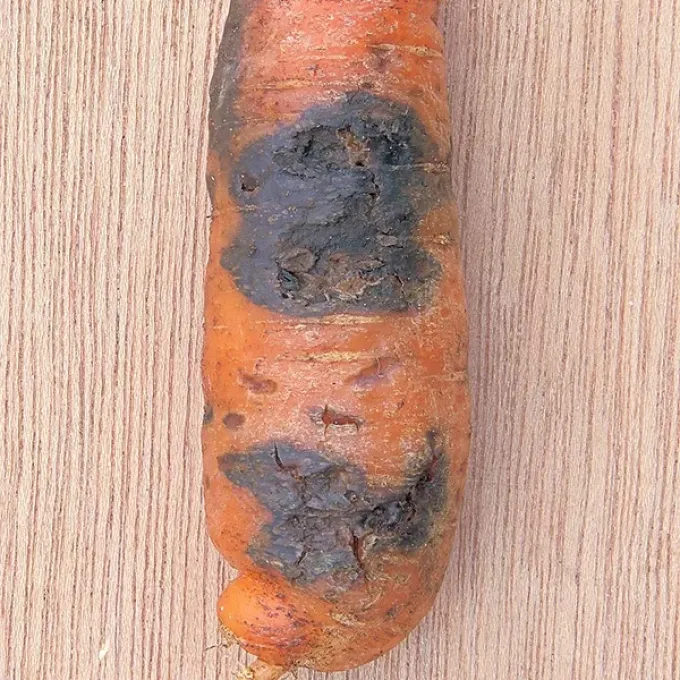
Root symptoms include sunken, firm, or sometimes decaying lesions on the crown or the main root, which can lead to significant post-harvest losses.
Under high-humidity conditions, a visible greyish-to-olive mycelial growth may appear on the surface of the lesions, indicating active sporulation.
Internal tissue browning within the celery root is a hallmark symptom, rendering the produce unmarketable and susceptible to further rot.
Pathogen
The disease is caused by the fungus Mycocentrospora acerina (Hartig) Deighton, which is known for its ability to survive in diverse environmental conditions.
This pathogen is primarily soil-borne and possesses a wide host range, frequently infecting vegetable crops within the Apiaceae family.
The fungus produces conidia, which act as the primary inoculums, dispersing through splashing rain, wind, or mechanical movement of contaminated soil.
It colonizes plant tissues by secreting enzymes that degrade cell wall integrity, leading to rapid tissue necrosis and the breakdown of vegetable structures.
In addition to active mycelial growth, the fungus forms chlamydospores, allowing it to persist in the soil for several years even in the absence of a host plant.
Conditions for development
The development of Mycocentrospora acerina is heavily favored by cool temperatures, typically ranging between 15°C and 20°C.
Excessive soil moisture and high relative humidity are critical prerequisites for the rapid spread of the disease within the field.
Poorly drained soils or waterlogged conditions significantly increase the likelihood of infection, especially in dense plant stands where air circulation is restricted.
Wounds caused by mechanical cultivation or pest feeding facilitate the entry of fungal spores into the plant's vascular and parenchymal tissues.
Extended periods of wet weather during the growing season serve as a catalyst for epidemic-level outbreaks of the disease.
Why it matters
The damage caused by this pathogen includes substantial yield reduction due to the destruction of both the vegetative foliage and the root system.
Infected celery shows significantly reduced aesthetic value, making it unsuitable for fresh market sales and retail distribution.
Post-harvest storage is severely compromised as the fungus continues to proliferate, causing secondary infections and rapid decomposition of stored crops.
Persistent soil contamination forces producers to avoid planting susceptible crops in affected fields for multiple growing seasons.
The need for intensive chemical management programs adds to production costs and poses challenges for integrated pest management systems.
Protection
Practicing long-term crop rotation is the most effective cultural method to reduce the inoculum load in the field over time.
Sanitation practices, including the removal and destruction of crop debris after harvest, are essential to minimize overwintering sites for the fungus.
Applying preventative fungicides, when local weather conditions favor disease development, is a standard approach to managing the spread.
Improving soil drainage and optimizing plant density to ensure adequate airflow can significantly lower the risk of severe infections.
Selecting certified disease-free seeds or transplants is a critical step in preventing the introduction of the pathogen into clean growing areas.
Pathogens and affected parts
Affects crops · 1
Discussion
No discussions yet — be the first.