
Licea
Licea
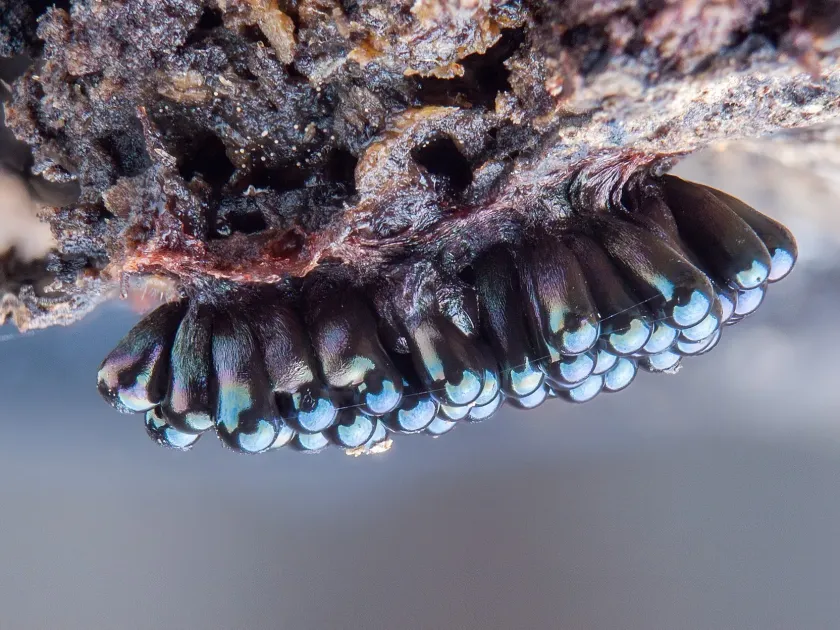
Description
Symptoms
The most recognizable sign of a Licea infection is the appearance of tiny, discrete sporangia directly on the surface of stems, leaves, or plant debris.
These structures are typically globular or elongated, often ranging in color from dark brown to black, giving the affected plant part a speckled or dirty appearance.
Unlike fungal mycelium, which is often thread-like and expansive, the fruiting bodies of Licea are distinct, compact, and often clustered together in specific damp zones.
The spores released from these sporangia are easily dispersed by wind and water, meaning that under favorable conditions, the colonization can spread rapidly across a plant's lower foliage.
Affected areas may appear as dark, dusty patches that can be easily wiped away, which helps differentiate them from tissue necrosis caused by actual pathogenic fungi or bacteria.
Pathogen
Licea is a genus of myxomycetes, commonly known as slime molds. These organisms are fascinating biological entities that belong to the kingdom Protista rather than the kingdom Fungi, although they are often studied alongside plant diseases due to their presence in agricultural environments.
The life cycle of Licea involves a mobile stage called a plasmodium, which feeds on bacteria, decaying organic matter, and microbial spores. Under specific environmental cues, the plasmodium concentrates and forms spore-bearing structures called sporangia.
These organisms do not possess the enzymatic ability to digest live plant tissue, meaning they are not obligate parasites. They function primarily as saprotrophs that thrive in moisture-rich environments containing abundant organic debris.
In agricultural practice, their presence serves as a bioindicator of high humidity levels and insufficient aeration within a crop canopy or soil surface.
While Licea species are not traditional plant pathogens, their classification as slime molds often causes confusion among growers who may mistake their growth for fungal infections.
Conditions for development
The proliferation of Licea is almost entirely dependent on high humidity and prolonged periods of wetness, such as dew, fog, or excessive irrigation.
The availability of decaying organic matter or mulch provides the necessary nutrients for the plasmodial stage to thrive and eventually produce fruiting bodies.
Poor ventilation and overcrowded planting density create microclimates where humidity remains trapped, which is an ideal environment for Licea development.
Temperature fluctuations, particularly moderate temperatures following heavy rainfall, trigger the transition from the vegetative plasmodial stage to the reproductive sporangium stage.
In greenhouses, insufficient drainage and a lack of soil aeration are major factors that allow slime molds to establish and spread on seedling trays and substrates.
Why it matters
Direct damage to the plant's structural integrity is negligible, as Licea does not feed on the plant itself. However, the presence of these slime molds is harmful in several indirect ways.
The accumulation of sporangia on the surface of leaves can physically obstruct stomata and inhibit photosynthesis, which over time reduces the plant's overall vitality and growth rate.
The damp environment created by these slime molds can become a breeding ground for other, more aggressive pathogens that are capable of infecting and killing plant tissues.
Marketability is a major concern; fruits or foliage covered in slime mold fruiting bodies are aesthetically unpleasing and fail to meet commercial standards for fresh produce.
In seedlings, the presence of Licea indicates that the growing environment is too wet, which increases the risk of damping-off diseases and other soil-borne infections.
Protection
The primary control method for Licea is the precise management of moisture. This includes avoiding over-irrigation and ensuring the substrate or soil has proper drainage.
Increasing plant spacing and implementing effective pruning practices will improve air circulation and help the canopy dry out quickly after rain or irrigation.
Sanitation is critical; removing decaying plant materials and dead leaves from the base of the crop eliminates the primary food source and habitat for the slime mold.
If chemical intervention is necessary, fungicides used for common fungal control (such as copper-based products or others) often inhibit the development of slime molds by altering the surface conditions.
- Improve ventilation in greenhouses and field plantings.
- Remove debris to reduce saprotrophic growth.
- Maintain low humidity during seedling establishment.
- Use non-organic mulch where appropriate.
Discussion
No discussions yet — be the first.