
Leucostoma canker
Leucostoma
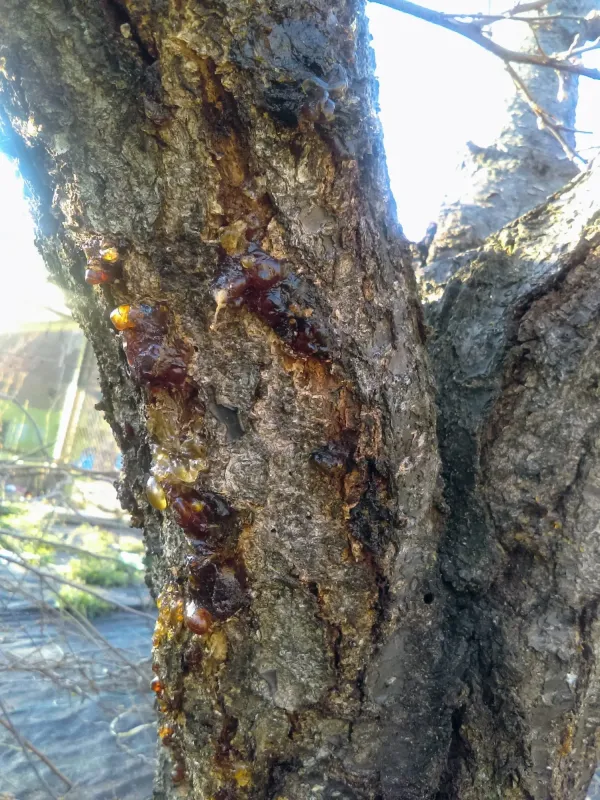
Description
Symptoms
The most prominent sign is the sudden dieback of branches or twigs, with leaves on affected parts wilting and turning yellow prematurely.
Infected areas of the bark become discolored, often turning reddish-brown or sunken, and frequently develop deep cankers or lesions.
Small black pimple-like structures (the fungal fruiting bodies) emerge through the bark surface as the infection progresses within the tree.
During periods of high humidity, these structures may exude sticky masses of spores that can be seen as droplets or small tendrils.
If the infection reaches the main trunk, it causes circular lesions that girdle the tree, ultimately leading to the decline and death of the entire plant.
Pathogen
Leucostoma canker is caused by ascomycete fungi from the Leucostoma genus, most notably Leucostoma cincta and Leucostoma persoonii.
These fungi are classified as wound parasites that gain entry into the tree's vascular system through cracks, winter injury, sunscald, or pruning cuts.
Once inside, the fungus colonizes the bark and cambium layers, causing the breakdown of tissue and obstructing the movement of nutrients and water.
The disease process involves the formation of fruiting bodies called pycnidia, which manifest as small, dark pustules on the infected bark surface.
The fungus survives on diseased bark and twigs, releasing spores into the environment that are spread by rain splash, wind, and pruning tools.
Conditions for development
Tree vulnerability is greatly increased by winter injury and significant temperature fluctuations that cause bark splitting and sunscald.
Frequent spring rains and high humidity are critical factors, as moisture is required for spore germination and infection of open wounds.
Poor orchard hygiene, such as failing to disinfect pruning tools between trees, allows the pathogen to spread easily throughout the grove.
Any mechanical damage caused by insects, equipment, or harvesting operations provides entry points for the fungal spores.
Older trees, as well as those suffering from poor nutrition or drought stress, are significantly more susceptible to successful colonization by the fungus.
Why it matters
Leucostoma canker is a highly destructive disease, particularly for stone fruit trees, capable of causing widespread loss of scaffold limbs.
The reduction in the tree’s photosynthetic capacity due to branch dieback results in lower fruit yields and poor quality harvests.
Persistent infections weaken the tree, making it susceptible to secondary stressors, including other diseases and insect infestations.
If left untreated, the disease spreads rapidly, leading to the economic failure of the orchard due to the need for extensive removal and replacement of trees.
The cumulative damage reduces the productive lifespan of the orchard and significantly increases maintenance costs related to sanitation and repair.
Protection
Effective management begins with strict sanitation: pruning out all infected branches during dry weather, ensuring cuts are made into healthy tissue.
All pruning tools must be disinfected regularly, and large pruning wounds should be protected to prevent pathogen entry.
Maintaining tree vigor through proper irrigation, fertilization, and protection against sunscald with white latex paint is essential for prevention.
Copper-based fungicide applications in early spring, before bud break, can reduce the amount of inoculum present on the bark.
Regular monitoring and removal of dead wood prevent the buildup of fungal spores and protect the long-term health of the orchard.
Discussion
No discussions yet — be the first.