
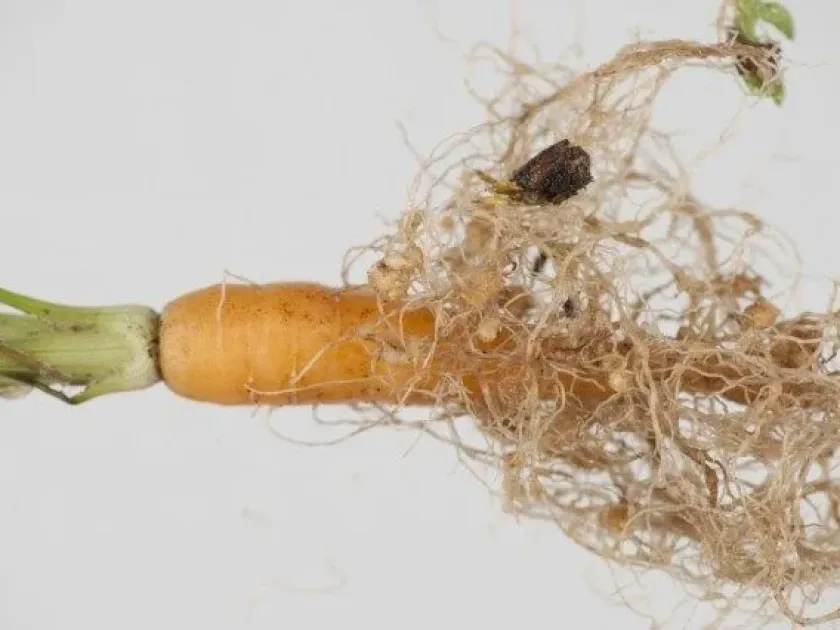
Description
Symptoms
The primary sign of infection is general stunted plant growth: plants appear undersized, with yellowing leaves that fall off prematurely.
On potato tubers, grey or lead-colored spots form under the skin, which eventually crack, turning the underlying tissue into a dry, powdery mass.
In citrus, nematodes cause "slow decline," a condition where the root system proliferates but loses the ability to absorb nutrients and water effectively.
Aerial parts of the plants may exhibit leaf curling, stem deformation, and the development of galls or swellings where parasite colonies concentrate.
Internal tissues of infected fruits and roots show a loose consistency, necrotic areas, and a change in color to brown or black upon sectioning.
Pathogen
The causative agents are microscopic parasitic worms of the genera Ditylenchus (stem) and Pratylenchus (lesion), belonging to the phylum Nematoda.
These organisms are endoparasites that penetrate plant tissues through stomata, micro-cracks, or mechanical injuries using specialized mouthparts called stylets.
The biological cycle involves several larval stages capable of maintaining viability in the soil and plant debris for long periods under unfavorable conditions.
Nematode reproduction occurs intensively within the host tissue, leading to the destruction of cell walls and the disruption of the plant's metabolism.
These parasites have a broad host range, affecting not only potatoes and citrus but also various vegetable crops, cereals, and many weed species.
Conditions for development
Development and dispersal of stem nematodes depend on soil moisture and ambient temperature, with the optimal range being between +15 and +22 degrees Celsius.
Heavy clay soils facilitate the long-term survival of larvae, while light sandy soils promote easier migration in search of new plant roots.
The primary source of infection is usually contaminated planting material: potato tubers, fruit tree nursery stock, or seeds carrying nematode cysts.
High planting density and lack of proper crop rotation create ideal conditions for the pest population to build up to catastrophic levels within a few seasons.
Nematodes spread within fields via irrigation water, contaminated agricultural tools, and the transport of infested soil on machinery or footwear.
Why it matters
The damage caused by stem nematodes leads to the total loss of marketability, rendering the produce unsuitable for sale or long-term storage.
Heavy infestation of potato fields results in yield reductions of 40-70%, with significant crop failure possible in favorable years for the pest.
Parasitism often creates entry points for secondary infections—bacterial and fungal pathogens that accelerate the decay of infected plant tissues.
In citrus orchards, the pest leads to reduced fruit quality, smaller harvest sizes, and the gradual wilting and death of entire trees.
Economic losses include not only direct yield reduction but also the costs associated with quarantine measures and the necessity of replacing planting stock.
Protection
Effective control is based on strict crop rotation including non-host plants, such as cereals or specific cover crops like mustard with phytosanitary properties.
The use of healthy, certified planting material is the most crucial factor in preventing the introduction of the pest into clean fields.
Thermal disinfection of potato tubers in hot water before planting can eliminate surface and some internal larvae if temperature protocols are strictly followed.
The application of chemical nematicides is justified only under conditions of high soil infestation and must be performed according to safety regulations.
Thorough removal of plant debris, deep plowing, and timely weed management are essential practices to significantly reduce the pest population density.
Pathogens and affected parts
Affects crops · 2
Discussion
No discussions yet — be the first.