
Phytomoniasis
Kinetoplastea
Description
Symptoms
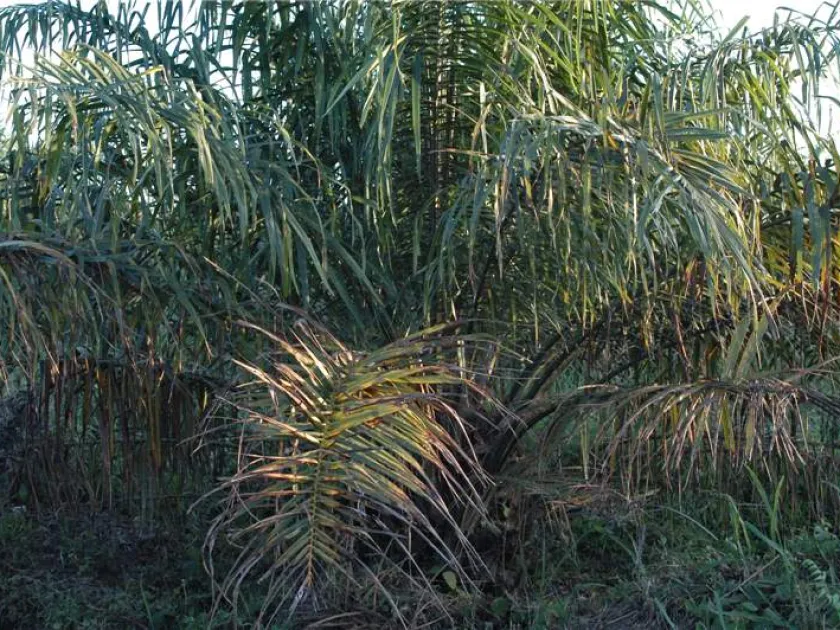
The clinical symptoms of phytomoniasis often mimic other vascular diseases, such as lethal yellowing. Initial signs include leaf chlorosis, which starts at the margins and progresses inward, leading to eventual necrosis of the leaf blades.
Upon inspection of the plant's vascular system, one can observe browning or necrosis within the phloem tissues. This is caused by the physical accumulation of protozoa and the resulting damage to the conductive elements.
In palms, the disease manifests as the drying of young leaves and the collapse of the apical bud. Fruits often become deformed, fail to ripen properly, and may drop prematurely, significantly reducing crop yields.
Because the disease affects the transport of nutrients, the entire plant undergoes progressive decline. In advanced stages, root growth is severely restricted, leading to the collapse of the plant's structural integrity.
Definitive diagnosis requires laboratory confirmation, such as PCR testing or microscopic examination of phloem sap, to distinguish these parasites from other plant pathogens.
Pathogen
The pathogens responsible for this disease are flagellated protozoa of the class Kinetoplastea, belonging to the genus Phytomonas. These organisms are highly specialized parasites that inhabit the phloem tissue of various vascular plants.
Unlike bacteria or fungi, these are single-celled eukaryotic organisms. Their classification is based on the presence of a kinetoplast, a network of DNA located within their single large mitochondrion, which is a signature feature of this group.
The transmission of these parasites is mediated by insects, primarily true bugs (Hemiptera), such as those from the families Coreidae and Pentatomidae. The protozoa cycle between the insect vector and the plant host.
Inside the plant, the organisms reside in the sieve tubes, effectively competing with the plant for sugars and other essential nutrients transported through the phloem. This parasitic interaction leads to severe physiological dysfunction.
Several species have been identified, each showing a preference for specific host plants, most notably coffee (Coffea arabica), coconut palms (Cocos nucifera), and oil palms (Elaeis guineensis).
Conditions for development
The prevalence of phytomoniasis is heavily dependent on the presence and density of insect vectors. Warm, humid tropical environments are conducive to the rapid reproduction of these bugs, thereby increasing infection rates.
Geographical areas where agricultural plantations are situated in close proximity to native vegetation serve as ideal reservoirs for the vectors, facilitating the spread of Phytomonas into the crop fields.
Environmental temperatures between 25°C and 30°C are optimal for both the insect vectors and the multiplication of the kinetoplastids within the plant. Consequently, seasonal shifts in climate can trigger outbreaks.
Poor agricultural practices, such as lack of proper fertilization and weed control, weaken the plant's natural resistance, making them more susceptible to successful colonization by these protozoan parasites.
The abandonment of fields and the accumulation of crop debris provide breeding grounds for the insect vectors, which then migrate to active plantation areas, sustaining the infection cycle year after year.
Why it matters
Phytomoniasis is a devastating disease in tropical agriculture. In regions heavily dependent on coffee and palm oil production, outbreaks can cause substantial economic losses, sometimes forcing the total abandonment of affected plantations.
The damage is primarily metabolic. By interfering with the phloem transport system, the parasites deprive the plant of its vital energy resources, leading to reduced growth, poor fruit quality, and lower yield.
Furthermore, the systemic nature of the infection means that once a plant is colonized, it is difficult to treat, often necessitating the complete removal and destruction of the infected tree to prevent the spread to neighbors.
The economic impact is exacerbated by the costs associated with increased monitoring, insecticide applications to control vectors, and the loss of long-term investments in perennial plantations.
There is also a broader impact on local food security and biodiversity, as the disease can limit the variety of crops farmers feel safe planting, leading to economic instability in vulnerable regions.
Protection
Sanitation is the cornerstone of management. Immediate identification, removal, and burning of infected plants are essential to reduce the inoculum levels within the field and minimize the risk to healthy plants.
Managing the insect vector population is critical. This involves the strategic use of insecticides and the maintenance of clean fields, including the removal of weeds that serve as alternative hosts for the bugs.
Implementing integrated pest management (IPM) strategies, which prioritize biological control and the use of pheromone traps, helps keep vector populations at manageable levels without over-reliance on chemicals.
Encouraging tree health through balanced nutrition and proper spacing between plants improves individual resilience. Strong, well-nourished plants are generally less attractive to the insect vectors.
Ongoing research into resistant germplasm is the most sustainable approach for the future. Breeding programs aimed at identifying and cultivating resistant varieties remain the best hope for controlling phytomoniasis in the long term.
Discussion
No discussions yet — be the first.