
Apple mosaic virus
Ilarvirus apmv
Description
Symptoms
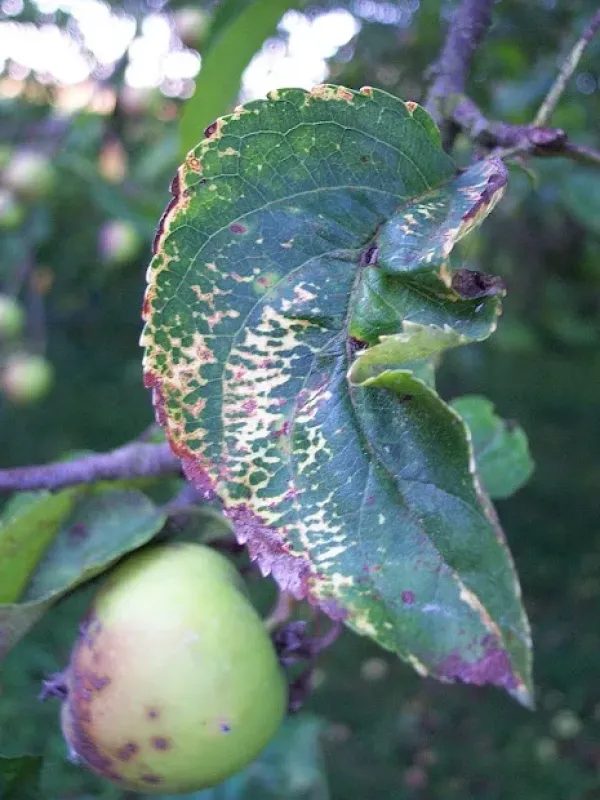
Symptoms are most visible during the early spring and summer months on newly developed leaves. The most classic sign is the appearance of chlorotic spots, lines, or rings across the leaf surface.
These spots often exhibit a mosaic pattern, with shades of yellow and light green appearing against the healthy dark green tissue of the leaf.
In some cultivars, the virus manifests as bright, broad stripes running parallel to the leaf veins. In severe cases, the leaf margins may become distorted, curled, or even necrotic as the season progresses.
It is important to note that symptoms can be uneven; some branches may show obvious signs while others appear completely healthy, which often misleads growers into ignoring the infection.
Overall, affected trees display a slower growth rate compared to their healthy counterparts, and they may show signs of stunted development in both twigs and canopy architecture.
Pathogen
The apple mosaic virus is a member of the Ilarvirus genus. It consists of a single-stranded RNA genome protected by a protein coat, which requires a living host to survive and multiply.
This pathogen acts systemically, spreading through the tree's vascular system to infect all parts of the plant, including leaves, stems, and fruits. It resides within the plant cells for the entire life of the tree.
The virus is primarily transmitted through vegetative propagation methods. Using infected scions or rootstocks when grafting is the most common way for the virus to enter new commercial orchards.
Mechanical transmission occurs frequently due to human activity. Contaminated pruning equipment, such as saws and shears, can easily transfer the virus from an infected tree to a healthy one.
While the virus is named after apple trees, it possesses a broad host range, including various stone fruits and nuts, making it a widespread concern for horticulturalists globally.
Why it matters
The primary economic impact of apple mosaic virus is a significant reduction in fruit yield. Over time, infected trees become less productive and fail to meet commercial quality standards.
Fruits harvested from infected trees are often smaller, lack proper coloration, and may suffer from impaired flavor profiles, which significantly lowers their market value.
The disease reduces the tree's overall vigor and hardiness. Infected specimens become more susceptible to environmental stresses, including winter injury and extreme drought conditions.
In intensive orchards, the presence of the virus necessitates the premature removal of trees, leading to financial losses and the need for costly replanting programs.
The virus can also interfere with the tree's physiological balance, shortening its lifespan and decreasing its ability to recover from other opportunistic diseases or pest attacks.
Protection
There are no chemical treatments or pesticides available that can cure an established viral infection within a tree. Management relies strictly on sanitation and preventative practices.
Always source nursery stock from reputable suppliers that provide virus-indexed and certified pathogen-free plant material. Never use budwood from an unknown source.
Implement strict hygiene protocols for all pruning equipment. Disinfect blades using alcohol solutions or chlorine-based agents between every tree to prevent mechanical transmission of the virus.
Identify and rogue (remove) symptomatic trees as early as possible. Once a tree is diagnosed with the virus, it should be uprooted and destroyed to prevent it from acting as an inoculum source for the rest of the orchard.
Maintain general orchard health to ensure trees can tolerate minor stresses, but focus primarily on exclusionary measures to keep the virus out of the planting site in the first place.
Discussion
No discussions yet — be the first.