
Hypochaeris mosaic
Hypochaeris mosaic virus
Description
Symptoms
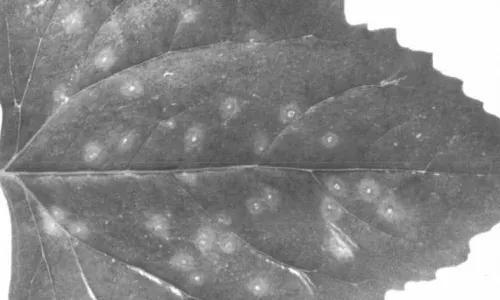
The primary symptom is a distinct mosaic pattern on leaves, characterized by irregular patches of light green, yellow, and dark green colors. This mosaic is the direct result of chlorophyll breakdown.
Deformation of the leaf blade is common, including crinkling, puckering, and curling of the margins. These distortions occur due to uneven growth rates in infected versus healthy leaf tissues.
Infected plants show significantly reduced growth rates compared to healthy neighbors. This is often accompanied by shortened internodes, which can give the plant a stunted, rosette-like appearance.
In advanced stages of the disease, chlorotic spots may evolve into necrotic lesions, indicating severe damage to the plant's photosynthetic apparatus and premature tissue death.
- characteristic mosaic discoloration on leaves
- leaf crinkling, curling, and distortion
- stunted plant growth and reduced vigor
- chlorotic spotting progressing to necrosis
- formation of growth-inhibited rosettes
Pathogen
The disease is caused by the Hypochaeris mosaic virus (HypMV), a viral pathogen primarily affecting members of the Asteraceae family. This virus functions as an intracellular parasite, exploiting the host plant's cellular machinery to replicate its genetic material.
It is classified as a systemic viral disease. Once the virus enters the plant, it travels through the phloem, infecting tissues across the entire organism and disrupting normal metabolic processes.
The biological nature of the virus includes its ability to persist in the root systems and perennial parts of host weeds during dormant seasons, ensuring a continuous supply of inoculum in the field.
The genetic structure of the virus allows it to adapt efficiently to environmental pressures, making it a persistent challenge for plant pathologists and farmers alike.
Transmission occurs through specific insect vectors or through mechanical contact with wounded plant tissues, making the virus highly contagious in dense plant populations.
Conditions for development
Disease development is highly dependent on favorable environmental conditions, particularly moderate temperatures and humidity levels, which encourage the activity of insect vectors.
Aphids are recognized as the primary vectors for this virus. They spread the pathogen during the feeding process, where the virus is picked up from an infected source and transmitted to healthy plants.
High population densities of host weeds around agricultural fields act as primary reservoirs, facilitating the initial infection of crop plants as insect vectors migrate during the growing season.
Mechanical transmission is facilitated by human activity, including the use of contaminated farm equipment during weeding, pruning, or harvest, which creates open wounds on leaves that serve as entry points.
Drought conditions often force insect populations to move from dried-out vegetation to irrigated fields, creating a surge in virus transmission rates during mid-summer months.
Why it matters
The primary harm caused by Hypochaeris mosaic is the severe reduction of photosynthetic efficiency. This leads to a systemic exhaustion of the plant, resulting in poor growth and lower overall vitality.
For agricultural ecosystems, the disease is harmful because it turns host weeds into a continuous source of infection that threatens neighboring crop plants, particularly those belonging to the same family.
Infected plants exhibit increased susceptibility to secondary infections, such as fungal or bacterial pathogens, which exploit the weakened defense mechanisms of the virus-stricken plant.
In terms of production, the disease leads to uneven plant development and stunted yields, complicating agricultural maintenance and potentially reducing the quality of the final harvest.
Economic damage also arises from the need for increased insecticide applications to control the vectors, which adds significant costs to the production cycle.
Protection
The most effective strategy for controlling the disease is rigorous weed management. Eliminating potential host reservoirs in and around the field is critical to preventing the virus from establishing itself.
Managing insect vector populations, particularly aphids, is essential. Applying systemic insecticides during the early stages of the growing season can significantly reduce the probability of viral transmission.
Adhering to strict phytosanitary practices, such as cleaning equipment and tools between different parts of the field, helps to eliminate mechanical transmission pathways.
Employing healthy, virus-free seeds and planting material is the first line of defense in minimizing the risk of introducing the virus into a clean field environment.
Regular field scouting and immediate removal of symptomatic plants help to contain the spread of the virus, effectively breaking the cycle of infection and maintaining the health of the overall crop stand.
Discussion
No discussions yet — be the first.