
Description
Symptoms
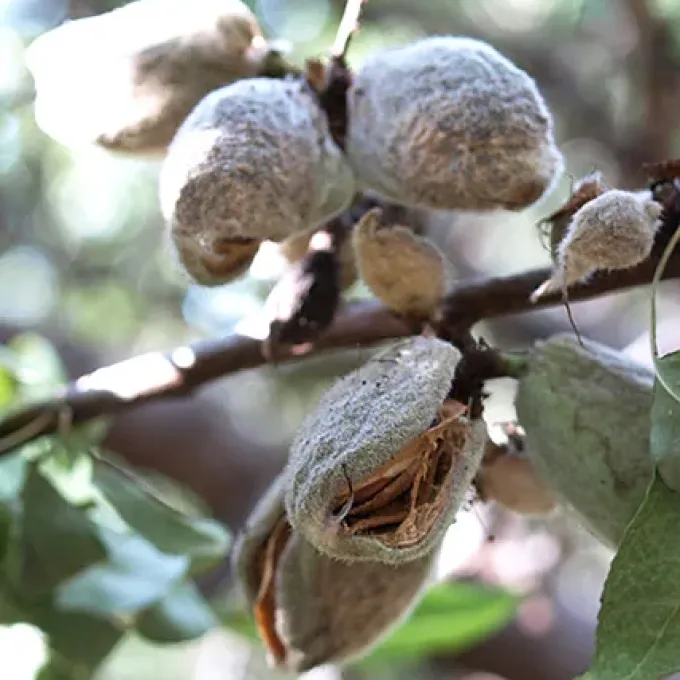
The most recognizable symptom is a fluffy, grey to dark-colored fungal growth that appears on the surface of the hull during the maturation phase.
Affected tissues become necrotic and soft, often exhibiting a watery rot that may spread to the hull-shell interface as the season progresses.
As the infection advances, the hull may crack prematurely, exposing the inner shell and making the nut kernel vulnerable to secondary colonization.
In severe cases, the entire hull can become mummified, clinging to the branches, or the fruits may drop prematurely from the canopy.
The characteristic fermentation odor associated with Rhizopus decay is often noticeable when inspecting heavily infected clusters in the orchard.
Pathogen
Hull rot of almond is primarily caused by fungal species of the genus Rhizopus, most notably Rhizopus stolonifer, the common bread mold.
These fungi are opportunistic pathogens that thrive as saprophytes on decaying plant material but can aggressively infect weakened or damaged almond hulls.
The fungus produces a rapid-growing white mycelium that turns grey or black as it develops numerous sporangia filled with reproductive spores.
The spores are airborne and highly abundant in the environment, allowing them to easily land on susceptible almond hulls and initiate infection.
The pathogen overwinters in the soil and on crop debris, creating a continuous cycle of infection within almond-growing regions.
Conditions for development
Warm temperatures combined with high humidity are the primary environmental drivers that favor the rapid development of hull rot.
Mechanical injuries caused by insect feeding, such as navel orangeworm or mites, provide the perfect entry points for the fungus to penetrate the hull.
Dense tree canopies that lack proper airflow maintain a microclimate of high moisture, significantly increasing the probability of fungal outbreaks.
Late-season rainfall or excessive irrigation during the hull-split stage can lead to tissue hydration that encourages fungal colonization.
The presence of unharvested debris or dropped fruit on the orchard floor acts as a significant reservoir for the pathogen to spread to healthy trees.
Why it matters
The disease causes significant economic losses by reducing the marketable yield and compromising the overall quality of the harvested almond kernels.
Infected fruits are highly prone to rapid deterioration during storage and transport, leading to spoilage of healthy nuts within the same bulk.
Hull rot can affect the tree's health by causing localized twig dieback, especially if the fungus moves from the hull into the woody tissue.
The necessity for extra labor to remove infected fruits and the potential cost of chemical treatments reduce the overall profitability of the orchard.
Quality standards in the global market are stringent, and the presence of fungal residues can lead to the rejection of entire shipments of almonds.
Protection
Effective management begins with integrated pest management (IPM) to control insects that cause physical damage and promote fungal infection.
Proper orchard sanitation, including the removal and destruction of mummified hulls and fallen fruit, is essential to lower the primary inoculum load.
Pruning strategies should focus on maintaining open canopies to improve air circulation and sunlight penetration, reducing moisture levels.
Timely harvest is critical; ensuring almonds are collected as soon as they reach maturity minimizes the exposure period to fungal spores.
- Application of preventative fungicides during high-risk periods.
- Rapid drying of nuts post-harvest to reach safe storage moisture levels.
- Monitoring weather patterns to adjust irrigation before hull split.
Pathogens and affected parts
Affects crops · 1
Discussion
No discussions yet — be the first.