
Description
Symptoms
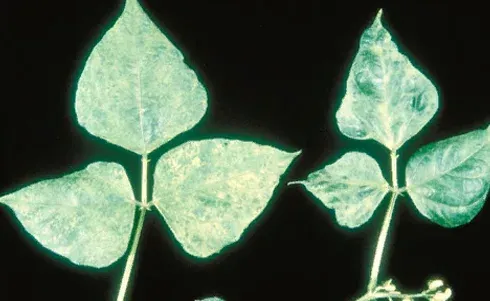
Initial symptoms are characterized by a distinct mosaic pattern on the leaves, featuring mottled areas of light green and yellowish-green discoloration.
Affected leaves frequently show significant morphological changes, including down-curling of the margins, puckering of the leaf surface, and clearing of the veins.
Infected hop plants exhibit severe stunting, with shortened internodes and a reduced overall vigor compared to healthy plants in the same yard.
Flowering is typically delayed in infected plants, leading to irregular or poor development of hop cones, which are essential for commercial harvesting.
In advanced stages or highly susceptible varieties, premature senescence of lower leaves occurs, resulting in sparse foliage and weakened vine health.
Pathogen
The causative agent of the disease is the Hop mosaic virus (HMV), a member of the Carlavirus genus. It is a systemic viral infection that specifically affects Humulus lupulus.
The virus is primarily transmitted through mechanical means, such as the use of infected rhizomes for propagation or during standard cultivation practices like pruning and training.
Insect vectors, particularly various species of aphids, are known to facilitate the spread of the virus within and between hop yards in field conditions.
Once inside the plant, the virus colonizes the phloem tissue, establishing a permanent, systemic infection that persists throughout the lifespan of the perennial hop plant.
HMV often occurs in co-infection with other viruses, which can lead to complex disease symptoms and exacerbates the negative impact on plant physiology.
Why it matters
The primary economic impact of Hop mosaic is a substantial reduction in yield due to the stunted growth and reduced formation of high-quality hop cones.
The quality of the hops is severely compromised, with a significant decrease in lupulin content and essential oils, affecting the final brewing characteristics.
Infected rootstocks demonstrate lower winter hardiness, leading to plant mortality and the subsequent formation of gaps in the yard that require replanting.
Long-term infestation decreases the overall economic viability of the hop farm, increasing the financial burden of replacing compromised stock with virus-tested plants.
Viral infection suppresses the plant's natural defense mechanisms, making the vines more susceptible to secondary fungal and bacterial infestations.
Protection
The most effective management strategy is the exclusive use of certified virus-indexed planting material derived from tissue culture programs.
Rigorous sanitation protocols must be implemented, including the regular disinfection of pruning and training tools to minimize mechanical transmission.
Integrated Pest Management (IPM) focusing on the control of aphid populations is essential to prevent the spread of the virus within the hop yard.
Regular monitoring of the yard for symptomatic plants, followed by immediate rogueing and disposal, helps contain localized outbreaks.
Maintaining adequate spatial separation between older, potentially infected plantings and new, virus-free yards is a critical prophylactic measure.
Pathogens and affected parts
Affects crops · 1
Discussion
No discussions yet — be the first.