
Hemitrichia
Hemitrichia
Description
Symptoms
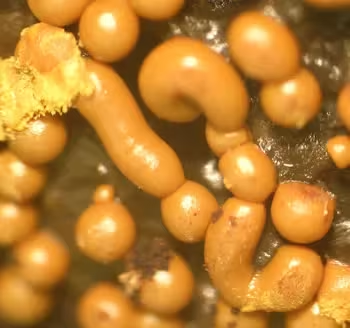
The primary symptom of Hemitrichia is the formation of distinctive fruiting bodies, which often appear as bright yellow, orange, or brownish tufts.
Early signs include a slimy, jelly-like mass covering parts of the plant, especially those near the ground or in highly humid areas.
As they mature, these masses transform into small, stalked, or cushion-like structures that are visible to the naked eye.
Upon rupturing, these fruiting bodies release a large number of spores, appearing as a dusty or powdery residue on the plant surface.
Unlike pathogenic fungal infections, these growths do not cause tissue necrosis or lesions directly underneath the point of attachment.
Pathogen
Hemitrichia is a genus of slime molds belonging to the class Myxomycetes, which are distinct from true parasitic fungi.
They exist as mobile, amoeba-like organisms known as plasmodia during their vegetative growth stage, capable of moving across surfaces.
These organisms are saprotrophs, feeding on decaying organic matter rather than deriving nutrients from living plant tissues.
Common species such as Hemitrichia clavata are frequently found in damp environments, including soil, rotting wood, and leaf litter.
While they are not phytopathogens in the traditional sense, their appearance on crops often signals underlying moisture or sanitation issues.
Conditions for development
Development of Hemitrichia is strictly dependent on high humidity and moisture levels, which are essential for their vegetative movement.
Optimal growth conditions include temperatures between 15 and 25 degrees Celsius combined with high relative humidity and lack of airflow.
Areas with poor drainage, heavy rainfall, or over-irrigation are primary targets for colonization by these slime molds.
The presence of decaying organic matter or debris in close proximity to plant stems provides a necessary substrate for their reproduction.
Dense foliage that prevents evaporation and creates a stagnant microclimate significantly increases the likelihood of their presence.
Why it matters
Hemitrichia does not directly attack or kill living plant cells, so it is generally considered a nuisance rather than a severe disease.
However, it can cause indirect harm by covering leaf surfaces, which physically blocks sunlight and hinders the process of photosynthesis.
Large colonies can clog plant stomata, interfering with transpiration and gas exchange, which may stress the affected plant.
The presence of slime mold is often an indicator of poor cultural practices, such as excessive moisture retention, which can lead to actual rot.
For commercial growers, the aesthetic damage caused by slime mold growth makes the produce unacceptable for market standards.
Protection
Effective management begins with improving soil drainage and adjusting irrigation practices to prevent water accumulation.
Pruning lower leaves and removing dead plant debris reduces the available surface area for slime mold colonization.
Promoting good airflow through proper spacing of plants and regular weeding helps to dry out the environment quickly.
The use of mulch, such as gravel or clean straw, can help create a barrier between the soil and the plant foliage.
In most cases, mechanical removal and correcting environmental conditions are sufficient to eliminate Hemitrichia without needing chemicals.
Discussion
No discussions yet — be the first.