
Sclerotial stem rot of rice
Helminthosporium sigmoideum
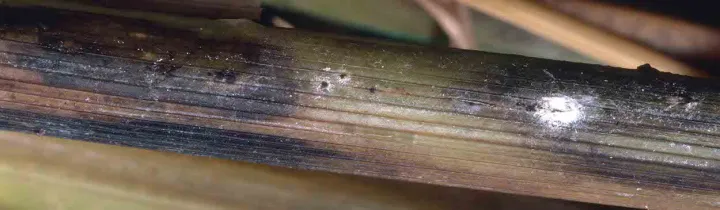
Description
Symptoms
The earliest symptoms usually appear as small, dark, water-soaked spots on the lower leaf sheaths that are in contact with the irrigation water.
As the infection advances, these spots expand and turn black, often showing a distinct gray center, which is typical for this fungal infection.
Inside the infected stems, small, spherical, black sclerotia can be easily identified, which serves as a definitive diagnostic sign of the pathogen.
Severely affected plants show yellowing and drying of the lower leaves, eventually leading to a loss of structural integrity and lodging.
In humid conditions, a sparse grayish mycelial growth may be visible on the surface of the infected culm, indicating active sporulation.
Pathogen
The causative agent of this disease is the fungus Helminthosporium sigmoideum, also known in its sexual stage as Magnaporthe salvinii.
This pathogen persists in the soil and on crop residues through the formation of sclerotia—hardened, melanized mycelial structures that can survive for years.
Under favorable conditions, these sclerotia germinate to produce conidia, which serve as the primary source of infection for young rice plants in the fields.
The fungus is highly specialized to infect the stems and leaf sheaths of rice plants, gradually degrading the plant tissues to derive nutrients.
As the infection cycle concludes, the fungus produces new generations of sclerotia, which are returned to the soil, ensuring the continuity of the disease cycle.
Conditions for development
High relative humidity and warm temperatures (25°C to 30°C) are considered the most conducive factors for the spread of Helminthosporium sigmoideum.
Continuous flooding of rice paddies, if not managed correctly, facilitates the buoyancy and transport of fungal sclerotia and conidia throughout the field.
Over-application of nitrogen fertilizers promotes lush canopy growth, which keeps the lower stems shaded and moist, creating an ideal micro-environment for the fungus.
Poor field sanitation, such as leaving infected straw in the paddies, allows the inoculum to build up over successive planting seasons.
Insect damage to the stem base, particularly from rice stem borers, provides direct entry points for the fungal mycelium to invade the plant tissues.
Why it matters
Sclerotial stem rot causes significant physiological stress to the rice plant, leading to reduced grain filling and overall lower yields.
The weakening of the stems caused by fungal degradation leads to severe lodging, which hinders harvest efficiency and increases grain loss.
The quality of the harvested grain is significantly impaired, often appearing chalky or light, which reduces its commercial value.
The accumulation of sclerotia in the soil creates a long-term problem for farmers, as the field remains a source of infection for future rice crops.
Economic losses are cumulative, involving reduced yield, higher processing costs, and the need for frequent chemical interventions.
Protection
Cultivating resistant rice varieties is the primary and most effective method for managing sclerotial stem rot in major rice-growing regions.
Deep plowing after harvest helps bury infected crop debris deep enough to prevent sclerotia from floating to the surface in the next season.
Effective crop rotation using non-host crops interrupts the survival cycle of the pathogen and helps reduce the overall fungal load in the soil.
Optimizing water management, including periodic drainage of the paddies, reduces the humidity around the base of the plants and suppresses fungal growth.
Application of systemic fungicides at the early stages of disease development is recommended to protect the crop when weather conditions favor infection.
Discussion
No discussions yet — be the first.