
Description
Symptoms
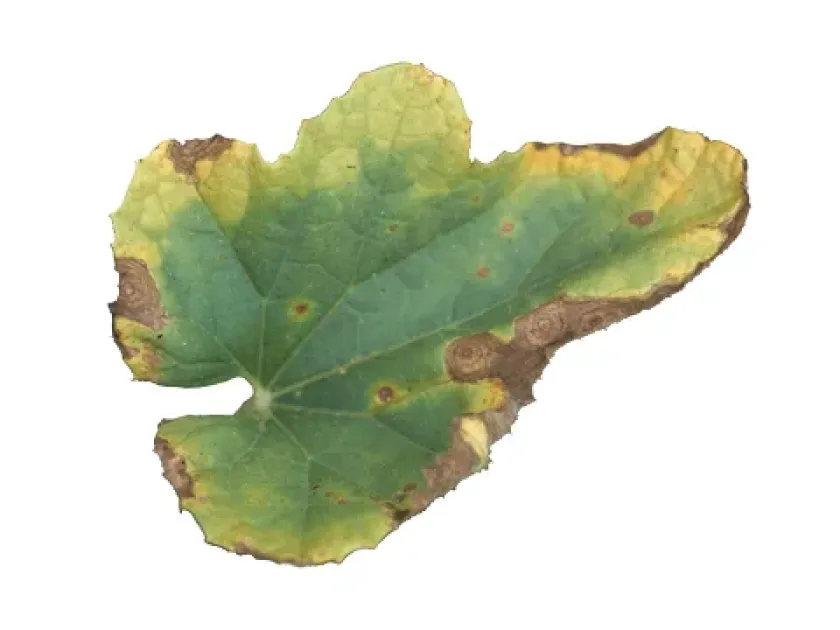
Symptoms typically begin on leaves as small, circular or irregular brown spots that eventually merge, covering large areas of the leaf. These spots often develop a dark border and exhibit visible black pycnidia.
Stem infection is characterized by longitudinal cracking, usually starting at the nodes. A characteristic symptom is the secretion of reddish-brown or amber-colored gummy exudate (ooze) from the lesions.
Fruit infection appears as circular, water-soaked lesions that later become dark and develop a gray fungal growth. As the fruit decays, it becomes soft and inedible, often showing prominent black dots.
As the disease progresses, systemic infection leads to the yellowing and wilting of entire vines, eventually resulting in the collapse of the plant and death of the stem.
- Water-soaked spots on foliage.
- Gummy, resinous exudate on stems.
- Stem cracking and necrotic lesions.
- Black pycnidia on diseased tissue.
- Premature yellowing of leaves.
Pathogen
The causal agent of Gummy stem blight is the fungus Stagonosporopsis caricae (syn. Didymella bryoniae). It is a highly destructive pathogen that specifically targets cucurbitaceous crops, including watermelon, melon, and cucumber.
The fungus overwinters as mycelium and pycnidia on infected crop debris, within soil, and on seeds. It can also persist on greenhouse structures, making sanitation critical for disease management.
The life cycle involves the release of conidia from pycnidia during wet weather. These spores are dispersed by splashing water, rain, irrigation, and wind, allowing the fungus to spread rapidly through the field or greenhouse.
The pathogen primarily enters plants through natural openings like stomata or through wounds caused by insects, mechanical damage, or pruning, making plant health a priority.
It thrives in intensive production systems where crop rotation is absent, as the pathogen can survive for several seasons in the absence of a host.
Conditions for development
Gummy stem blight development is strongly favored by warm and humid conditions. The optimal temperature range for the pathogen's growth is between 20°C and 25°C.
High relative humidity (above 85%) is essential for spore germination and infection. Prolonged leaf wetness resulting from overhead irrigation or morning dew facilitates the infection process significantly.
Poor ventilation within high tunnels and greenhouses creates stagnant air pockets, which promotes the accumulation of moisture on plant surfaces and accelerates disease spread.
Plants under stress—due to nutrient deficiency, excessive nitrogen, or environmental fluctuations—are significantly more susceptible to infection compared to healthy, well-nourished plants.
Cloudy weather with frequent rain cycles during the fruit-set period often triggers severe outbreaks, causing widespread damage to developing fruit and foliage.
Why it matters
The disease causes significant economic loss by drastically reducing marketable yields. Fruit that is infected is unmarketable and susceptible to post-harvest decay.
Total vine death can occur if stem girdling takes place, leading to a complete loss of production for that specific plant and reducing the overall harvest efficiency.
The rapid spread of the disease within a plantation requires intensive chemical intervention, which increases production costs and may lead to issues with pesticide residue management.
Infection significantly reduces the plant's ability to photosynthesize, resulting in smaller, underdeveloped fruit with lower sugar content, which is detrimental to the quality of watermelons.
The presence of the pathogen in the soil mandates a long-term strategy for field management, often requiring land to be fallowed or rotated with non-host crops for several years.
Protection
Using certified, disease-free seed is the first line of defense. Seed treatment with appropriate fungicides helps to eliminate internal and external inoculum effectively.
Strict crop rotation is mandatory; avoid planting cucurbits in the same field for at least three years to allow the soil inoculum levels to decline naturally.
Sanitation practices such as removing and destroying all infected plant parts immediately after detection are crucial for preventing secondary spread within the greenhouse.
Implementing effective ventilation and using drip irrigation instead of overhead watering reduces leaf wetness and creates an environment less conducive to the pathogen's growth.
A preventative fungicide spray program, utilizing systemic and contact products, should be initiated before the symptoms appear, especially in high-humidity periods.
Pathogens and affected parts
Affects crops · 1
Discussion
No discussions yet — be the first.