
Description
Symptoms
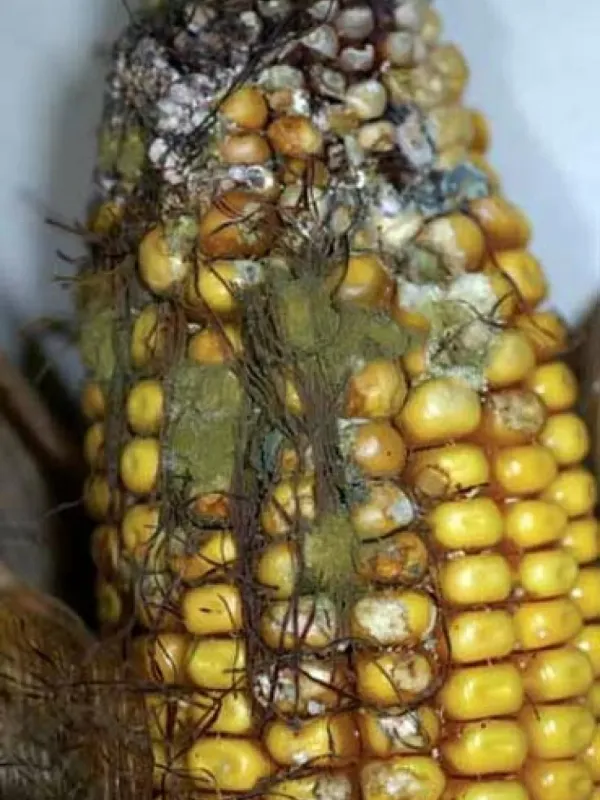
The first noticeable sign of the disease is a gray or ash-colored mold covering the ears. This mold is typically observed on the surface of husks and can spread rapidly under humid conditions.
Small, black, pycnidia-like structures (fruiting bodies of the fungus) appear scattered across the affected parts of the ear. These dots are characteristic symptoms and help differentiate this disease from other ear rots.
Kernels in the infected areas become dull, brittle, and lose their natural color. In advanced stages of infection, the kernels may shrink or rot entirely, covered by the gray mycelial mass of the pathogen.
The cob itself often shows signs of internal decay. When sliced open, the pith (the internal core) appears dark and discolored, indicating that the fungus has colonized the inner tissues of the ear.
Affected ears may exhibit physical deformities, such as stunted growth or curved shapes. Husk leaves may also become matted against the ear due to the dense growth of the fungal mycelium.
Pathogen
Gray ear rot is caused by the pathogenic fungus Botryosphaeria zeae, which specifically targets the ears of maize plants. This pathogen is a significant concern in agricultural regions with favorable environmental conditions for fungal growth.
The fungus overwinters in crop debris left on the soil surface, allowing it to survive between growing seasons. This reservoir of infection is the primary source of inoculum for the next year's corn crops.
The life cycle involves the production of spores that are disseminated by wind and splashing rain. Once these spores land on the susceptible parts of the ear, they germinate and penetrate the internal tissues.
Botryosphaeria zeae is particularly aggressive during the late grain-filling stages. It utilizes the nutrients concentrated in the cob to fuel its rapid mycelial expansion, which can lead to severe tissue degradation.
The biological nature of this pathogen makes it resilient to many traditional control methods, necessitating an integrated approach to crop health management to minimize potential losses.
Conditions for development
High humidity and consistent rainfall during the silking and grain-filling stages are the most critical factors for the development of gray ear rot. The fungus requires moisture to germinate and establish infection.
Temperature plays a vital role in disease progression. The pathogen thrives in moderate to warm temperatures, which are common during the mid-to-late summer period in many corn-growing regions.
Mechanical damage to the ears, primarily caused by insect pests like the European corn borer, provides an easy entry point for the fungus. Insects facilitate the introduction of the pathogen into the healthy tissues of the ear.
High planting densities create poor air circulation within the canopy, leading to a trapped, humid microclimate. This environment prevents the ears from drying out, which significantly increases the risk of fungal infestation.
Poor management of previous crop residues significantly boosts the inoculum load in the field. Fields where maize is grown continuously are at a much higher risk of epidemic outbreaks of gray ear rot.
Why it matters
The primary impact of gray ear rot is a significant reduction in grain yield and quality. Infected ears are often unfit for human consumption or high-grade industrial processing due to fungal damage.
There is a potential risk of mycotoxin contamination associated with various ear rots, which can make the grain hazardous for livestock feed. Strict testing is required for affected batches of grain.
Seed quality is severely compromised in infected fields. Using seeds from diseased plants leads to poor germination rates and weaker seedlings, resulting in lower overall field performance.
Storage of infected maize is problematic. The presence of the fungus increases the risk of further spoilage, leading to additional losses as the decay spreads to healthy grains within the storage facility.
Farmers face economic losses not only from the yield reduction but also from the added labor and costs associated with cleaning, drying, and potentially disposing of substandard, contaminated grain.
Protection
Implementing a proper crop rotation strategy is the most effective way to manage gray ear rot. Rotating maize with non-host crops helps break the life cycle of Botryosphaeria zeae by reducing the inoculum in the soil.
Tillage practices that incorporate crop debris deep into the soil are recommended, as they accelerate the decomposition of infected residues and minimize the chances of pathogen survival.
Integrated pest management (IPM) is essential to control the insect populations that damage corn ears. Reducing insect feeding sites is a direct method of preventing fungal entry into the cob.
Choosing hybrid varieties with improved resistance to ear rots and better husk coverage is a long-term solution. Varieties that mature and dry down quickly are generally less susceptible to late-season infections.
Applying high-quality fungicide seed treatments protects the vulnerable early growth stages. Furthermore, ensuring timely harvest as soon as the grain reaches physiological maturity helps avoid the wet weather window that favors infection.
Pathogens and affected parts
Affects crops · 1
Discussion
No discussions yet — be the first.