
Description
Symptoms
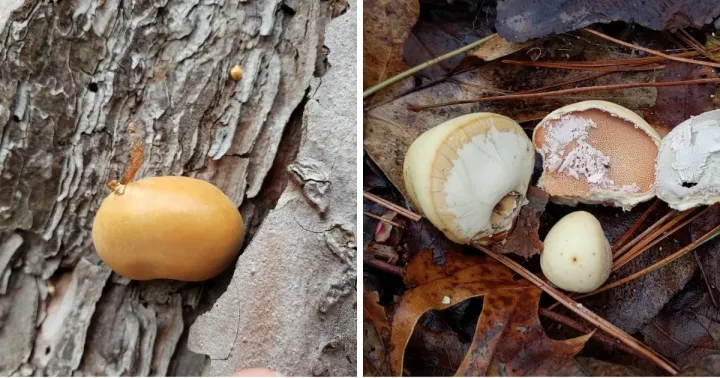
The most distinctive diagnostic feature is the appearance of spherical or hoof-shaped fruiting bodies erupting through the bark.
These fruiting bodies often have a smooth, tan to cream-colored surface and a membrane that covers the spore-bearing surface until maturity.
Upon peeling back the bark of an infected tree, one can observe mycelial mats and wood discoloration indicative of decay.
Infected trees might show thinning of the canopy or chlorosis, although these symptoms are often secondary to the primary infestation by bark beetles.
The presence of beetle exit holes in the immediate vicinity of the fungus is a common observation in the field.
Pathogen
Cryptoporus volvatus is a wood-decay fungus belonging to the Polyporaceae family. It is a specialized species often found on dead or weakened coniferous trees, particularly the Douglas fir (Pseudotsuga menziesii).
The fungus is characterized by a unique life cycle where its fruit bodies develop within a protective chamber under the bark of the host tree.
It acts as a saprophyte, feeding on decaying wood, but it can significantly impact the health of trees that are already stressed by insects or environmental factors.
The biological strategy of Cryptoporus volvatus is closely linked to wood-boring beetles, which provide the spores with a mechanism for dispersal.
This fungus typically colonizes the sapwood, causing white rot and disrupting the physiological processes within the tree trunk.
Conditions for development
The fungus thrives in forest stands where trees are weakened by drought, fire, windstorms, or insect outbreaks.
High levels of moisture within the bark environment are essential for the mycelial growth and the subsequent development of reproductive structures.
The dispersal of Cryptoporus volvatus is highly dependent on bark beetles, which transport spores from infected logs to healthy, stressed trees.
Stands with high accumulations of woody debris provide a reservoir for the fungus, allowing it to persist and spread effectively.
Stagnant air and poor management in dense forest stands contribute to the intensification of fungal foci within an area.
Why it matters
The primary harm is the destruction of sapwood, which impairs the tree's ability to transport water and nutrients, leading to decline.
In terms of forestry, this fungus causes economic loss by degrading the quality of the timber, making it unsuitable for commercial use.
Trees colonized by the fungus become structurally compromised, increasing the risk of mechanical failure and windthrow.
By weakening the trees, the fungus creates a cycle that invites further infestation by primary insect pests, accelerating tree mortality.
The spread of the fungus can lead to significant changes in forest stand composition, especially when Douglas fir populations are targeted.
Protection
Sanitation cutting and the prompt removal of infested trees are the most effective methods to limit the spread of the fungus.
Maintaining a clean forest environment by removing deadwood and stumps minimizes the available habitat for the fungus to establish.
Management programs must integrate the control of bark beetle populations, as these insects are the primary vectors of the pathogen.
Promoting forest health through strategic thinning and thinning intensity can enhance the overall resistance of trees to fungal attacks.
Regular forest health monitoring and early detection of affected trees allow for rapid intervention before the pathogen spreads further.
Pathogens and affected parts
Affects crops · 1
Discussion
No discussions yet — be the first.