
Graphiola leaf spot
Graphiolales
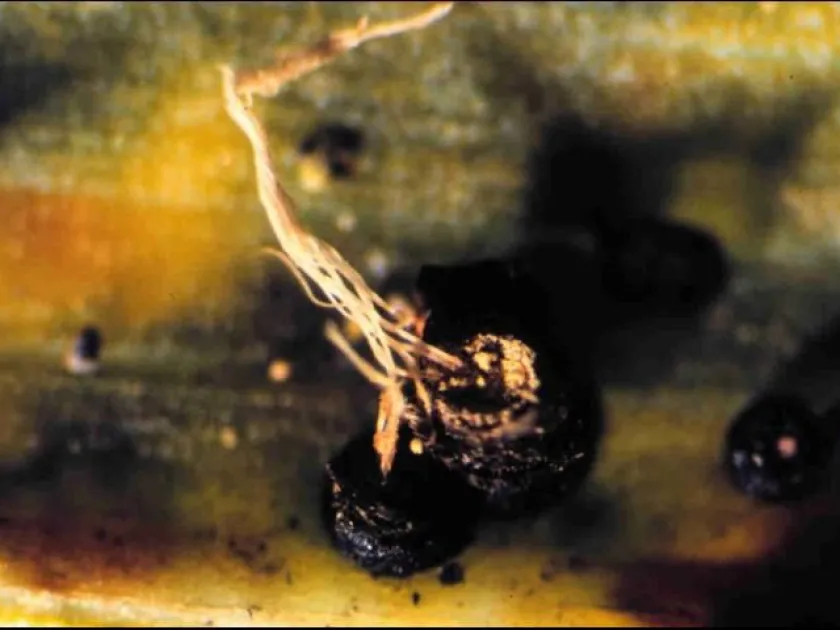
Description
Symptoms
The primary symptom of the disease is the appearance of small, yellowish or brownish spots on the surface of the palm leaflets. As the infection progresses, these spots develop small black, raised pustules known as sori.
These sori resemble tiny black warts or grains, usually 1 to 3 millimeters in diameter. Often, a pale or yellowish halo surrounds each sorus, indicating localized tissue damage.
In cases of severe infestation, the palm fronds become densely covered in these black spots. This gives the leaves a speckled appearance and is a definitive diagnostic sign of Graphiola infection.
As the disease advances, the tissues around the sori begin to wither and dry out. This premature senescence leads to the yellowing and eventual browning of the entire leaf segment.
- presence of small, black, warty sori on leaves;
- yellow or brown discoloration surrounding the spots;
- premature wilting and drying of the fronds;
- significant reduction in the decorative quality of the crown.
Pathogen
The disease is caused by the fungus Graphiola phoenicis, which belongs to the order Graphiolales. It is a highly specialized parasite that exclusively infects various species of palm trees.
The fungus develops within the leaf tissues, creating visible reproductive structures known as sori. These small, warty structures are where the fungus produces spores, allowing it to propagate through the plant or to new hosts.
The lifecycle of Graphiola is relatively slow, often resulting in chronic infections that can persist on a palm tree for years. The fungus derives its nutrients directly from the living host cells.
Infection spreads primarily through spores that are carried by water droplets or wind. These spores are capable of surviving harsh conditions, allowing the fungus to persist in fallen debris or on affected foliage.
This disease is classified as a foliar spot infection. While it rarely kills a healthy palm outright, the heavy impact on foliage significantly damages the plant's overall health and aesthetic value.
Conditions for development
High relative humidity is the most critical factor for the development of Graphiola leaf spot. The disease thrives in environments with poor air circulation where moisture remains on the foliage for extended periods.
The optimal temperature range for the growth of Graphiola phoenicis is between 20 and 25 degrees Celsius. However, the fungus is versatile and can persist across a broader temperature range.
Poorly ventilated greenhouses or crowded landscapes are ideal environments for the spread of this disease. Stagnant air allows spores to settle and germinate more effectively on the leaf surface.
Overhead irrigation, which causes water to remain on the leaves, is a primary driver of infection. Splashing water helps transport spores from infected leaves to healthy ones.
General lack of sunlight or poor plant health can make a palm more susceptible to infection. Maintaining proper hygiene and plant spacing is essential to limiting the spread.
Why it matters
Graphiola leaf spot is primarily a major concern for the ornamental value of palms. An infected plant loses its visual appeal, making it unsuitable for displays, interior landscaping, or garden use.
The infection causes premature loss of older leaves. This places a stress load on the plant, as it must divert energy to grow new foliage to replace the prematurely dying segments.
By damaging the leaf surface, the fungus interferes with the plant’s photosynthetic capacity. Over time, this leads to stunted growth and a general decline in the vitality of the palm.
The disease is notoriously difficult to eradicate completely because the fungal mycelium penetrates deep into the leaf tissue. Even after treatment, the physical scars from the sori remain until the leaves are replaced.
For commercial palm nurseries, this disease causes significant financial losses due to the quarantine of infected plants and the cost of repeated chemical treatments.
Protection
The first step in controlling Graphiola is strict sanitation. All heavily infected fronds should be pruned and safely disposed of to prevent the spread of spores to healthy tissue.
Improving cultural practices is vital. Ensure adequate air circulation around plants and avoid overhead watering to keep foliage dry. Target the soil or base of the plant instead.
Preventative applications of copper-based fungicides are highly effective. These should be applied to the foliage before infection sets in, especially in high-humidity conditions.
In cases of active infection, systemic fungicides may be used to suppress the development of the fungus. Follow-up treatments are often required every 10–14 days for effective control.
Regular inspection of your palms is necessary to catch the disease early. Isolate any newly diagnosed plants from your main collection to prevent the entire group from becoming infected.
Discussion
No discussions yet — be the first.