
Gloxinia ringspot
Gloxinia ringspot virus
Description
Symptoms
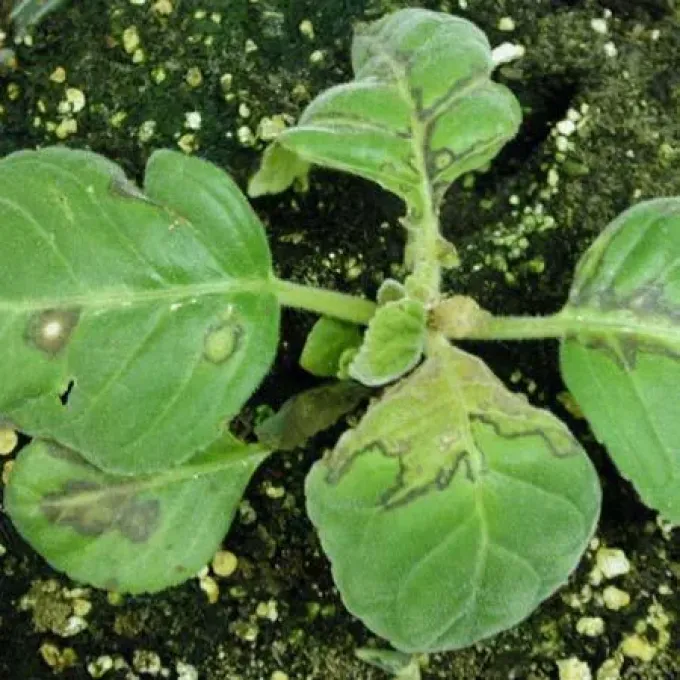
The most distinctive symptom is the appearance of ring-shaped, chlorotic patterns or mosaic spotting on the leaves.
In later stages, these spots often develop into necrotic lesions, causing the tissue to brown, shrivel, and eventually die.
Plants infected with the virus typically exhibit stunted growth, reduced leaf size, and overall loss of vigor.
Flower buds may fail to open or show signs of severe deformity, and the stalks often appear twisted or malformed.
The foliage may show crinkling or puckering, which is a classic symptom of the underlying systemic stress caused by the virus.
Pathogen
Gloxinia ringspot is caused by the Tomato spotted wilt virus (TSWV), a highly destructive plant pathogen with a broad host range.
This virus infects plant cells by hijacking their replication machinery, eventually leading to severe physiological disruptions.
It is not transmitted by soil or seeds, but relies heavily on insect vectors, primarily thrips, for its rapid spread.
The virus particles are persistent within the vector insect, meaning that once a thrips acquires the virus, it remains infective for life.
The pathogen can also be transmitted mechanically through contaminated tools, such as pruning shears or knives used during propagation.
Conditions for development
Warm temperatures in greenhouses or homes significantly accelerate both the life cycle of the thrips and the replication of the virus.
High humidity and poor air circulation create an environment where insect vectors can thrive and spread from plant to plant.
Crowded planting schemes are highly conducive to the rapid transmission of the virus due to the ease of vector movement.
Lack of rigorous sanitation protocols allows the virus to persist on shared tools and handling surfaces.
The presence of symptomatic weeds or nearby ornamental hosts acts as a constant reservoir for re-infestation of the gloxinia collection.
Why it matters
Gloxinia ringspot causes irreversible damage to the host plant, leading to a significant loss of ornamental value.
The cumulative effect of the virus weakens the plant's metabolic pathways, eventually causing decline and total death of the specimen.
In commercial nurseries, a single infected plant can lead to the loss of an entire batch due to the ease of viral transmission.
Infected tubers can serve as a means of latent virus transmission, ensuring that the next generation of plants will also be diseased.
The disease effectively ruins the aesthetic potential of the plant, making it unsuitable for display or commercial sale.
Protection
Since there are no curative treatments for viral infections, prevention through strict sanitation is the only effective management strategy.
All plants showing suspected symptoms should be immediately isolated and destroyed to prevent the spread to healthy specimens.
Aggressive vector control, particularly the management of thrips populations using targeted insecticides, is critical for disease suppression.
Always sterilize cutting tools in a strong disinfectant solution between each use to prevent mechanical transmission of the virus.
Implement a strict quarantine protocol for any newly acquired plants to ensure they are virus-free before introducing them to the main collection.
Discussion
No discussions yet — be the first.