
Bitter rot
Glomerella cingulata
Description
Symptoms
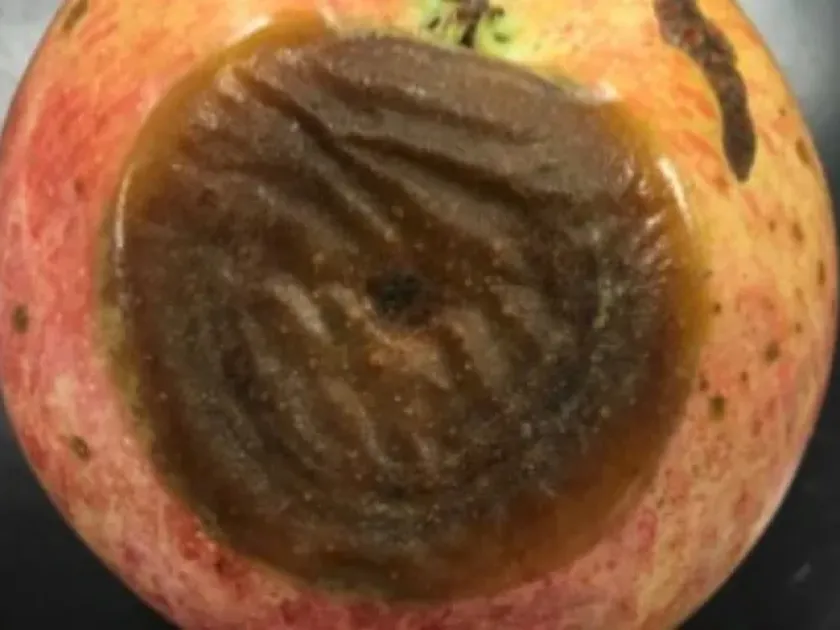
Initial symptoms include small, light brown circular spots that rapidly enlarge. As the lesions expand, they become depressed, giving the fruit a sunken appearance consistent with the progression of rot.
A distinctive feature of bitter rot is the development of concentric circles within the lesion, covered with sticky, pink, or orange spore masses. Under humid conditions, these masses become quite prominent.
The flesh underneath the lesion becomes soft and watery, extending in a V-shaped pattern toward the core of the fruit. This internal degradation is often accompanied by a distinct, intensely bitter taste.
On tree limbs, the fungus causes perennial cankers characterized by necrotic, sunken bark. These cankers can eventually girdle branches, leading to dieback and providing a continuous source of inoculum.
In advanced stages, affected fruits shrivel and turn into dark, hardened mummies. These structures often persist on the tree through the winter, releasing spores during spring rains.
Pathogen
The causative agent of bitter rot is the ascomycetous fungus Glomerella cingulata (anamorph Colletotrichum gloeosporioides). It is a highly aggressive pathogen with a wide host range, infecting various fruit trees and berries worldwide.
The fungus persists in the orchard through mycelium and conidia found in mummified fruits, dead branches, and decaying organic matter. These reservoirs serve as primary inoculum sources for the next growing season.
Pathogen dispersal is primarily driven by rain splash and high humidity, which facilitate the release and movement of spores throughout the tree canopy. Insects and birds can also act as secondary vectors, transferring spores between fruits.
The pathogen can infect fruits at any stage of development, but symptoms often remain latent until the fruit approaches maturity. This delayed manifestation makes early detection difficult for orchard managers.
Genetic diversity within the species allows it to adapt to different environmental conditions and maintain high pathogenicity across different fruit varieties, challenging breeding programs focused on resistance.
Conditions for development
Bitter rot thrives in warm, humid climates. Optimal temperatures for fungal growth range between 20°C and 28°C. Periods of persistent rainfall or high moisture are critical for infection cycles.
Poor orchard ventilation due to excessive canopy density creates a favorable microclimate for the pathogen. Restricted airflow prevents the drying of foliage and fruit surfaces, prolonging the duration of leaf wetness.
Mechanical damage caused by hail, insects, or harvest activities provides easy entry points for spores. Fruits with compromised skin are significantly more susceptible to rapid colonization by the fungus.
Nutritional status, particularly calcium deficiency, plays a significant role in fruit susceptibility. Fruits with lower calcium levels have weaker cell walls, making them easier for the pathogen to penetrate.
Late-season irrigation, if managed poorly, can exacerbate disease pressure by maintaining the high humidity levels required for late-stage infections prior to harvest.
Why it matters
The disease causes significant economic loss by rendering fruit unmarketable for fresh consumption. Because of the bitter flavor, infected fruits are also often unsuitable for juice or cider production.
Bitter rot leads to substantial post-harvest losses, as infected fruits can quickly contaminate healthy produce during storage and transportation in cold-chain logistics.
Continuous infections decrease the overall vigor and productivity of orchard trees, eventually shortening their economic lifespan and reducing annual harvest yields.
Management of bitter rot requires intensive chemical control programs, which increase production costs and potentially impact the environmental sustainability of the farming operation.
The persistence of the pathogen as cankers on trees means that once an orchard is infested, it requires years of diligent sanitation to reduce inoculum levels and bring the disease under control.
Protection
An integrated approach to disease management is essential. Sanitation, cultural practices, and chemical intervention are the pillars of controlling bitter rot in commercial orchards.
Removing all sources of inoculum is the primary defense. Pruning out cankered branches and discarding mummified fruit from the orchard floor significantly reduces the primary spore load.
Fungicide programs should be timed strategically, focusing on periods of high disease risk, such as flowering and the weeks leading up to fruit harvest.
- Regular pruning to improve air circulation and sunlight penetration.
- Foliar applications of calcium to strengthen fruit cell walls.
- Integrated Pest Management (IPM) to minimize insect-related damage.
- Careful handling during harvest to prevent skin punctures.
- Rapid cooling of harvested fruit to inhibit post-harvest fungal development.
Discussion
No discussions yet — be the first.