
Glomales
Glomales
Description
Symptoms
There are no visible disease symptoms on the above-ground parts of the plant, as Glomales are not a disease. On the contrary, high levels of mycorrhizal colonization are associated with vigorous plant growth.
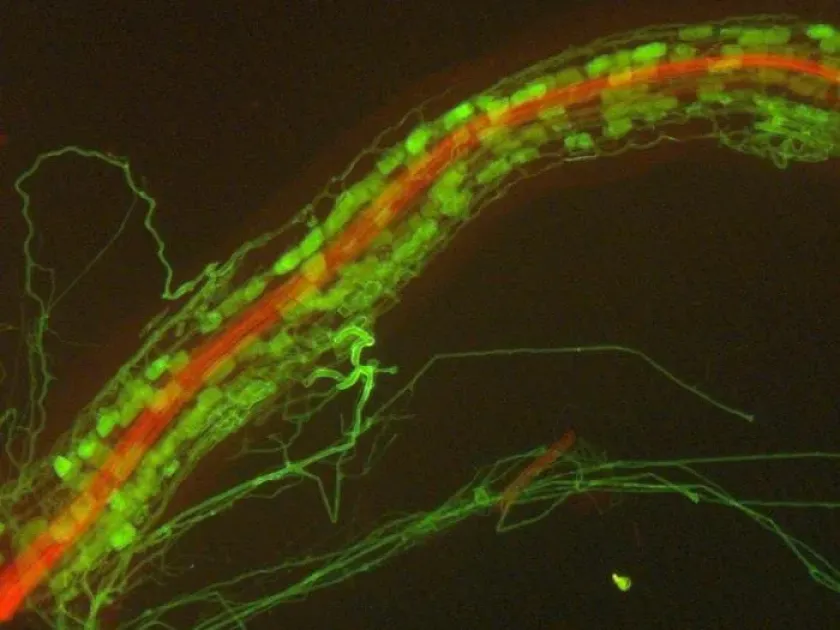
Microscopic examination of root tissue is required to identify the presence of arbuscules and mycelial networks within the cell layers.
Plants colonized by AM fungi often exhibit deeper root branching and improved resilience to environmental stresses compared to non-mycorrhizal plants.
A healthier appearance, better uniformity in the field, and improved green color in leaves are indirect indicators of effective mycorrhizal symbiosis.
Detection of mycelial structures in soil samples or root fragments is the only reliable way to confirm the establishment of these beneficial organisms.
Pathogen
Glomales are a historical classification of arbuscular mycorrhizal (AM) fungi, which are beneficial symbionts rather than plant pathogens. They form essential relationships with the roots of the vast majority of agricultural crops.
The fungus colonizes the root cortex and forms specialized structures called arbuscules, which facilitate a mutualistic exchange. The plant provides the fungus with carbohydrates, while the fungus supplies the plant with phosphorus and essential nutrients.
Unlike parasitic fungi, Glomales do not kill host tissues or cause diseases. They are integral to plant health and contribute significantly to soil structure through the production of glomalin.
These organisms reproduce via spores in the soil, which serve as the primary inoculum for subsequent crop seasons.
Current taxonomy has evolved, but the term remains widely recognized in agronomy to describe the beneficial fungal partners that drive nutrient uptake in crops.
Conditions for development
The development of arbuscular mycorrhiza is most successful in soils with moderate nutrient availability. High applications of soluble phosphorus fertilizers often inhibit the symbiosis.
Soil structure, pH levels, and aeration are critical factors. Well-drained soils with neutral pH favor the proliferation of fungal hyphae.
Reduced tillage practices allow for the preservation of established fungal networks, which significantly enhances the speed of root colonization for new crops.
Host crops must be present in the rotation to maintain the fungal population levels in the soil over time.
Severe compaction and frequent chemical disturbances create unfavorable conditions for these sensitive soil organisms.
Why it matters
Glomales are not harmful; they are essential agricultural partners. The only 'harm' occurs when their activity is suppressed, leading to poor crop performance in phosphorus-deficient soils.
Over-reliance on intensive fungicide regimes can disrupt the natural symbiosis, leaving crops without their vital fungal support system.
Poor soil management that destroys soil structure limits the reach of fungal hyphae, reducing the overall efficacy of nutrient uptake.
Without these fungi, plants may struggle during periods of drought, as they lose the secondary water-absorption mechanism provided by the extensive mycelial network.
Therefore, the loss of these fungi constitutes a loss of the biological potential of the field, impacting final yield targets.
Protection
Management strategies should focus on fostering a soil environment that encourages biological diversity and fungal colonization.
Farmers should balance chemical fertilizer inputs, particularly phosphorus, to ensure the plant maintains its demand for the fungal symbiont.
Adopting conservation tillage techniques is one of the most effective ways to protect and encourage the growth of mycorrhizal populations.
When soil biological activity is low, applying bio-inoculants containing active mycorrhizal strains can help restore the beneficial soil community.
- Implement reduced tillage.
- Monitor soil phosphorus levels.
- Use cover crops.
- Limit systemic fungicide use.
Discussion
No discussions yet — be the first.