
Soybean mosaic virus
Gammacarmovirus glycinis
Description
Symptoms
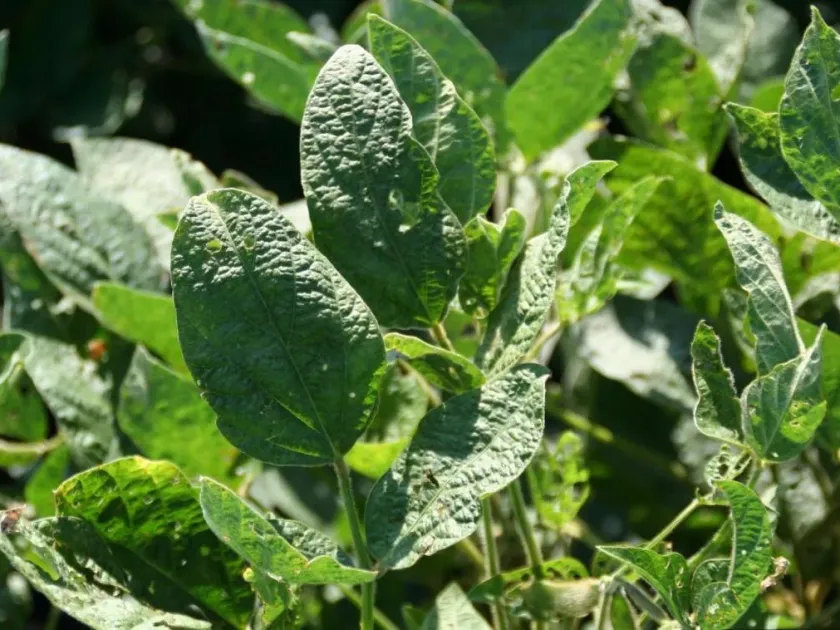
Symptoms of SMV are highly variable, influenced by the soybean genotype and the timing of infection. The most characteristic sign is the mosaic pattern on the leaves, showing patches of light and dark green.
Leaves often become distorted, wrinkled, or puckered. The margins of the leaflets may curl downwards, and the overall plant growth is frequently stunted, giving the field a characteristic uneven appearance.
Infection during the early growth stages leads to significant height reduction and reduced leaf size. Severely infected plants show shortened internodes and a bushy habit due to suppressed apical dominance.
Reproductive symptoms include blossom drop and the formation of smaller, flattened, or misshapen pods. The seeds themselves often show characteristic mottling or discoloration around the hilum (seed scar).
- Mottling and chlorotic mosaic on foliage.
- Leaf distortion, crinkling, and puckering.
- Severe plant stunting and reduced internode length.
- Poor pod set and reduced seed quality.
- Discoloration or mottling of the seed coat around the hilum.
Pathogen
Soybean mosaic virus (SMV) is the pathogen responsible for one of the most widespread viral diseases in soybeans, belonging to the Gammacarmovirus genus. It is a highly contagious agent that affects the global soybean production.
The virus is primarily transmitted through infected seeds, which is the most dangerous pathway for the long-distance spread of the disease. Planting infected seeds introduces the virus directly into new fields.
In the field, SMV is transmitted by several species of aphids in a non-persistent manner. The insects acquire the virus by probing infected plants and transmit it to healthy plants within seconds or minutes.
The virus survives in seeds and can be carried over by perennial legume weeds, serving as a reservoir. It infects plants systemically, interfering with essential biochemical processes throughout the growing season.
The genetic diversity of SMV strains means that different varieties of soybeans may exhibit varying levels of susceptibility, making uniform control challenging across diverse climatic zones.
Conditions for development
Warm and humid weather conditions promote the multiplication of aphid populations, which are the primary vectors responsible for the spread of the virus within a crop season.
The disease incidence is strongly correlated with the initial seed infection rate. If a high percentage of seeds carry the virus, the early development of mosaic symptoms is almost guaranteed.
The proximity of alternative host plants, such as wild legumes or perennial weeds, facilitates the survival of the virus during the winter and provides a source of inoculum for the next season.
Dense soybean plantings create a favorable environment for aphids to migrate between plants, accelerating the transmission rate. The microclimate within thick canopies also maintains the health of aphid populations.
Late planting dates often expose young, susceptible soybean plants to higher populations of winged aphids, resulting in higher rates of secondary infection compared to earlier plantings.
Why it matters
The economic impact of SMV is significant, with yield losses ranging from 10% to over 50% in cases of early and severe infection. The virus limits the photosynthetic capacity of the plants.
Beyond yield loss, the quality of the harvested grain is degraded. The seeds produced by infected plants often have lower oil and protein content, affecting their market value for processing.
Infected seeds also have reduced viability and lower germination rates, which compromises the stand density of the subsequent crop and may necessitate reseeding in extreme cases.
Viral infection weakens the plants, making them more susceptible to opportunistic fungal and bacterial pathogens, which further diminishes the overall crop health and performance.
Controlling the virus requires additional management costs, including vector management and the procurement of certified disease-free seeds, which impacts the total cost of production.
Protection
The primary control strategy is the use of healthy, pathogen-tested seeds. Ensuring that seed lots are certified free of SMV is the most effective way to prevent primary outbreaks.
Spatial isolation between new soybean fields and those where the disease was present in the previous season helps reduce the early influx of winged aphid vectors.
Effective management of aphid populations during the critical vegetative stages through targeted insecticide applications can help slow the spread of the virus within the field.
Sanitation practices, including the eradication of weed hosts on field margins and internal pathways, are vital to reducing the local reservoir of the virus.
The development and adoption of SMV-resistant soybean cultivars is the most sustainable and efficient approach for long-term management of the disease in high-risk areas.
Discussion
No discussions yet — be the first.