
Fusarium wilt of pigeon pea
Fusarium udum
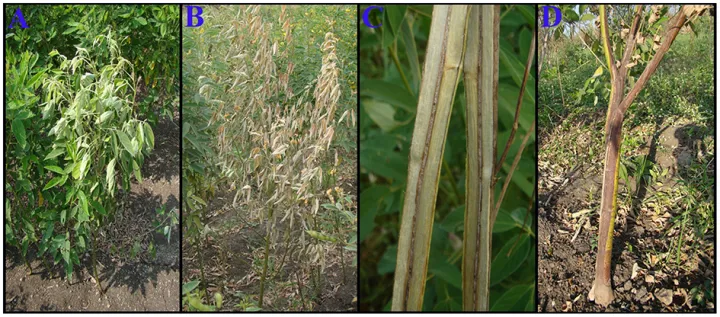
Description
Symptoms
Initial symptoms include chlorosis and yellowing of the lower leaves, which eventually leads to a loss of turgor. The foliage gradually wilts, turns brown, and drops prematurely.
A hallmark symptom is the sudden wilting and drying of individual branches or the entire plant, which is frequently observed during the flowering and pod-filling stages.
Internal examination of the lower stem reveals a distinct browning or darkening of the vascular bundles. This internal symptom serves as a definitive diagnostic sign of Fusarium wilt infection.
Under conditions of high humidity, a faint pinkish or whitish fungal growth may appear on the surface of the stem or root collar, representing the spore production of Fusarium udum.
The root system of infected plants typically appears stunted, with significant decay of fine lateral roots, making the plant easily pullable from the soil.
Pathogen
The causal agent of this disease is the soil-borne fungus Fusarium udum, which belongs to the class of imperfect fungi. This pathogen exhibits high host specificity, primarily targeting plants within the Cajanus genus.
The fungus survives in the soil as chlamydospores or mycelium within decaying plant debris for several years. Its ability to endure adverse conditions makes it a persistent threat to future cropping seasons.
Infection occurs through the root system, often entering via microscopic wounds caused by soil pests or mechanical damage. Once inside, the fungal mycelium colonizes the vascular system.
The primary mechanism of pathogenesis involves the physical obstruction of xylem vessels by the mycelium and the production of toxic metabolites, which collectively disrupt water transport and lead to wilting.
Dissemination occurs through infested seeds, movement of contaminated soil by farm equipment, and irrigation water, facilitating the spread of the pathogen across large areas.
Conditions for development
The development of the disease is favored by high soil temperatures, typically ranging from 25°C to 30°C, which accelerate the growth of fungal mycelium within plant tissues.
Periods of moisture stress, particularly drought followed by irrigation or rainfall, can exacerbate the disease by weakening the plant's natural defenses against infection.
Soil pH plays a critical role, with Fusarium udum showing higher virulence in neutral to slightly acidic soils common in many pigeon pea-growing regions.
Continuous cropping of pigeon pea without adequate rotation allows for the progressive build-up of the pathogen's inoculum in the soil over successive years.
Physical injuries to the roots, occurring during weeding or inter-row cultivation, create entry points for the fungal spores, significantly increasing the infection rate in the field.
Why it matters
Fusarium wilt is considered one of the most devastating diseases of pigeon pea, capable of causing yield losses ranging from 30% to 100% in severely infested fields.
The infection results in poor seed quality, reduced pod formation, and overall physiological stress, which compromises the plant's potential for high-quality grain production.
Widespread wilting during early growth stages leads to plant population gaps, necessitating replanting and increasing overall production costs for the farmer.
The economic impact is long-term, as fields infested with the fungus require lengthy fallow periods or strict crop rotation, limiting land-use options for the grower.
Given the difficulty of controlling the disease once it has established, the lack of curative measures makes prevention the only economically viable management strategy.
Protection
The primary control strategy involves the deployment of resistant or tolerant pigeon pea varieties, which remains the most cost-effective solution for farmers.
Implementing a robust crop rotation schedule, utilizing non-host crops, helps to naturally deplete the soil inoculum levels over a multi-year period.
Seed treatment with systemic fungicides prior to planting is a critical prophylactic measure to protect emerging seedlings from soil-borne primary infection.
Agronomic practices, such as maintaining optimal drainage and performing shallow cultivation to avoid root damage, are essential to limit the pathogen's spread.
- Rogueing and destroying infected plants to minimize the spread of inoculum.
- Balanced nutrient management, focusing on potassium to boost host immunity.
- Use of certified, high-quality, and disease-free seed stocks.
Discussion
No discussions yet — be the first.