
Fusarium head blight
Fusarium sporotrichioides
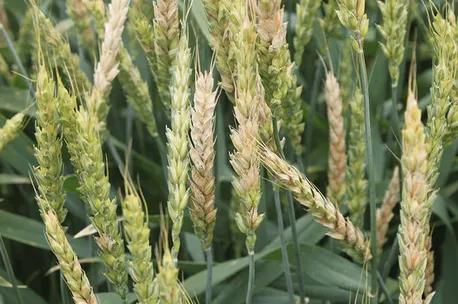
Description
Symptoms
The primary symptom of Fusarium head blight is the premature bleaching of spikelets, which contrasts sharply with the healthy green parts of the wheat head. This whitening often starts at the center of the head and spreads upwards or downwards.
In high-humidity conditions, a distinctive pinkish or orange-red mass of fungal spores develops on the infected glumes. This sporulation serves as the primary inoculum for further spread of the pathogen within the crop canopy.
Infected kernels appear shriveled, discolored, and often covered in a white or pinkish mycelial mat. These grains are typically lightweight, brittle, and possess a musty odor, rendering them unsuitable for standard milling processes.
Brown lesions may appear on the rachis, causing the entire head to wither and die. If the infection occurs early, the entire head might become sterile, leading to a complete lack of grain formation in the affected spikelets.
Diagnostic field checks should focus on the transition zones between green and bleached tissues. Laboratory testing is often required to differentiate Fusarium infections from other physiological or biological disorders in cereals.
Pathogen
The disease is caused by various species of the Fusarium genus, including Fusarium sporotrichioides, which are classified as ascomycete fungi. These pathogens are highly successful soil-borne and residue-borne organisms.
The fungus survives on crop residues like corn stalks, wheat stubble, and other organic matter. It produces thick-walled chlamydospores that allow it to endure harsh environmental conditions for extended periods in the field.
Pathogens proliferate by producing large quantities of conidia, which are disseminated by rain splash, wind currents, and insect movement. These spores landing on susceptible tissue during anthesis trigger the infection process.
The infection biology is highly specialized, as the open floret during flowering provides a direct entry point for the fungus to colonize the developing grain. Once inside, the hyphae spread rapidly through the rachis tissue.
Beyond physical damage, the fungus secretes potent mycotoxins such as deoxynivalenol (DON), which interfere with the host plant's metabolism. These toxins are significant safety concerns for global grain supply chains.
Conditions for development
Warm and humid weather during the flowering stage is the most critical environmental trigger for Fusarium head blight outbreaks. Temperatures between 20°C and 25°C with high moisture levels are optimal for spore germination.
Agricultural practices that leave large amounts of crop residue on the soil surface, such as no-till farming, significantly increase the risk of infection. Corn-to-wheat rotations are particularly conducive to high disease pressure.
Crop nutrition management influences susceptibility, as nitrogen deficiency can stress plants, making them more vulnerable. Conversely, excessive nitrogen can create dense canopies that trap humidity and promote fungal growth.
Poor drainage in fields can also lead to microclimates with higher humidity, which favors the development of the pathogen. Improving field drainage is an effective way to reduce the duration of leaf and head wetness.
Weed density within and around the field can increase the humidity levels and harbor the fungus, serving as a bridge for the pathogen to reach the main crop during the sensitive flowering stage.
Why it matters
The economic impact of Fusarium head blight is profound, often resulting in significant yield losses and severe reductions in grain quality. It is a major limiting factor for cereal production in humid regions.
The presence of mycotoxins in grain is the most dangerous consequence, as these compounds are toxic to both humans and livestock. Many countries enforce strict regulatory limits on mycotoxin concentrations in food.
Grain harvested from infected fields has reduced germination rates, making it poor quality for seed usage. Planting contaminated seeds can propagate root rot diseases in the subsequent cropping season.
Milling quality is heavily compromised, with affected grain exhibiting lower protein content and poor baking characteristics. This lowers the market value and increases processing costs for the agricultural industry.
Cleaning, drying, and sorting infected grain adds a substantial layer of cost to post-harvest management. Often, entire batches of grain must be discarded if toxin levels exceed safety thresholds.
Protection
Integrated management begins with a robust crop rotation plan, avoiding the sequence of cereal-on-cereal or corn-on-cereal. Legumes or oilseeds are excellent rotation crops that help break the disease cycle.
Tillage techniques that bury crop residues deeply help accelerate the decomposition process, thereby reducing the overwintering population of the fungus. This remains a foundational practice for disease suppression.
Fungicide application during the early flowering phase is essential for mitigating risks when environmental conditions are favorable for disease. Proper timing and nozzle configuration are crucial for maximum coverage.
Selection of resistant or moderately resistant varieties provides a genetic barrier against the disease. While complete immunity is rarely achieved, resistant cultivars significantly reduce the impact of outbreaks.
- Use of certified, disease-free seed stocks.
- Application of systemic seed treatments.
- Maintaining optimal plant density.
- Monitoring regional weather forecasts for risk alerts.
Discussion
No discussions yet — be the first.