
Description
Symptoms
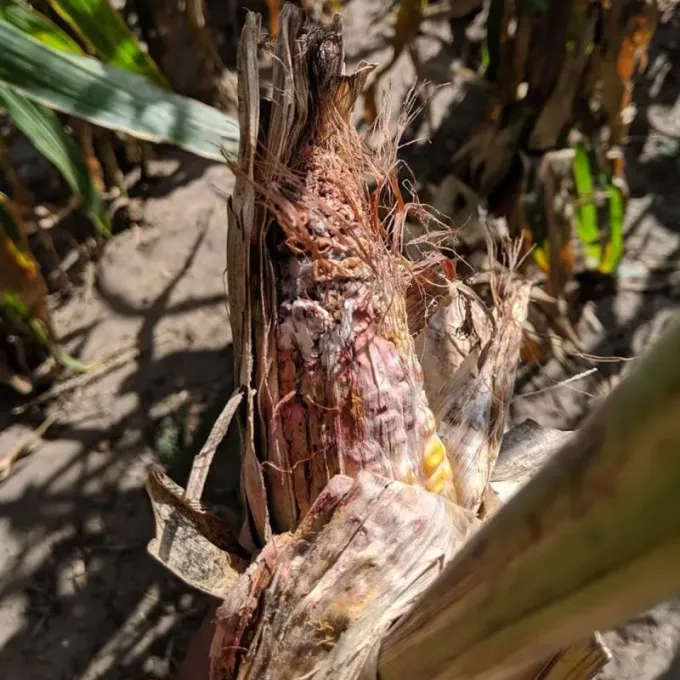
The primary symptom of seed fusarium is the development of a fluffy or dense fungal mat on the surface of the seeds. The color of this mycelium typically ranges from white to pink or cream.
Infected seeds often exhibit poor germination. If they do sprout, the radicle frequently turns brown, becomes soft, and decays, causing the seedling to collapse before it emerges from the soil.
Seedlings that do emerge may show stunted growth, chlorosis, and brown lesions on the hypocotyl or cotyledons. These necrotic areas often expand, leading to the rapid death of the young plant.
In the field, the disease manifests as irregular patches of missing or dead seedlings, often referred to as "damping-off." Affected plants appear wilted and weak compared to healthy individuals.
Microscopic examination of the decaying tissues reveals the presence of typical crescent-shaped Fusarium conidia, confirming the identity of the causal agent.
Pathogen
The disease is caused by the fungus Gibberella acuminata (anamorph Fusarium acuminatum). It is a highly aggressive soil-borne pathogen known for infecting a wide range of economically important crops.
The fungus exists primarily as a saprotroph in soil and on crop residues. It transitions to a parasitic phase when it comes into contact with germinating seeds, leading to seed rot and seedling blight.
Soybean is particularly susceptible to this pathogen. Infection can occur through contaminated seeds or through mycelium/spores present in the soil, which penetrate the plant tissues shortly after planting.
The life cycle of the pathogen includes the production of conidia and perithecia, allowing it to survive harsh winter conditions. This resilience makes it a persistent problem in intensive agricultural systems.
Beyond crop damage, Gibberella acuminata is capable of producing several mycotoxins. These toxins can accumulate in harvested grain, posing significant health risks to livestock and humans.
Conditions for development
The development of seed fusarium is highly dependent on environmental conditions, with high soil moisture being the most critical factor. The pathogen thrives in wet and cool environments.
Optimal temperatures for the fungus range between 15°C and 25°C. Delayed germination caused by cold or waterlogged soil provides an extended window for the pathogen to infect the vulnerable seedling tissues.
Poor soil structure, such as compaction or lack of drainage, significantly exacerbates the infection rate. Reduced oxygen levels in the soil stress the seeds and favor the growth of Fusarium species.
Crop residues left on the soil surface serve as a primary reservoir for the inoculum. Fields with a history of intensive monocropping tend to have higher pathogen loads due to the accumulation of spores.
Nutrient deficiencies, particularly low phosphorus or potassium levels, can leave plants less capable of mounting a defense against the fungus, increasing the severity of the disease.
Why it matters
The economic impact of seed fusarium is mainly due to reduced plant density. Significant seedling mortality often necessitates costly replanting, which impacts the final harvest timeline.
Plants that survive initial infection often carry a latent or systemic infection, leading to root rot and reduced vigor throughout the growing season. This results in lower yields and poor biomass production.
Infection leads to reduced quality of the harvested grain. The presence of mycotoxins restricts the marketability of the produce, as it may not meet food or feed safety standards.
The disease contributes to an overall decline in soil health by increasing the concentration of persistent fungal pathogens. This necessitates more intensive management practices in subsequent years.
Overall losses include the cost of fungicides, extra seeds for replanting, and the direct loss of potential revenue due to decreased yield and poor grain quality.
Protection
The most effective strategy is the use of high-quality, disease-free seed. Growers should perform professional seed testing to detect the presence of Gibberella acuminata before sowing.
Seed treatment with systemic fungicides is crucial to protect the developing embryo during the early stages of growth. This practice is standard for managing Fusarium species in soybean production.
Adhering to proper crop rotation schedules is essential to reduce the soil-borne inoculum. Avoid planting susceptible crops in fields with a recent history of severe Fusarium infections.
Good agronomic practices, such as proper field preparation, optimal planting dates, and ensuring good soil drainage, help to promote rapid and uniform germination of seeds.
Management of weed hosts and thorough incorporation of crop residues into the soil can further minimize the infection pressure and break the survival cycle of the pathogen.
Pathogens and affected parts
Affects crops · 1
Discussion
No discussions yet — be the first.