
Fig mosaic
Fig mosaic virus
Description
Symptoms
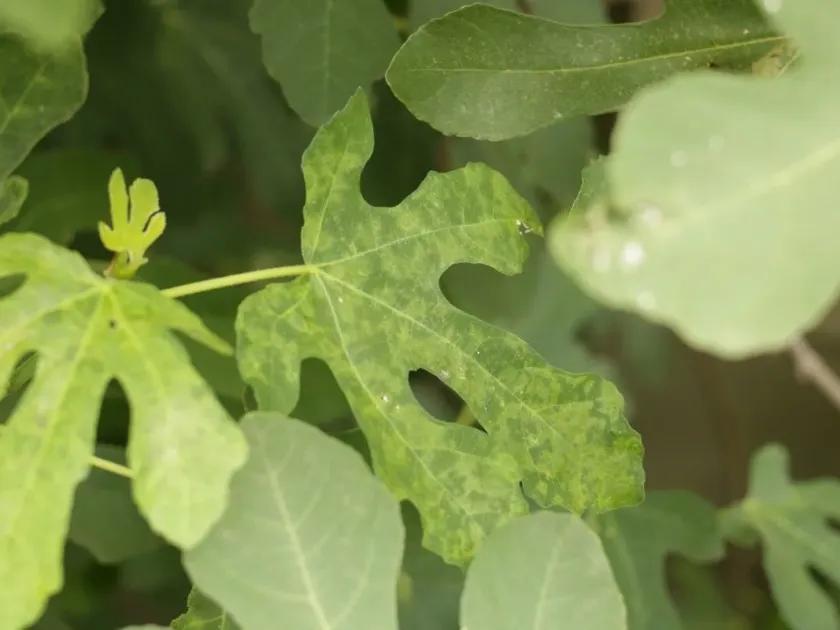
The primary symptom is the appearance of chlorotic spots on leaves, which often have irregular shapes and diffuse, mottled margins.
As the infection progresses, these spots may turn a more intense yellow or develop necrotic centers, creating a distinctive mosaic pattern on the foliage.
Affected leaves are frequently deformed, asymmetrical, and the leaf blade itself may be significantly reduced in size compared to healthy foliage.
Young fig fruits may also exhibit light-colored spots, rings, or stripes, which significantly degrades the market quality and appearance of the produce.
In severe cases, the disease leads to premature leaf drop, stunted shoot growth, and a noticeable decrease in the development of fruit buds.
Pathogen
The causative agent of this disease is the Fig mosaic virus (FMV), which belongs to the Emaravirus genus. It is a systemic viral infection that affects all plant tissues.
The virus is primarily transmitted by the fig mite (Aceria fici), which acts as the main vector and a persistent reservoir for the infection in orchards.
Transmission can also occur through the use of infected vegetative propagation material, such as cuttings or rootstock, taken from diseased trees.
Although transmission via pruning tools is not fully proven, strict sanitation practices remain standard protocol to prevent any potential spread.
The virus persists in plant tissues throughout the life of the tree, making infected specimens constant sources of the disease in the environment.
Conditions for development
The disease spread is closely linked to the population density of the fig mite, which thrives and reproduces rapidly in warm and dry climatic conditions.
The spring and summer seasons are the most critical periods for symptom expression as temperatures favor both the mite activity and the viral metabolism.
Poor orchard management, particularly the neglect of mite control, creates ideal conditions for the rapid spread of the virus throughout the planting.
Environmental stressors, such as drought or extreme temperature fluctuations, can exacerbate symptom expression and weaken the tree's defensive response.
The introduction of infected nursery stock from contaminated areas is the most common way for the virus to reach new orchards and plantations.
Why it matters
The main impact is the inhibition of photosynthesis, which weakens the plant's overall health and reduces its resistance to various biotic and abiotic stressors.
Large-scale infections lead to significant yield losses and lower fruit quality, as affected trees produce fewer and less sugar-rich fruits.
The virus renders the tree more susceptible to secondary pathogens, such as fungi or bacteria, which can cause branch dieback and overall decline.
Economic damage is substantial due to the need to rogue infected nursery stock and the ongoing costs associated with vector control programs.
As there is no cure for the viral infection, the management focus remains on total removal of infected plants to protect healthy neighbors.
Protection
The primary control strategy is the use of certified, virus-indexed propagation material obtained from reputable, disease-free nursery sources.
Integrated Pest Management (IPM) focusing on regular monitoring and chemical control of the fig mite (Aceria fici) is essential to limit viral spread.
Timely removal and destruction of heavily infected trees are necessary to prevent them from serving as inoculum sources for the rest of the orchard.
Maintaining proper spatial isolation between newly planted trees and older, potentially infected specimens is a critical preventive measure.
- Providing optimal irrigation and balanced fertilization to maintain tree vigor and resistance.
- Disinfecting pruning tools between trees to ensure no potential transfer of pathogens occurs.
Discussion
No discussions yet — be the first.