
Exserohilum paspali leaf spot
Exserohilum paspali
Description
Symptoms
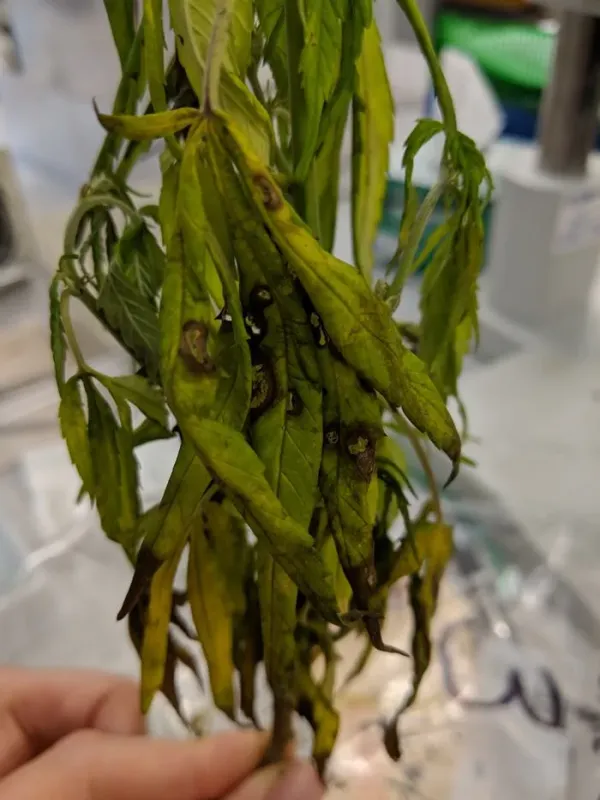
Initial symptoms appear as small, oval-shaped spots on the leaf blades, which may initially be chlorotic or light green, eventually turning brown to dark purple or black.
Under humid conditions, the centers of these lesions develop a dark, velvety appearance, which is composed of dense masses of fungal conidia and conidiophores.
As the infection progresses, the lesions expand and coalesce, leading to significant dieback of the leaf tips and an overall blighted appearance of the turfgrass.
Severely infected plants exhibit a general yellowing or browning of the foliage, resulting in thinning of the turf canopy and loss of visual quality.
In cases of high disease pressure, the infection can extend from the leaf blades to the sheaths and stems, causing premature wilting and death of the entire plant.
Pathogen
The causal agent of this disease is the fungus Exserohilum paspali (formerly known as Helminthosporium paspali), a pathogen specifically adapted to infecting grasses within the genus Paspalum.
The fungus produces conidia, which serve as the primary inoculum. These spores are efficiently disseminated by wind, splashing rain, or maintenance equipment used on the turfgrass.
The pathogen survives in infected plant debris and within the thatch layer, remaining dormant as mycelium or spores until environmental conditions become favorable for infection.
The life cycle involves the germination of spores on the leaf surface under high humidity. The fungus penetrates host tissues through stomata or directly through the epidermal cells.
Once inside, the fungus colonizes the plant tissue, secreting toxins that cause cellular death, leading to the characteristic spotting and eventual chlorosis of the foliage.
Conditions for development
The development of Exserohilum paspali is favored by warm temperatures, typically ranging from 20°C to 28°C, combined with extended periods of high relative humidity.
Frequent rainfall, heavy dew, or irrigation practices that leave the foliage wet for prolonged periods provide the necessary moisture for spore germination and infection.
Dense turf canopies with restricted airflow create a microclimate that traps moisture, significantly increasing the severity and spread of the disease.
Excessive nitrogen fertilization often leads to rapid, succulent growth that is more susceptible to fungal penetration, while inadequate potassium levels reduce the plant's natural resistance.
Poor soil drainage and deep thatch accumulation are critical environmental factors that predispose paspalum to infection and inhibit healthy root development.
Why it matters
The primary impact of the disease is the reduction of photosynthetic area, which leads to metabolic stress and a decrease in the overall vigor of the turfgrass.
For golf courses and residential landscapes, the disease causes significant aesthetic damage, creating unsightly patches that require costly remedial management.
In pastures where Paspalum is used as fodder, the disease reduces forage quality and yield, potentially impacting the health of grazing livestock.
Chronic infections lead to a thinning stand, providing opportunities for weed encroachment and further destabilizing the turf composition.
Weakened plants are less resilient to abiotic stresses such as drought, heat, and cold, making them susceptible to secondary infections by other opportunistic pathogens.
Protection
Cultural management is the first line of defense, focusing on improving airflow through core aeration and proper thatch management to minimize leaf wetness.
Irrigation should be timed to take place during the early morning hours, ensuring the foliage dries out rapidly to prevent the moisture levels required for spore germination.
Implementing a balanced fertility program, with an emphasis on adequate potassium, enhances the structural integrity of cell walls and improves the plant's defense mechanisms.
Removing clippings from areas with known infections helps to reduce the primary inoculum load and prevents the spread of fungal spores across the site.
When environmental conditions favor disease outbreaks, the application of systemic fungicides, particularly those containing strobilurins or triazoles, is effective in preventing and managing the infection.
Discussion
No discussions yet — be the first.