
Description
Symptoms
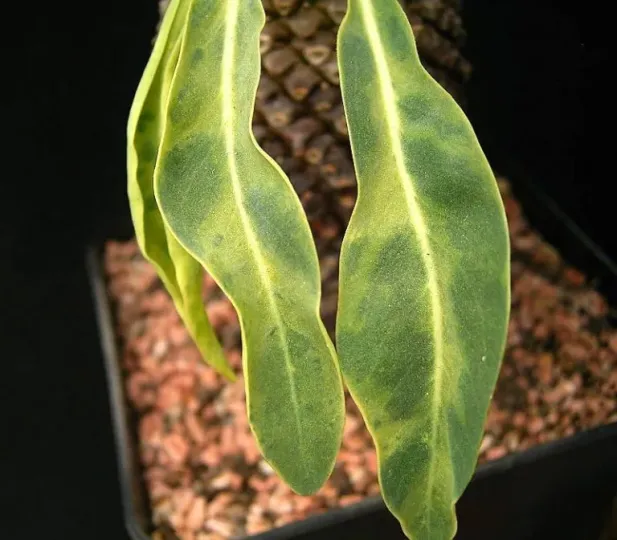
Early symptoms of Euphorbia mosaic appear as chlorotic spots on young leaves, eventually developing into a characteristic mosaic pattern of light green and yellow interleaved areas.
As the infection progresses, the leaves exhibit distinct deformation, including downward curling and crinkling, often resulting in reduced leaf size and stunted plant growth.
Affected soybean plants demonstrate significant growth suppression, such as shortened internodes and increased fragility of stems, making them noticeably smaller than healthy plants.
Early-stage infection leads to a poorly developed root system, which compromises the plant's ability to withstand drought stress and nutrient deficiency during the growth cycle.
In field conditions, the disease usually occurs in patches, corresponding to the distribution of whitefly populations, making it easy to identify when inspecting the crop.
Pathogen
The disease is caused by the Euphorbia mosaic virus (EuMV), which belongs to the genus Begomovirus of the Geminiviridae family. It is a single-stranded DNA virus with a high capacity for host adaptation.
The primary infection mode is systemic, affecting the plant vascular tissues. The virus is transmitted primarily by insect vectors, such as the whitefly (Bemisia tabaci), which are crucial for the disease cycle.
The virus persists in reservoir weed species, particularly members of the Euphorbiaceae family, which serve as primary infection sources during the off-season in agricultural environments.
Transmission occurs when an insect vector feeds on an infected plant, acquiring the viral particles, and subsequently transfers the virus to healthy plants during the feeding process.
Given its wide host range, this virus poses a continuous threat to various agricultural crops, including soybean, necessitating integrated pest management strategies.
Conditions for development
Outbreaks are heavily influenced by the population density of whiteflies, which reproduce most efficiently under warm conditions, specifically temperatures between 25 and 30 degrees Celsius.
High humidity levels promote the survival and rapid development of insect vectors, creating an environment favorable for the widespread dissemination of the virus throughout the field.
The presence of wild weeds in and around the field provides the virus with a continuous food source and a refuge for overwintering, increasing the risk of recurring annual infections.
Dense crop canopies create a microclimate with reduced air circulation, which is ideal for whitefly feeding and facilitates the rapid spread of the virus between healthy and infected plants.
Poor crop rotation practices and the cultivation of highly susceptible varieties in endemic regions often lead to severe epidemics and substantial yield losses.
Why it matters
The primary impact of the disease is a significant reduction in soybean yield, often resulting in a 30 to 70 percent decrease in the number of pods and seeds per plant.
The virus disrupts essential plant metabolic processes, including photosynthesis, leading to lower protein and oil content in seeds, which significantly degrades their market quality.
Plants infected early in their development may become sterile or exhibit flower abortion, causing substantial yield gaps that cannot be recovered during the growing season.
Infection compromises the plant's natural immune system, making it more susceptible to secondary pathogens and unfavorable environmental stress factors.
Long-term economic losses include not only the direct yield loss but also the increased costs associated with frequent insecticide applications to manage insect vectors.
Protection
The most effective preventive measure is the systematic removal of reservoir weeds, particularly Euphorbiaceae species, from fields and surrounding buffer zones to break the infection cycle.
Timely application of insecticides to control whitefly populations is essential to minimize the risk of virus transmission, especially during the plant's most susceptible growth stages.
Cultivating resistant or tolerant soybean varieties is the most sustainable and cost-effective strategy for managing Euphorbia mosaic in regions with high disease pressure.
Maintaining spatial isolation between soybean crops and other susceptible hosts can significantly reduce the probability of virus introduction into clean production areas.
Monitoring vector populations using yellow sticky traps is a critical component of integrated pest management, allowing for precise decision-making regarding protective insecticide treatments.
Pathogens and affected parts
Affects crops · 1
Discussion
No discussions yet — be the first.