
Euonymus mosaic
Euonymus mosaic virus
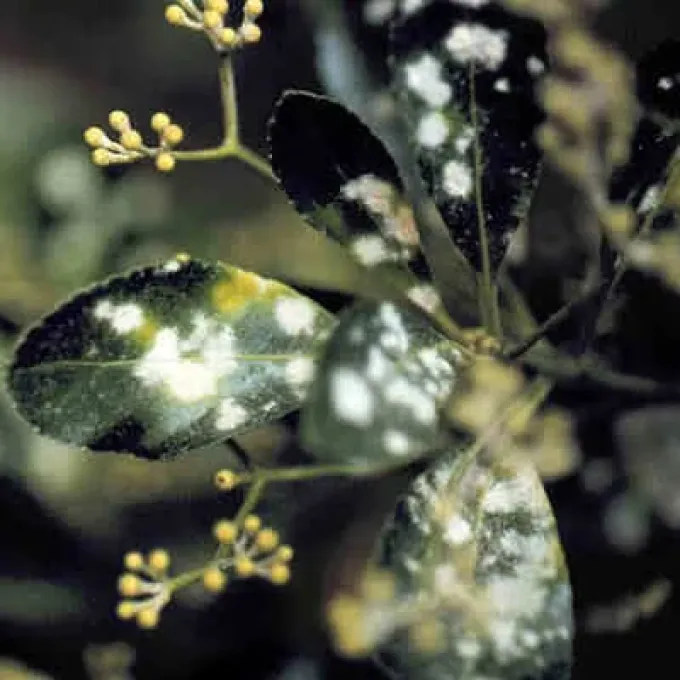
Description
Symptoms
The most diagnostic sign is the appearance of a mosaic pattern on the foliage. Leaves exhibit irregular patches of light green, yellow, or cream-colored tissue, which create a mottled effect across the leaf surface.
Deformation of leaf tissue is another common symptom. The affected leaves often show signs of curling, crinkling, or uneven development, resulting in a distorted growth pattern that deviates from the healthy, flat appearance of the foliage.
Intricate patterns such as ringspots or vein-banding may appear as the infection progresses. These symptoms indicate that the virus has moved through the plant's phloem, causing significant disruption to nutrient transport.
Affected shrubs often display a marked decrease in growth rate. Shortened internodes and stunted overall growth are typical, making the shrub look sparse and lacking the vigor associated with a healthy ornamental specimen.
During peak summer months, the contrast between the healthy and infected tissue becomes more pronounced. In severe cases, the infected leaves may prematurely senesce and drop, leading to bare branches and poor aesthetic quality.
Pathogen
The causative agent of this disease is the Euonymus mosaic virus. It is a systemic pathogen that invades the vascular tissues of the host plant, hijacking the metabolic processes within cells to replicate its own genetic material.
Unlike fungal or bacterial pathogens, viruses are composed of a genome wrapped in a protein coat. They lack independent metabolic machinery and rely entirely on the host plant cells for survival and transmission to new hosts.
Transmission occurs primarily through the transfer of infected sap. This can happen through mechanical wounding caused by pruning tools or, more commonly, through insect vectors like aphids and spider mites that feed on the plant.
The virus exhibits remarkable persistence within the woody tissues of the plant. Since Euonymus is a perennial shrub, the pathogen overwinters within the roots and stems, reactivating and spreading to new growth in the spring.
In many cases, the virus may remain latent, showing no outward signs for extended periods. However, environmental stress often triggers the activation of the virus, leading to visible symptomatic expression throughout the plant.
Why it matters
The primary concern regarding Euonymus mosaic is the degradation of the plant's ornamental value. Since Euonymus is primarily grown for its foliage, the loss of color uniformity and natural shape renders the plant useless for landscaping.
The disease causes physiological stress that weakens the entire shrub. A weakened plant is significantly more susceptible to environmental stressors such as drought, frost, and heat, often leading to premature death during the winter months.
Secondary infections are a major risk, as the plant's compromised immune system makes it easier for fungal pathogens, such as powdery mildew, or various pests to colonize the foliage and further damage the shrub.
In a nursery setting, this disease poses a severe economic threat. Because the virus is easily transmitted through cuttings, an entire batch of propagation material can be rendered unsalable if even one plant is infected.
Given the lack of a curative treatment, the presence of the mosaic virus effectively mandates the removal of the affected shrub. This results in the loss of time and investment required for establishing mature ornamental plantings.
Protection
Currently, there are no chemical pesticides or treatments capable of eliminating a systemic viral infection from a plant. Consequently, management strategies are strictly limited to prevention and rigorous sanitary practices.
The most effective measure is the immediate removal and destruction of symptomatic plants. Infected shrubs should be dug up, including their root systems, and disposed of away from the garden, ideally by burning, to eliminate the viral reservoir.
Controlling insect vectors is crucial for limiting the spread of the virus. Implementing an effective pest management program targeting aphids, scales, and mites will significantly reduce the risk of secondary infections within the garden.
Strict hygiene standards must be maintained during pruning. All pruning equipment must be disinfected after working on each plant using a 70% alcohol solution or a strong bleach solution to prevent mechanical transmission of the virus.
Prevention starts with sourcing healthy planting material. It is recommended to purchase shrubs only from reputable nurseries that perform regular diagnostic testing to ensure their stock is free from systemic viral diseases.
Discussion
No discussions yet — be the first.