
Euglena oxyuris
Euglena oxyuris
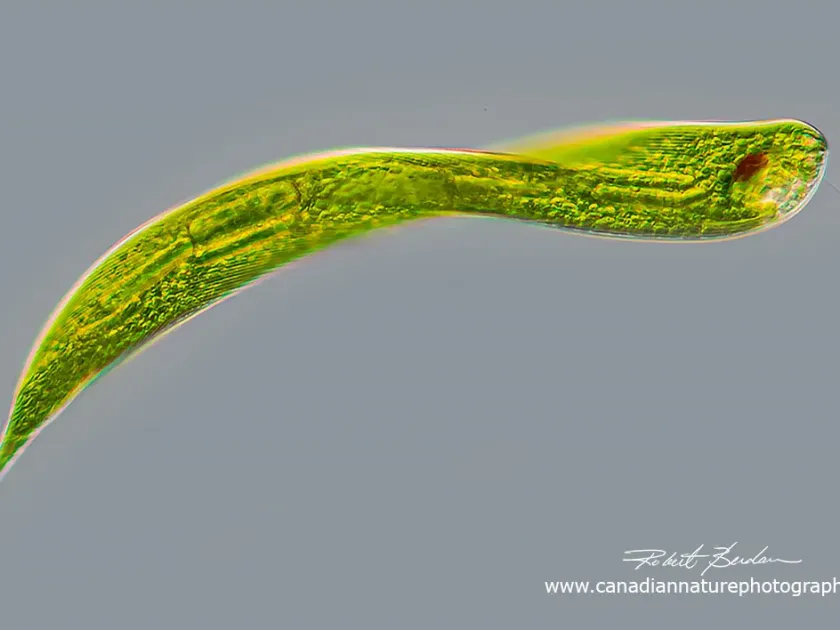
Description
Pathogen
Euglena oxyuris is a species of flagellate protist that belongs to the group of euglenids. It is important to clarify that this organism is not a plant pathogen.
Unlike parasitic fungi or bacteria that destroy plant tissue, Euglena oxyuris is a free-living organism. It primarily derives nutrition through photosynthesis or by absorbing dissolved organic compounds from its environment.
In an agricultural context, its presence on the surface of the soil or in irrigation water is not a sign of a disease, but rather an indicator of environmental conditions.
The morphology of this organism is characterized by an elongated, spindle-like body. They are common inhabitants of fresh water and moist soil environments worldwide.
Therefore, associating Euglena oxyuris with crop diseases is scientifically inaccurate, as it does not infect or feed on living plant tissues.
Conditions for development
The proliferation of Euglena oxyuris is strictly dependent on high moisture levels. It thrives in stagnant water and permanently damp soil surfaces.
The presence of organic matter, such as decomposing plant debris or excessive fertilization, provides the necessary nutrients for its rapid population growth.
As a photosynthetic organism, it requires light to sustain its autotrophic lifestyle. High light intensity often leads to the characteristic green blooms on the soil surface.
Optimal temperatures for its development generally fall within the moderate range (15–25°C). Growth slows down or stops if the substrate dries out or temperatures drop significantly.
Greenhouse environments with poor ventilation and high humidity represent the most favorable conditions for this organism to colonize soil surfaces and hydroponic systems.
Why it matters
Euglena oxyuris does not inflict direct damage on crops. It is not capable of penetrating the cuticle or cellular walls of higher plants to cause necrosis or decay.
However, it can be considered a nuisance because it forms a dense, mucilaginous film on top of the soil. This crust can significantly reduce oxygen diffusion to the roots.
This film creates a hydrophobic barrier, making irrigation difficult. Water may run off the surface instead of penetrating the root zone, potentially causing moisture stress.
While not a direct parasite, its presence indicates an unbalanced growing environment. Poor aeration and excessive moisture, which favor Euglena, can facilitate other pathogenic fungi.
Management of the greenhouse or field is the primary concern when Euglena appears, rather than the organism itself acting as a direct pest or pathogen.
Protection
The most effective strategy for control is the regulation of watering. Allowing the substrate to dry out slightly between waterings prevents the conditions needed for the bloom.
Ensuring proper drainage in pots and greenhouse beds is essential to avoid water stagnation. A well-aerated root zone is the best defense against surface algal growth.
Routine cultivation or raking of the soil surface disrupts the integrity of the algal film. This improves gas exchange and keeps the surface layer drier.
Applying a layer of coarse sand, perlite, or gravel over the soil surface prevents light penetration and physical contact with the moist substrate, inhibiting growth.
If the surface bloom is severe, removing the top layer of substrate and increasing air circulation through improved ventilation will effectively manage the population of Euglena.
Discussion
No discussions yet — be the first.