
Euglena water bloom
Euglena
Description
Symptoms
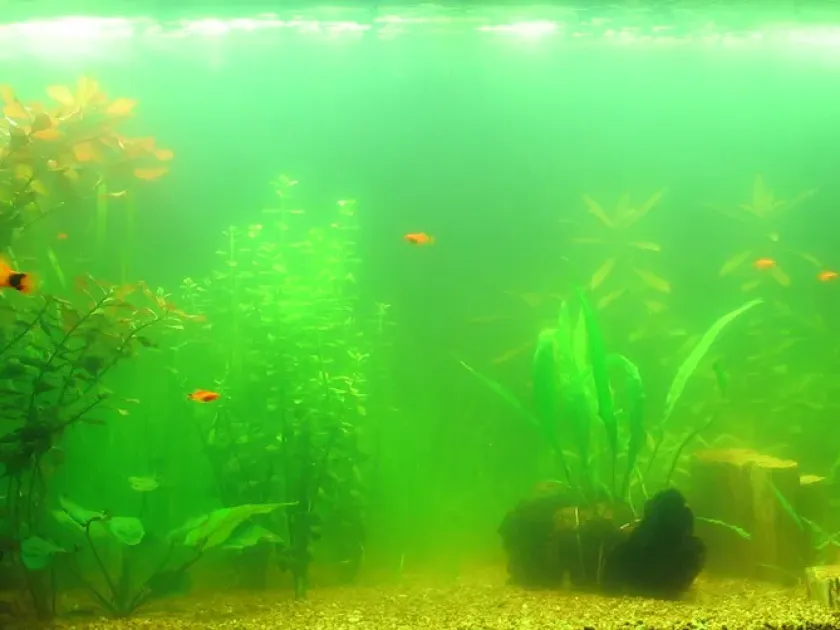
The primary symptom is the appearance of an intense emerald-green or brownish discoloration of the water surface.
A thick, velvet-like film often forms on the surface of water reservoirs, which may vary in density depending on the time of day.
Turbidity becomes highly visible, and the water loses its clarity even after sitting in a container for several hours.
In cases of heavy infestation, the water can develop a distinct earthy or pungent smell due to the metabolic activity of the algae.
Vertical migration behavior often leads to the water looking clearer in the morning and greener as the intensity of light increases throughout the day.
Pathogen
The causative agent of this phenomenon is the single-celled flagellated organism of the genus Euglena, primarily Euglena viridis.
These organisms are unique biological entities that exhibit both plant-like and animal-like characteristics, allowing them to thrive in various conditions.
They possess chloroplasts capable of photosynthesis, which drives their rapid population growth in well-lit aquatic environments.
Euglena species function as mixotrophs, meaning they can switch between photosynthesis and consuming organic matter as food sources.
The biological cycle of Euglena involves active movement using a flagellum, which helps them optimize their position within the water column.
Conditions for development
High levels of nutrients, especially phosphorus and nitrogen, create an ideal environment for rapid proliferation.
Direct exposure to bright sunlight is a critical catalyst for the photosynthetic activity of the Euglena population.
Water temperatures ranging between +20 and +30 degrees Celsius significantly accelerate the reproduction rate.
Poor water circulation or stagnant water in irrigation tanks promotes the buildup of algal biomass.
Contamination of water supplies with organic residues provides the necessary fuel for explosive population growth.
Why it matters
The bloom can physically clog irrigation filters, nozzles, and drippers, leading to system failure and uneven water distribution.
In hydroponic systems, the algae compete with crops for dissolved oxygen and essential nutrients, causing plant stress.
Metabolic byproducts released by Euglena can be potentially toxic to the root systems of sensitive crop varieties.
Increased turbidity blocks light penetration, which disrupts the natural balance and health of the aquatic environment.
Root zone suffocation occurs when algal biomass accumulates and limits oxygen exchange in the growing medium.
Protection
The most effective strategy is to implement UV sterilization systems in the irrigation water supply lines.
Shading or completely covering water tanks prevents the light exposure necessary for photosynthesis.
Routine cleaning and disinfection of water storage tanks and irrigation lines are essential to prevent algal biofilm buildup.
Monitoring nutrient levels in water supplies helps to avoid the conditions that lead to eutrophication and algal blooms.
The use of approved algicides can be a last resort, provided that they are safe for the specific crops being cultivated.
Discussion
No discussions yet — be the first.