
Powdery mildew
Erysiphaceae
Description
Symptoms
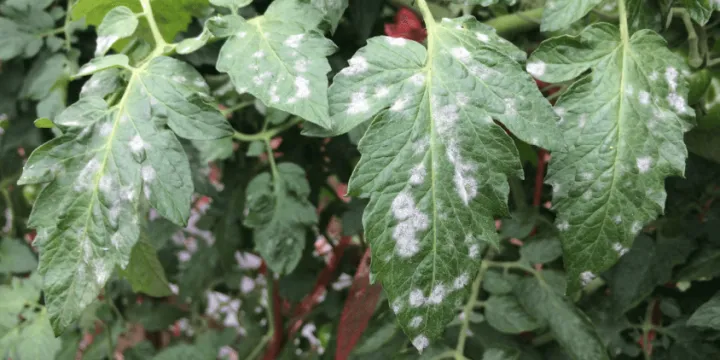
The most recognizable symptom is the appearance of white, powdery spots or patches on the upper surface of leaves, which resemble a dusting of flour.
Over time, these spots expand and coalesce until the entire leaf surface is covered. The mycelium may eventually turn grayish or brownish as the fungus matures.
Small black dots, known as chasmothecia, may appear scattered within the white mat, indicating that the fungus is entering a reproductive or overwintering stage.
Infected leaves often become chlorotic, curled, and distorted. In severe cases, they may wither and drop off prematurely, significantly reducing the plant's canopy.
Flowers and fruits are also susceptible; affected fruits may crack, ripen unevenly, or be rejected entirely for sale due to their unattractive appearance.
Pathogen
Powdery mildew is caused by obligate parasitic fungi belonging to the family Erysiphaceae. These pathogens are highly specialized, meaning they require a living host to survive and reproduce.
The fungus spreads via wind-dispersed conidia (asexual spores) and can overwinter through cleistothecia, which are small, dark fruiting bodies found on plant debris.
This group of fungi has a broad host range, infecting various crops including cereals, vegetables like cucumbers and tomatoes, berries, fruit trees, and grapevines.
The pathogen develops a superficial white mycelium that blankets the host tissue. It obtains nutrients by extending specialized structures called haustoria into the plant cells without necessarily killing them immediately.
Infection can affect all aerial parts of the plant, including leaves, stems, flower buds, and fruits, which severely disrupts the plant's metabolic and physiological processes.
Conditions for development
Powdery mildew development is favored by warm, dry conditions, with temperatures ranging between 18°C and 25°C being optimal for fungal growth.
High relative humidity, particularly stagnant air in overcrowded gardens or greenhouses, creates a perfect environment for spores to germinate and infect new tissues.
Unlike many other fungal diseases, powdery mildew does not necessarily require free water on the leaves to initiate infection; in fact, heavy rain can sometimes wash spores away.
Plants stressed by poor light conditions, improper irrigation, or an excess of nitrogen fertilizer are significantly more prone to severe outbreaks.
Weeds and surrounding vegetation can act as reservoirs for the fungus, allowing it to survive between growing seasons and spread to cultivated crops.
Why it matters
The disease causes significant economic loss by reducing crop vigor, yield quality, and quantity. In severe cases, the entire harvest may be lost to damage.
By covering the leaf surface, the fungal mat blocks sunlight, severely hindering photosynthesis and depleting the plant's energy reserves needed for growth and fruiting.
In perennial crops, the disease reduces winter hardiness, making plants more vulnerable to frost damage and weakening them for the following growing season.
For cereal crops, early infection leads to poor grain filling, lower grain weight, and reduced milling quality, directly affecting profitability.
The disease ruins the aesthetic appeal of ornamental plants and the marketability of fresh produce, often rendering fruits and vegetables unsalable.
Protection
Effective management begins with the selection of resistant varieties, which is the most sustainable way to prevent the disease from taking hold.
Proper cultural practices are crucial, including adequate spacing between plants to improve airflow and careful management of nitrogen fertilizer levels.
Sanitation plays a key role: gardeners and farmers should promptly remove and destroy infected plant parts and clear field debris to reduce the inoculum load.
Chemical control involving fungicides, such as sulfur-based products, triazoles, or strobilurins, should be applied preventively or at the first sign of symptoms.
- Practice crop rotation to disrupt the pathogen's life cycle.
- Use biological controls such as Bacillus subtilis for early intervention.
- Ensure greenhouses are well-ventilated to keep humidity levels in check.
- Monitor plants regularly for early signs of infection to act quickly.
Discussion
No discussions yet — be the first.