
Enteridium
Enteridium
Description
Symptoms
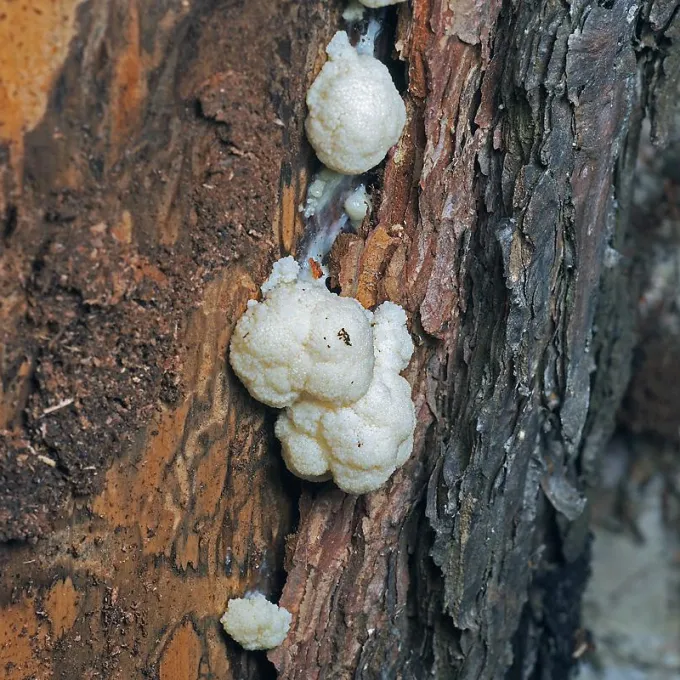
The primary symptom is the appearance of distinct, rounded, or cushion-like growths on the bark of trees. Initially, these growths look like white, cream-colored, or pale foam.
As the fruiting body matures, the color changes significantly to a dark brown or bronze, eventually resembling a puffball mushroom or a patch of thick, dry leather.
When the outer layer is broken, a dense, chocolate-brown dust cloud is released. This dust consists entirely of mature spores, which is a definitive diagnostic feature of the species.
Affected areas are often found in bark fissures, around old pruning cuts, or near frost cracks where organic debris and moisture tend to accumulate.
The surface under the slime mold may appear darker and slightly softer than the surrounding healthy bark due to the constant moisture maintained by the organism.
Pathogen
Enteridium, particularly the species Enteridium lycoperdon, is a fascinating member of the slime mold group (Myxomycetes). These are not true fungi, but rather protists that exhibit unique amoeboid characteristics during their life cycle.
The organism exists as a plasmodium, a mass of protoplasm that moves slowly over the surface of decaying wood or tree bark, consuming bacteria, yeasts, and organic particles.
When environmental conditions become unfavorable, the plasmodium concentrates to form fruiting bodies (sporangia). This is the stage most commonly seen by gardeners, appearing as spongy, puffy masses.
These organisms are saprotrophs, meaning they feed on dead or decaying organic matter. They do not penetrate healthy, living plant tissues, but rather colonize existing wounds, cracks, or dead bark.
The biological nature of Enteridium allows it to survive in extreme moisture, waiting for the right conditions to complete its life cycle and release millions of microscopic spores.
Conditions for development
High humidity and prolonged rainfall are the primary drivers for Enteridium development. Frequent mists, fog, and poorly ventilated garden environments provide the perfect microclimate.
Optimal temperatures for the activity of the plasmodium phase are generally between 15°C and 25°C. Lower temperatures may stall activity, while extreme heat and dryness induce spore formation.
The presence of dead organic matter on the bark is crucial. Trees with thin, cracked, or decaying bark are much more susceptible to colonization compared to healthy, robust trees.
Poor airflow through the canopy leads to higher humidity around the trunk, which significantly increases the risk of slime mold growth.
Cultural practices that promote tree health, such as proper spacing and avoiding unnecessary wounding, are essential to keeping the tree bark dry and resistant to colonization.
Why it matters
While Enteridium is not a parasite that feeds on the tree, it can cause indirect harm by physically obstructing the lenticels, which are essential for gas exchange in the bark.
The constant moisture maintained by the slime mold colony provides a favorable environment for secondary infections, such as bacterial decay or fungal pathogens that do attack living tissue.
The softening of the bark surface can lead to structural decay in the long term if the underlying tissue remains constantly wet and unable to heal properly.
Large colonies can be visually unappealing and may harbor other organisms or pests within the damp, spongy crevices of the slime mold itself.
Spore dispersal can be problematic for people with respiratory sensitivities, as the massive release of dry spores can irritate the throat and lungs during maintenance work.
Protection
The most effective management strategy is to maintain the health and vigor of your trees. This includes regular sanitation, such as removing dead branches that act as initial colonization sites.
Mechanical removal of the slime mold should be done with care to avoid spreading the spores. Scrape off the growth when it is in the early stage and dispose of it away from the garden.
Pruning for better air circulation is vital. Thinning the canopy allows sunlight to penetrate and dry out the bark, making the environment inhospitable for slime molds.
Treating any wounds or cracks in the bark with appropriate disinfectants or wound sealants helps prevent the accumulation of moisture and organic debris.
- Monitor tree trunks regularly during wet seasons.
- Avoid over-watering that wets the bark directly.
- Keep the base of the tree clear of debris and excessive mulch that might trap moisture.
Discussion
No discussions yet — be the first.