
Emericella
Emericella
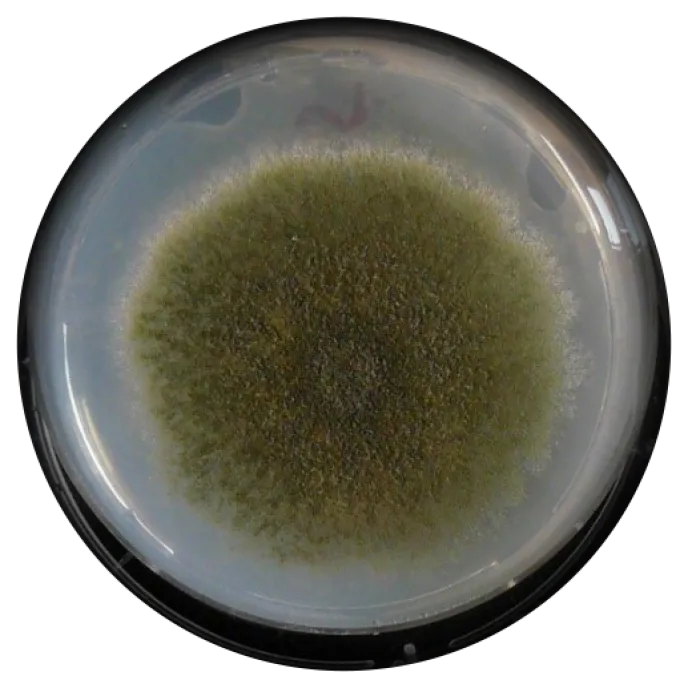
Description
Symptoms
The main external manifestation of the disease is the appearance of a dense coating, with colors ranging from white to brown or olive. This coating is most commonly localized on seeds, fruits, or roots.
When seeds are affected in storage, intense molding occurs. The embryo loses its viability, and the tissues acquire a specific musty odor.
On growing plants, signs can manifest as localized tissue necrosis. Leaves and stems gradually turn yellow, wilt, and become covered with fungal sporulation under high humidity conditions.
The root zone of an affected plant darkens, and tissues become soft and slimy. In advanced cases, the entire root system is destroyed, which leads to lodging of the crop.
Internal tissues of affected fruits often lose turgor and are subject to secondary bacterial rot. This significantly reduces the marketability of the harvest and makes it unsuitable for long-term storage.
Pathogen
The causative agent of the disease is a fungus from the Emericella genus, which represents the sexual stage (teleomorph) of certain Aspergillus species. This is an ascomycete fungus that forms cleistothecia — enclosed fruiting bodies containing ascospores.
Biologically, this organism is a typical saprotroph capable of transitioning to a parasitic lifestyle when the host plant's immunity is weakened. Its spores are characterized by high resistance to adverse environmental factors.
The fungal mycelium actively spreads within host tissues, secreting specific enzymes to break down cell walls. During its life cycle, it may produce mycotoxins that are dangerous to both plants and consumers of the products.
The fungus can persist in the soil and on crop residues in the form of sclerotia. This makes it extremely resilient under crop rotation conditions and complicates the complete elimination of the infectious background in a field.
Systematically, the species is often associated with complexes of mold fungi. The primary vector for disease spread is air currents, which carry conidia over significant distances.
Conditions for development
High humidity of the air and substrate is required for the active growth and spread of Emericella. The optimal temperature range for development is between 25 and 30 degrees Celsius.
A critical factor for development is the presence of large amounts of undecomposed plant residues in the soil. Fresh manure or an excess of organic matter also provokes infection outbreaks.
Violation of harvest storage regimes is the main cause of large-scale losses. Condensation in storage facilities and a lack of proper ventilation create an ideal microclimate for fungal reproduction.
Damage to the skins of fruits and seeds by insect pests opens the door for fungal penetration. Mechanical damage during harvesting also promotes the development of the disease.
Poor agricultural practices, including dense planting, prevent proper air circulation in plantations. This creates local zones of high humidity where fungal spores germinate quickly.
Why it matters
The main damage lies in a sharp decrease in the quality of seed material. Infected seeds have low germination energy and often die in the soil before they can form seedlings.
Economic damage is associated with the spoilage of products during storage. A small center of infection can spread to the entire lot of grain or fruit in a short time.
Mycotoxins secreted by the fungus into plant tissues make the harvest unsuitable for feed or food purposes. Consumption of such products causes poisoning in farm animals.
Infection of growing plants leads to thinning of crops and yield loss. The quality of marketable produce drops, excluding the possibility of selling it at market prices.
The spread of the pathogen in the soil makes it difficult to cultivate susceptible crops on the same site for several years. This forces farms to spend significant resources on disinfection.
Protection
The foundation of protection is strict adherence to storage regimes. In storage facilities, it is necessary to maintain air humidity of no more than 60–65% and ensure forced ventilation.
Pre-sowing treatment of seeds with broad-spectrum fungicides allows for reliable protection of future seedlings from fungal mold infection at the initial stage of growth.
Agronomic measures include deep plowing of plant residues, which are the main source of infection in the field. Compliance with crop rotation helps break the pathogen's development cycle.
It is important to promptly control pests that damage fruits. The integrity of the epidermis serves as a natural barrier protecting the plant from the penetration of Emericella spores.
To prevent the spread of the disease in fields, regular phytosanitary inspections are applied. Affected specimens should be removed from the field and disposed of to prevent the accumulation of infection.
Discussion
No discussions yet — be the first.