
Embellisia rot
Embellisia
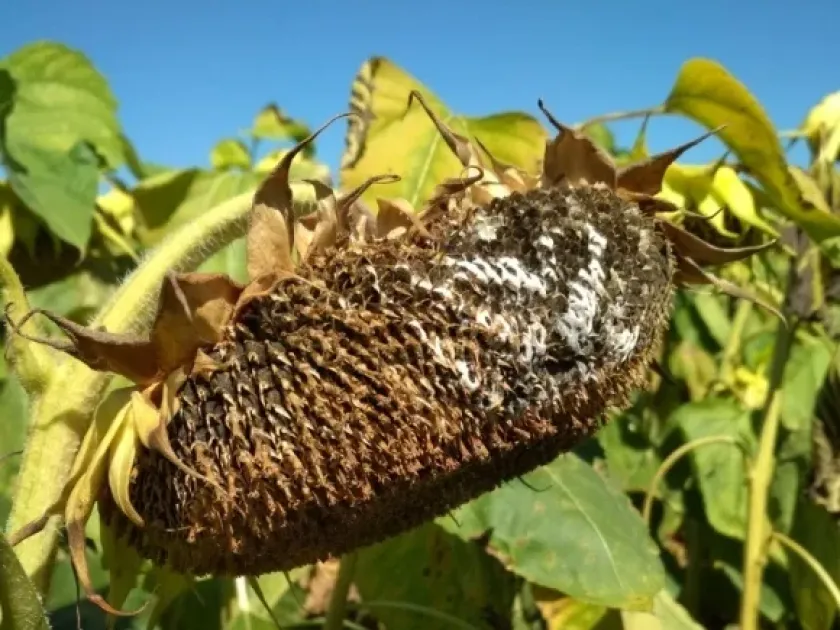
Description
Symptoms
The main sign of infection is the presence of characteristic spots that eventually turn dark brown or nearly black with a distinct olive tint.
In affected plants, especially garlic and onions, symptoms often manifest as necrosis of the leaf tips, which gradually progresses downward to the base of the leaf blade.
Under high humidity, a velvety layer of fungal spores forms on the surface of the spots. This is the most dangerous stage, facilitating the rapid spread of the infection to neighboring plants.
In the case of bulb infection, Embellisia rot causes tissue softening, darkening of the basal plate, and generalized rot, which is often accompanied by an unpleasant odor due to the involvement of secondary microflora.
- Premature yellowing and drying of leaves.
- Appearance of dark spots on bulb scales.
- Retardation of overall growth and development of vegetative mass.
- Mass lodging of foliage during severe infection.
Pathogen
The causative agent of the disease is an imperfect fungus of the Embellisia genus, which belongs to the group of dematiaceous hyphomycetes. It is a pathogenic microorganism capable of surviving for long periods in plant debris and soil as mycelium or conidia.
The fungus is characterized by the formation of olive-black or dark brown colonies. The conidiophores of the pathogen can be solitary or gathered in bundles, which is an important diagnostic feature during microscopic examination.
The life cycle of Embellisia is closely linked to the weakening of the host plant's immune system. Infection often occurs through breaches in the epidermis, mechanical injuries, or sites of pest infestation.
In phytopathological terms, the Embellisia genus is often identified as an accompanying agent in complex diseases of bulbous crops. It can develop as a saprotroph, transitioning to active parasitism when favorable conditions are created.
The fungus possesses high resistance to adverse environmental factors, which complicates its eradication from infested fields even when using standard agrotechnical methods.
Conditions for development
The development of Embellisia rot is favored by high humidity levels in the air and soil, especially during prolonged rainy periods or when irrigation regimes are poorly managed.
The temperature optimum for the growth of Embellisia mycelium is in the range of moderately warm temperatures, although the pathogen remains active even in cooler seasons.
Inadequate ventilation in plantings, high planting density, and lack of crop rotation create ideal conditions for the accumulation of infectious material in the topsoil.
Failure to follow storage rules for bulbous crops, such as high humidity in warehouses and lack of aeration, triggers mass rot development caused by this fungus.
Mechanical damage to tissues during harvest serves as an entry point for spores to penetrate into healthy plant tissues.
Why it matters
The harm caused by Embellisia rot lies in a significant reduction in the quality and quantity of agricultural crop yields.
Leaf damage leads to a decrease in photosynthetic area, which ultimately reduces the weight of the marketable part of the plant, such as bulbs or roots.
Infected planting material loses viability or produces weakened seedlings that often die in the early stages of development due to progressive rot.
During storage, Embellisia rot can cause significant product losses, making it impossible to keep vegetables for long periods under standard warehouse conditions.
The marketability of the product suffers significantly: spots on the outer scales make the produce uncompetitive on the market, reducing production profitability.
Protection
The foundation of protection is adhering to a sound crop rotation system, avoiding the return of susceptible crops to the same location for at least 3-4 years.
It is important to use only healthy, disinfected planting material, as well as to treat seeds or bulbs with approved fungicides before planting.
Agrotechnical measures include deep plowing of plant residues, weed control, and ensuring proper field drainage to prevent water stagnation.
During the growing season, preventive treatments with copper-based preparations or broad-spectrum systemic fungicides are recommended at the first signs of disease.
It is necessary to strictly adhere to drying and storage regimes: maintaining optimal temperature and low humidity in warehouses while ensuring constant ventilation.
Discussion
No discussions yet — be the first.