
Fig mosaic
Emaravirus fici
Description
Symptoms
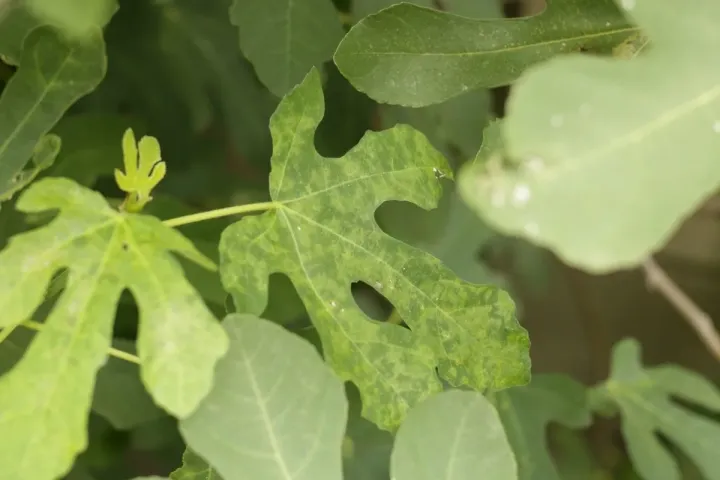
The most recognizable symptom is the mosaic pattern on leaves, appearing as yellow or light-green patches with irregular, diffuse borders.
Infected leaves often show signs of malformation, becoming asymmetrical, reduced in size, or displaying a distorted, crinkled appearance.
Symptoms may also manifest on the fruit in the form of mosaic spots, rings, or premature discoloration, which severely affects the fruit quality.
The severity of symptoms can vary significantly depending on the fig variety, environmental conditions, and the duration of the infection.
- mosaic-like yellow chlorotic spots on leaves;
- leaf malformation and size reduction;
- ring-spot patterns on the fruit skin;
- premature leaf drop;
- stunted growth of new shoots.
Pathogen
The causative agent of the disease is Emaravirus fici, a viral pathogen that specifically affects Ficus carica species worldwide.
The virus particles invade the plant's vascular system, disrupting normal physiological functions and the development of plant tissues.
It is primarily transmitted by the eriophyid mite Aceria ficus, which feeds on the plant, acting as a biological vector for the virus.
In addition to mite transmission, the virus can be spread by human activity through contaminated pruning tools or during vegetative propagation using infected cuttings.
Once a fig tree is infected, the virus becomes systemic and remains present in the plant tissues indefinitely, making the tree a perpetual source of infection.
Conditions for development
The development of Fig Mosaic is directly linked to the population dynamics of the eriophyid mite, which thrives in warm and humid environments.
During the active growing season, high temperatures facilitate the reproduction of Aceria ficus, leading to faster spread of the virus.
Greenhouse conditions are particularly favorable for the disease as they provide stable temperatures and protection from natural predators of mites.
Plant stress, such as drought, poor irrigation, or imbalanced nutrition, does not cause the disease but can exacerbate the visual symptoms of the virus.
Global movement of fig cuttings and nursery stock is a major factor in the dispersal of the virus across different geographical regions.
Why it matters
The economic impact of Fig Mosaic is significant due to reduced yields and lower market quality of the fruit produced by infected trees.
The virus impairs the photosynthetic efficiency of the leaves, resulting in diminished vigor, slower tree growth, and increased susceptibility to other stressors.
In commercial nurseries, the presence of the virus necessitates the destruction of infected stock, leading to direct financial losses.
Fruit quality deterioration, including smaller size and poor taste, makes the harvest unsuitable for commercial sale or processing.
The chronic nature of the infection means that infected trees often require removal and replacement, impacting long-term orchard productivity.
Protection
The primary prevention strategy is the use of healthy, virus-free planting material sourced from reputable and certified suppliers.
Strict sanitation practices, such as disinfecting pruning tools with alcohol or appropriate disinfectants after every cut, help prevent mechanical transmission.
Managing the population of the vector mite Aceria ficus using acaricides is essential to minimize the risk of virus spread within the orchard.
Early identification and removal of infected plants can help reduce the viral inoculum pressure on the remaining healthy trees.
Ongoing breeding efforts are focused on developing and promoting cultivars that show natural resistance or tolerance to the Fig Mosaic virus.
Discussion
No discussions yet — be the first.