
Eucalyptus leaf anthracnose
Elsinoë leucospila
Description
Symptoms
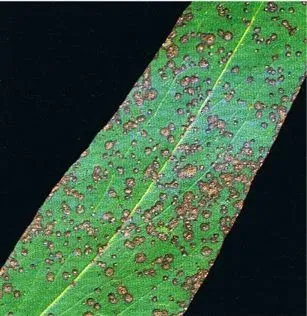
The primary symptoms include the appearance of small, circular, or irregular spots on the leaves, which initially present a yellowish or light brown discoloration.
As the infection progresses, the center of these spots turns white or greyish, often surrounded by a dark margin, a classic visual trait of Elsinoë leucospila.
In severe cases, the spots coalesce, causing large areas of the leaf to wither, leading to premature leaf drop and partial or total defoliation of the tree.
Young stems can also be affected, showing small, sunken ulcers that may result in tip dieback or malformation of new growth branches.
Under humid conditions, the lesions may display small, dark-colored fruiting bodies, indicating the active sporulation phase of the fungal pathogen.
Pathogen
The causative agent of this disease is the ascomycete fungus Elsinoë leucospila. It acts as a specialized pathogen that specifically targets Eucalyptus species in various environments.
This disease is classified as an anthracnose, characterized by localized necrotic lesions on the leaf tissue. The fungus survives unfavorable seasons within infected plant debris.
The biological cycle of the fungus involves the production of conidia, which serve as the primary inoculum for spreading the infection during the growing season.
The fungal mycelium penetrates the leaf surface, destroying cells and disrupting physiological processes, which eventually leads to the visible symptoms of the disease.
Rapid dissemination is supported by the production of large quantities of spores, which are easily dispersed by wind and splashing rainwater across the canopy.
Conditions for development
High relative humidity and frequent rainfall are the most critical factors favoring the development and spread of Eucalyptus leaf anthracnose.
Temperatures ranging from +18°C to +25°C provide an ideal environment for the fungus to colonize and reproduce rapidly within host tissues.
Poor air circulation within dense plantings significantly increases the risk of the disease, as leaf surfaces remain wet for longer periods after irrigation or rain.
Overhead irrigation systems can inadvertently promote the disease by splashing spores from lower, infected leaves onto the upper, healthy parts of the tree.
Weakened trees, whether due to nutrient deficiency or environmental stress, are significantly more susceptible to severe infection than healthy, vigorous ones.
Why it matters
The reduction in effective photosynthetic area directly limits the plant's ability to produce energy, leading to overall stunted growth and reduced vigor.
Chronic infections can lead to the loss of significant amounts of foliage, which diminishes the tree's health and compromises its aesthetic value.
Tip dieback and stem deformities caused by the pathogen can drastically alter the tree's architecture and slow down the maturation of young Eucalyptus saplings.
Repeated stress from defoliation makes the trees more vulnerable to secondary pests and other opportunistic infections that may lead to long-term decline.
In commercial eucalyptus forestry, this disease can cause considerable economic loss by reducing timber quality and total biomass production.
Protection
Sanitation is the first line of defense; it is crucial to remove and destroy fallen leaves and infected twigs to eliminate the primary sources of inoculum.
Applying appropriate fungicides, such as copper-based sprays or systemic triazoles, can effectively protect the plants during high-risk, rainy seasons.
Improving spacing between trees and implementing proper pruning practices enhances air movement and decreases the humidity levels around the foliage.
Maintaining a balanced nutritional program helps strengthen the host's natural resistance, allowing it to withstand minor infections more effectively.
Early detection and immediate treatment of affected areas are vital to prevent the disease from becoming established within a nursery or plantation setting.
Discussion
No discussions yet — be the first.