
Echinostelium minutum
Echinostelium minutum
Description
Pathogen
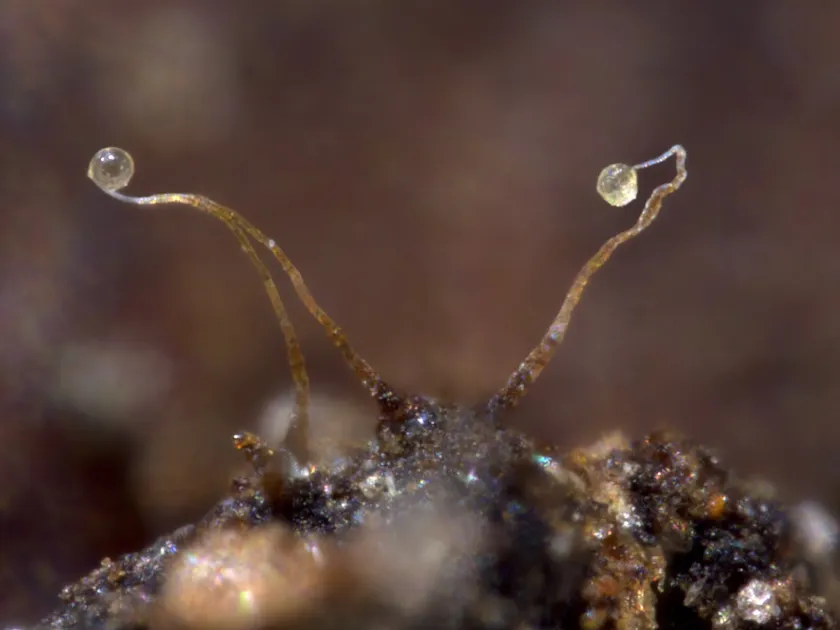
Echinostelium minutum is a microscopic myxomycete, commonly known as a slime mold. Unlike true fungi, it belongs to a group of amoeboid organisms that undergo complex life cycles, including a plasmodial stage that feeds on bacteria and decaying organic matter.
In its active phase, the plasmodium moves across substrates, such as plant leaves, stems, or bark. It is primarily a saprotroph, meaning it lives on non-living organic material rather than invading healthy living plant tissue to extract nutrients.
The organism produces tiny, stalked fruiting bodies (sporocarps) that are visible to the naked eye under magnification. These structures contain spores, which are disseminated by air currents or water splashes to colonize new environments.
Taxonomically, it belongs to the order Echinosteliales. Its life cycle allows it to quickly adapt to changing environmental conditions, making it a persistent component of the soil and surface microflora in many agricultural ecosystems.
While often overlooked due to its minute size, Echinostelium minutum is frequently encountered by agronomists during the inspection of greenhouse crops, where it may be misidentified as a parasitic fungus due to its visible colonies.
Conditions for development
The development of Echinostelium minutum is heavily dependent on moisture levels. It thrives in environments with high relative humidity and thrives when free water is present on plant surfaces for extended periods.
Optimal temperatures for the growth and sporulation of this organism range between +15°C and +25°C. These conditions are commonly found in greenhouses, especially during periods of poor ventilation or intensive irrigation.
The availability of decaying plant debris acts as a primary nutrient source for the plasmodium stage. When such debris accumulates near the base of living plants, the slime mold can easily migrate to the stems and leaves.
Poor aeration in dense crop plantings creates microclimates characterized by trapped humidity, which is highly favorable for the transition from the vegetative plasmodium to the reproductive sporocarp stage.
During dry conditions, the organism can enter a dormant state called a sclerotium, which allows it to survive periods of drought until water availability increases and triggers the germination of the spores.
Why it matters
Echinostelium minutum is not typically a primary plant pathogen, as it does not actively infect or cause lesions in healthy living tissue. Its direct harm to the crop's physiological state is generally considered negligible.
However, heavy colonization of the plant's aerial parts can lead to physical shading and blockage of stomata, which may slightly interfere with gas exchange and photosynthesis, potentially leading to minor stress in sensitive varieties.
The aesthetic impact is significant for commercial horticulture. The presence of slimy residues and spore masses on fruits, flowers, or foliage reduces the marketability and quality grade of the agricultural product.
Furthermore, the physical presence of slime mold colonies can trap dust and other pathogens, indirectly promoting the development of true fungal or bacterial diseases by creating a moist, protected niche for them.
Its widespread occurrence on a crop is a reliable indicator of suboptimal microclimate management, particularly regarding overwatering and insufficient air circulation, which are critical issues for successful plant growth.
Protection
The primary control strategy for Echinostelium minutum is the improvement of the crop's growing environment. Reducing humidity levels through better ventilation is the most effective way to prevent mass outbreaks.
Good sanitation practices are essential. Regularly removing crop debris and maintaining a clean growing environment prevents the build-up of organic matter, which serves as a breeding ground for the organism.
Transitioning from overhead irrigation to drip irrigation systems helps keep plant foliage dry, which interrupts the life cycle of the myxomycete by removing the essential requirement of free water for its sporulation.
In greenhouses, maintaining adequate plant spacing is vital to ensure airflow and reduce moisture accumulation. If colonization occurs, mechanical removal or washing the affected surfaces with water is often sufficient.
- Implement drip irrigation to minimize leaf wetness.
- Ensure adequate ventilation and air circulation.
- Remove and dispose of all plant debris promptly.
- Avoid over-densification of crops to prevent microclimate issues.
Discussion
No discussions yet — be the first.