
Echinostelium
Echinostelium
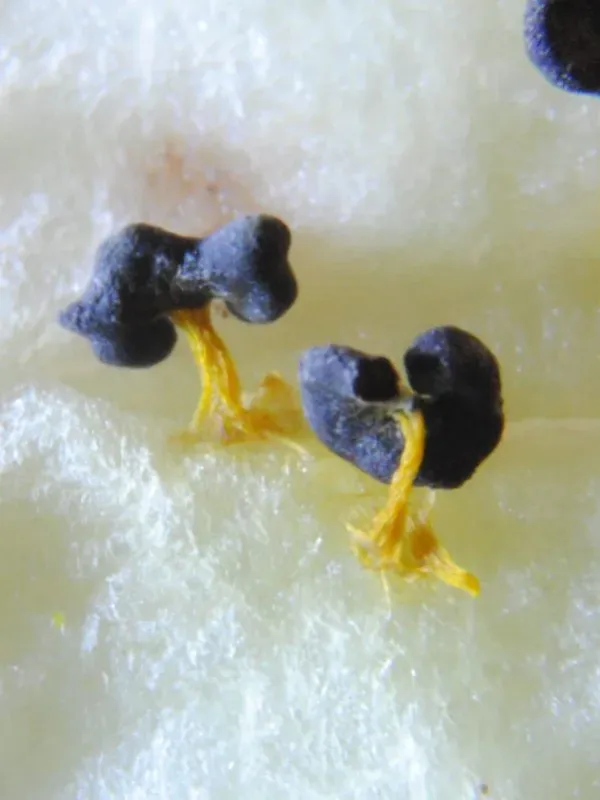
Description
Symptoms
Visual identification of Echinostelium is difficult due to its microscopic size, which typically requires magnification for observation.
The fruiting bodies resemble tiny, barely visible pins or spheres on thin stalks, rising slightly above the surface of the plant substrate.
The color of the sporocarps ranges from whitish to pale pink or translucent, making them virtually invisible to the naked eye against bark or soil backgrounds.
When colonizing growing plant parts, the organism may cause a general decline in plant health due to competition for space.
Root zones and lower leaves in direct contact with moist soil or organic litter are the most frequently affected areas.
Pathogen
Echinostelium is a genus of microscopic slime molds (myxomycetes) belonging to the kingdom Amoebozoa. Although often misidentified as classic fungal pathogens, they are biologically distinct protists.
The pathogen exists as mobile amoeboid cells (myxamoebae) or flagellated stages that feed on bacteria and decaying organic matter.
These organisms undergo a complex life cycle, including a plasmodial stage capable of moving across the substrate in search of nutrients.
During maturation, the plasmodium transforms into sporocarps—tiny fruiting bodies that serve as the primary diagnostic sign of the organism's presence.
It is crucial to understand that unlike obligate parasites, many species of Echinostelium are saprotrophs living on tree bark, fallen leaves, and plant debris.
Conditions for development
High humidity in both air and soil is the primary factor promoting the development of Echinostelium, as it is essential for the activity of its amoeboid stages.
Optimal temperatures for reproduction and sporocarp formation lie within the moderate range, typical of forest and rhizosphere ecosystems.
The presence of decomposing organic matter accelerates the organism's life cycle by providing a food source for the bacteria that slime molds consume.
Dense planting and poor aeration create a microclimate that retains moisture for extended periods, facilitating colonization by Echinostelium.
Limited sunlight penetration into the lower canopy of an agroecosystem is also a favorable condition for the expansion of these myxomycetes.
Why it matters
The direct harmfulness of Echinostelium to crops is generally considered low, as it typically functions as a saprotroph rather than an aggressive parasite.
The indirect harm involves creating a poor phytosanitary environment, which can encourage the development of secondary infections on weakened plant tissues.
In greenhouse settings, accumulations of slime molds can lead to aesthetic degradation, negatively impacting the marketability of seedlings or ornamentals.
During mass development, myxomycetes can obstruct plant stomata by forming a dense, slimy film on the leaf surface.
This disruption of gas exchange leads to physiological stress, reducing growth rates and overall resilience against more dangerous plant diseases.
Protection
The primary preventive measure is to maintain optimal soil moisture and provide regular ventilation in greenhouses to prevent stagnant air.
Prompt removal of plant debris is essential, as these residues serve as the main reservoir and nutrient base for the development of myxomycetes.
Broad-spectrum fungicides are generally ineffective against slime molds, so the focus must remain on proper agronomic practices.
Mulching the soil is an effective technique to prevent direct contact between leaves and the substrate, where sporocarps are likely to develop.
In cases of severe infestation in protected ground, surface disinfection and drying of the substrate until normal humidity levels are restored is recommended.
Discussion
No discussions yet — be the first.